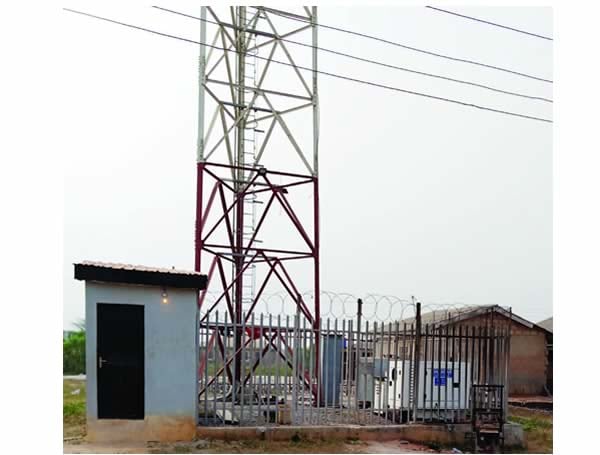

The Nigeria Security and Civil Defence Corps (NSCDC) in Bauchi State has reported a significant operational success, apprehending two individuals allegedly responsible for the systematic theft of diesel from a major telecommunications infrastructure site. The suspects, identified as 20-year-old Abdulrahman Jibrin and 31-year-old Munarak Halilu, were arrested for siphoning an estimated 600 litres of Automotive Gas Oil (AGO) used to power a generator at an MTN mast situated in the Sabon Kasuwa–Railway area of the Bauchi Local Government Area.
Saminu Yusuf, the spokesperson for the NSCDC Bauchi Command, confirmed the arrests in a statement, noting that the apprehension followed intensive surveillance targeted at curbing the rampant vandalism of public infrastructure. Crucially, preliminary interrogations revealed the enduring nature of the operation; the suspects reportedly confessed to engaging in the criminal act of diesel theft from the same site for a period spanning over one year. The command stated that both individuals would be swiftly charged to court upon the conclusion of all necessary investigations.
This local victory against vandalism underscores a far-reaching national security and economic challenge confronting Nigeria’s vital telecommunications sector. As much of Nigeria relies on unstable grid power, telecom facilities must maintain 24/7 service using diesel-powered generators. Industry data compiled by the Association of Licensed Telecommunications Operators of Nigeria (ALTON) shows the scale of this operational challenge, indicating that operators collectively consume an average of 40 million litres of diesel every month to power their more than 53,000 base stations across the country.
This massive reliance on fuel, combined with high operating costs, has made network sites highly vulnerable targets for criminals seeking to profit from the lucrative black market for stolen diesel, batteries, and other critical infrastructure components. Industry reports consistently track alarming rates of sabotage, with theft incidents averaging close to 99 cases weekly. Such continuous criminal activity severely affects network uptime, leading to service degradation, connectivity blackouts, and financial losses that threaten the resilience of the nation’s digital future.
The NSCDC’s swift intervention in Bauchi aligns directly with its core mandate as the lead agency designated to safeguard Critical National Assets and Infrastructure (CNAI). Under the NSCDC Act (as amended in 2007), telecommunication facilities are explicitly classified as CNAI, meaning intentional interference with these sites is treated as an act of economic sabotage with potentially severe legal consequences.
State Commandant Oloyede Nelson Oyerinde commended the diligence of the NSCDC personnel involved in the arrest, reaffirming the Corps’ uncompromising resolve to protect assets vital to the nation’s stability. He issued a stern warning to economic saboteurs, stressing that the corps will intensify its operations and utilize the full extent of the law to prosecute those who endanger public safety and disrupt essential services. The successful interception of the thieves in Bauchi is a pointed reminder of the security agencies’ commitment to defending the backbone of Nigeria’s digital economy.