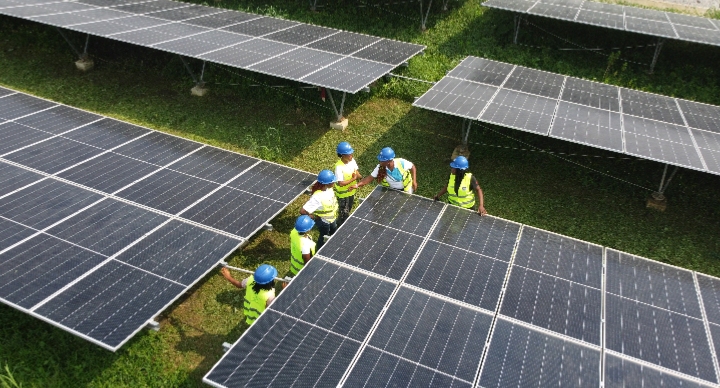

The Rural Electrification Agency (REA) has taken another step toward improving electricity access across Nigeria by releasing significant funding for solar mini-grid projects. According to a recent report, “REA releases N9 billion for solar mini-grids in Taraba, Kogi, Kwara, and Niger. The intervention is targeted at underserved communities where reliable power remains a challenge.
The funding, which totals N9 billion, has been distributed to support the development of multiple mini-grid projects across four states. This initiative is part of a broader effort to expand renewable energy infrastructure and reduce dependence on traditional power sources such as diesel generators.
Reports indicate that a large portion of the funds, about N7.95 billion, was allocated to a renewable energy company to finance equipment for projects in Taraba, Kwara, and Kogi states. Another N1.056 billion was directed toward additional mini-grid installations in Niger State.
These projects are expected to provide clean and stable electricity to rural and semi-urban communities that are either poorly connected or completely disconnected from the national grid. By deploying solar-powered systems, the REA aims to improve living standards, support small businesses, and reduce energy costs for households.
Mini-grids are small-scale electricity systems that generate and distribute power independently of the national grid. They are particularly useful in remote areas where extending traditional grid infrastructure is either too expensive or impractical. In Nigeria, such systems have become an important solution to the country’s long-standing electricity challenges.
The current funding effort is linked to the Distributed Access through Renewable Energy Scale-Up programme, which focuses on increasing electricity access through renewable sources. The programme also encourages private sector participation by providing grants and financial support for project developers.
Beyond improving access to electricity, the initiative is expected to have wider economic benefits. With reliable power, local businesses can operate more efficiently, students can study under better conditions, and healthcare facilities can function without interruptions. This aligns with ongoing national efforts to promote sustainable development and reduce energy poverty.
The REA has continued to scale up its renewable energy projects in recent years. Earlier plans revealed ambitions to deploy hundreds of mini-grids nationwide and reach millions of Nigerians with off-grid electricity solutions.
Overall, the release of N9 billion for solar mini-grids marks another important milestone in Nigeria’s transition toward cleaner and more reliable energy. As more communities gain access to electricity through such initiatives, the country moves closer to bridging its energy gap and supporting inclusive growth.