


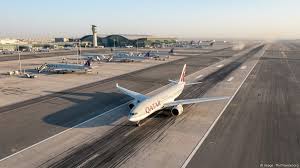

Qatar Airways has published its latest revised flight schedule, reflecting a gradual increase in operations to more than 120 destinations by mid-May 2026, despite ongoing US-Iran attacks that have disrupted air travel across the region. The airline confirmed that all flights to and from Doha continue to operate through dedicated flight corridors established in close coordination with the Qatar Civil Aviation Authority, prioritising passenger and crew safety while maintaining connectivity to key markets, including Africa.
For African travellers and businesses, the airline’s commitment to restoring services is significant. Destinations across the continent are being reinstated on a phased basis, with Abidjan and Accra resuming from April 16, while Kinshasa follows from May 16. Other served African cities include Abuja, Addis Ababa, Algiers, Cairo, Cape Town, Casablanca, Dar es Salaam, Durban, Entebbe, Harare, Johannesburg, Kilimanjaro, Lagos, Luanda, Lusaka, Nairobi, and Tunis. The restoration of these routes is critical for trade, investment, and diaspora connectivity between Nigeria and global markets.
The airline noted that flight schedules remain subject to change or cancellation due to operational, regulatory, safety, or other circumstances beyond its control. Passengers with confirmed bookings on affected flights will be contacted with new flight information and are advised to verify their contact details on the Qatar Airways website or app. The airline also urged passengers not to arrive at departure airports unless they hold valid, confirmed tickets for travel, apologising for any inconvenience caused during the period of disruption.
From an economic perspective, the restoration of Qatar Airways’ African network matters for several reasons. The airline serves as a major connector between Nigeria and destinations across the Middle East, Asia, and beyond, facilitating business travel, cargo movement, and tourism. Disruptions to this connectivity impose costs on Nigerian exporters who rely on air freight for perishable goods such as agricultural produce, as well as on importers sourcing manufactured goods from Asian markets. The resumption of services, even on a phased basis, restores a degree of predictability to logistics planning.
The broader context of the US-Iran attacks has introduced significant uncertainty into global aviation. Airlines operating in the region have had to reroute flights, adjust schedules, and in some cases suspend services entirely to avoid conflict zones. Qatar Airways’ ability to maintain operations through dedicated flight corridors, coordinated with civil aviation authorities, demonstrates both the resilience of its operational planning and the importance of Doha as a hub that can adapt to geopolitical shocks. For Nigerian passengers, the availability of connections through Doha remains a vital alternative to European hubs, particularly given the persistent challenges facing domestic carriers on long-haul routes.
The airline’s emphasis on passenger safety and its transparent communication about schedule adjustments reflect industry best practices during periods of geopolitical instability. However, the situation remains fluid, and further changes are possible depending on the evolution of the conflict. Nigerian travellers and freight forwarders are advised to maintain close contact with the airline and to build flexibility into their travel and logistics planning.


