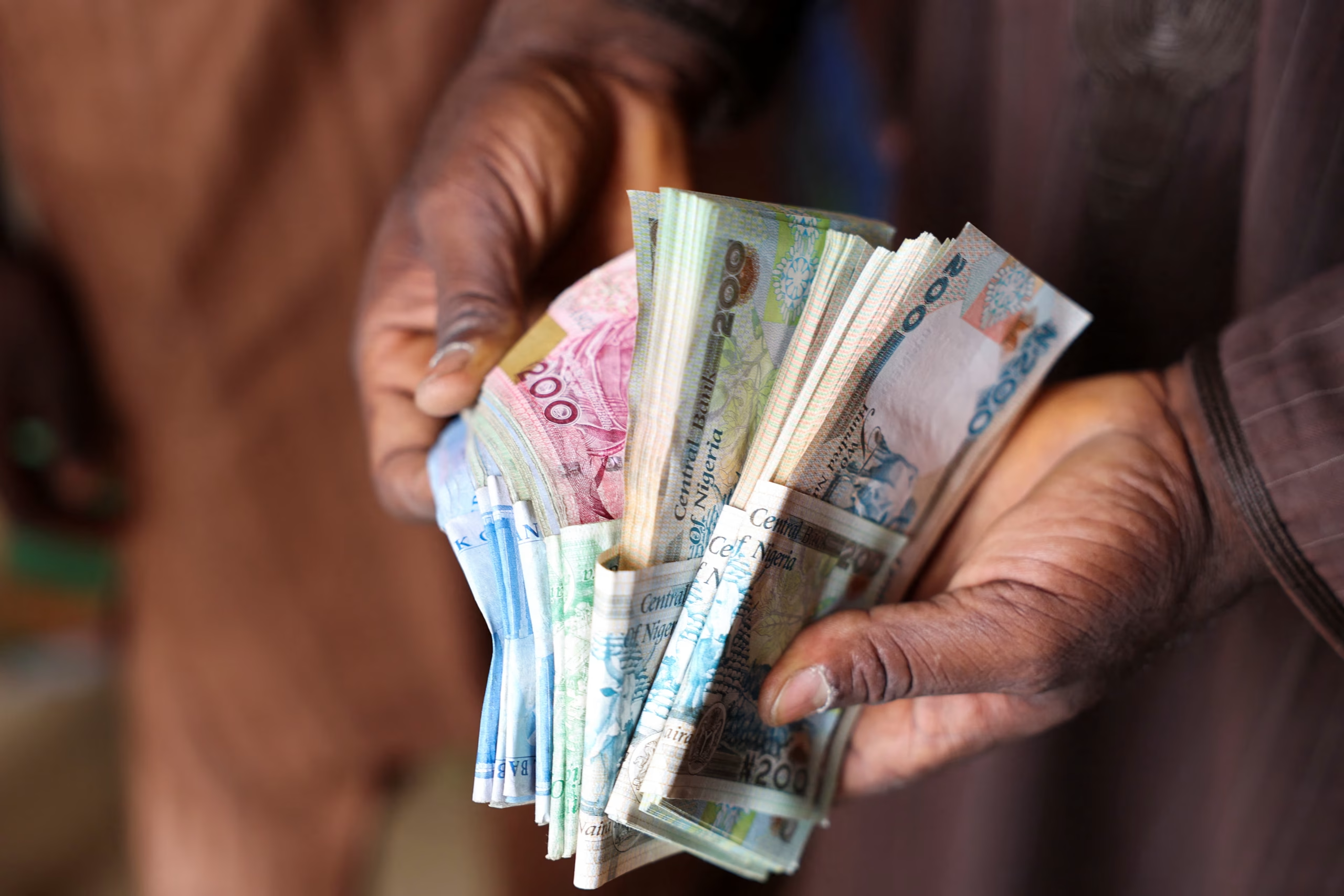

Credit to Nigeria’s private sector fell to ₦72.5 trillion in September 2025, down from ₦75.9 trillion in August, according to new data from the Central Bank of Nigeria (CBN). The decline, which marks the sixth monthly contraction this year, underscores growing concern that recent efforts by the apex bank to stimulate credit and revive economic growth are yet to yield results.
Private sector credit had peaked at ₦78.1 trillion in April before beginning a steady descent, despite the CBN’s policy pivot towards easing monetary conditions. In August, the CBN cut its benchmark interest rate to 27 percent, the first reduction in over a year, as part of a broader attempt to spur lending and support the real economy following a period of aggressive tightening to curb inflation. However, the latest figures suggest that the anticipated expansion in credit has failed to materialise, highlighting persistent structural bottlenecks in the financial system.
Analysts attribute the continued contraction in credit to a combination of weak credit demand, constrained liquidity, and risk aversion among banks. With inflation still hovering around 24 percent and the naira experiencing bouts of volatility, many firms are reluctant to take on new loans amid uncertainty about input costs and consumer demand. On the supply side, commercial banks appear increasingly drawn to the safety of government securities, which offer attractive yields with minimal risk compared to lending to private borrowers.
The trend is further reinforced by the federal government’s increasing reliance on domestic borrowing to fund its widening fiscal deficit. Data from the CBN shows that credit to the government jumped to ₦24.15 trillion in September from ₦22.95 trillion in August. This sharp rise reflects a continued preference by banks for lending to the public sector, where returns are guaranteed and regulatory risk is lower. Economists warn that this dynamic is creating a “crowding-out effect,” where rising government borrowing absorbs liquidity that would otherwise flow to productive private enterprises.
The implications for the broader economy are significant. Private sector credit remains a key driver of investment, job creation, and industrial output. When access to financing tightens, small and medium-sized enterprises (SMEs) in particular struggle to sustain operations or expand, dampening productivity and employment growth. Nigeria’s unemployment rate, which the National Bureau of Statistics estimates at over 5 percent using the revised methodology, could worsen if credit constraints persist, especially in manufacturing, trade, and agriculture.
Despite the CBN’s monetary easing, lending conditions remain restrictive. The effective cost of borrowing is still elevated, as commercial banks price loans well above the policy rate to cover risks associated with inflation, exchange rate instability, and non-performing loans. According to analysts, many banks are also focusing on preserving asset quality and liquidity buffers following the stress induced by the currency depreciation earlier in the year, which eroded capital adequacy and raised the cost of foreign debt obligations.
Experts argue that monetary easing alone will not be sufficient to revive private sector credit growth without complementary structural and fiscal measures. They emphasise the need for government intervention to address supply-side bottlenecks such as unreliable power supply, poor transport infrastructure, and regulatory inefficiencies, all of which undermine business confidence and creditworthiness. Moreover, restoring macroeconomic stability, particularly by stabilising the naira and reducing inflationary pressures, is seen as critical to unlocking credit demand and supporting long-term investment.
The decline in private sector lending also comes at a time when Nigeria is seeking to boost domestic production and reduce import dependence under the Renewed Hope economic agenda. Without adequate credit, the capacity of local industries to expand, innovate, or participate meaningfully in government-led growth initiatives remains limited. Some analysts caution that the contraction in credit could offset the benefits of recent reforms, including the removal of fuel subsidies and exchange rate unification, which were intended to improve efficiency and attract investment.
While the CBN has pledged to continue using targeted interventions to support key sectors such as agriculture, manufacturing, and renewable energy, concerns persist about the overall effectiveness of such programmes. Critics note that previous intervention schemes often suffered from poor targeting, limited scale, and repayment challenges, limiting their impact on credit deepening.
Going forward, experts say the key challenge for monetary and fiscal authorities will be to strike a balance between financing public expenditure and sustaining private sector growth. With the government expected to continue borrowing heavily to fund infrastructure and social programmes, ensuring that private enterprises are not crowded out of the credit market will be essential to sustaining Nigeria’s fragile economic recovery.
For now, the steady fall in private sector credit, against the backdrop of rising government borrowing, paints a concerning picture of an economy where liquidity is increasingly absorbed by the public sector at the expense of productive private activity. Unless confidence, macroeconomic stability, and access to finance improve, Nigeria risks undermining its growth prospects and entrenching a cycle of low investment and weak job creation.