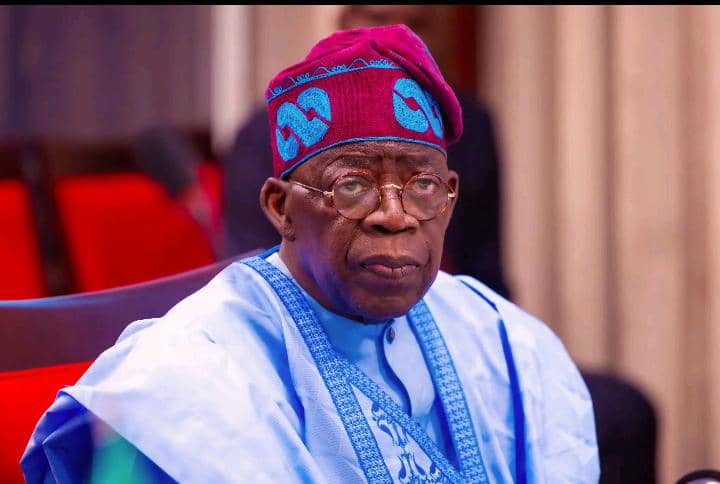

President Bola Tinubu has dismissed several top military officers and appointed new service chiefs to lead Nigeria’s armed forces. The decision, announced by his media aide, took immediate effect.
“President Bola Tinubu has made changes in the hierarchy of the Service Chiefs in furtherance of the efforts of the Federal Government of Nigeria to strengthen the national security architecture,” the statement read.
Under the new military structure, General Olufemi Oluyede replaces General Christopher Musa as Chief of Defence Staff. Major-General W. Shaibu becomes the new Chief of Army Staff, while Air Vice Marshal S. K. Aneke assumes duty as Chief of Air Staff. Rear Admiral I. Abbas is now the Chief of Naval Staff, and Major-General E. A. P. Undiendeye retains his position as Chief of Defence Intelligence.
President Tinubu expressed appreciation to the outgoing service chiefs for their dedication and sacrifices, urging the newly appointed leaders to build on existing reforms and improve collaboration among the security agencies. He emphasized the need for professionalism, discipline, and renewed commitment to safeguarding the nation’s sovereignty.
The reshuffle signals a strategic shift in Tinubu’s approach to tackling Nigeria’s deep-rooted security challenges, including insurgency in the Northeast, banditry in the Northwest, and rising militancy in the oil-rich Niger Delta. It also comes at a time when the country faces mounting pressure to strengthen its borders following recent instability in neighboring West African nations and changes in regional alliances.
Analysts believe the decision reflects Tinubu’s intent to restore confidence in the military and enhance operational effectiveness amid growing public concerns about insecurity. Beyond security, the development carries broader economic implications.
A stable security environment is critical for Nigeria’s economic recovery and investment outlook. Persistent violence has discouraged both local and foreign investors, disrupted agricultural production, and inflated the cost of doing business. Experts argue that improved security could help restore investor confidence, reduce capital flight, and encourage new inflows into sectors such as agriculture, manufacturing, and infrastructure.
According to research from the International Monetary Fund (IMF), Nigeria’s high spending on defense and security has constrained fiscal space for other priorities like health, education, and infrastructure. While the government continues to grapple with limited revenue, a more effective security strategy could reduce economic losses caused by attacks on farmlands, transport networks, and energy facilities.
Insecurity has also had a significant impact on food production. Many farmers in states such as Benue, Niger, and Kaduna have been forced to abandon their fields due to threats of violence. This has led to lower output, higher food prices, and rising inflation. With improved security, agricultural activity could rebound, easing pressure on households and helping to stabilize food prices.
Furthermore, the new military leadership could accelerate Nigeria’s ambitions to develop a local defense manufacturing industry. Strengthening domestic production of military equipment and technology could stimulate job creation, attract investment in research and development, and contribute to industrial growth.
Nigeria’s economy has shown signs of recovery, with GDP growth of 4.23 percent in the second quarter of 2025 and moderating inflation. Economists believe that effective security reform under the new military leadership could help sustain this momentum, create a more stable environment for business, and support the government’s broader economic goals.
However, the success of the new appointments will depend on how quickly and effectively the new service chiefs can deliver results. Any setbacks or continued insecurity could undermine investor confidence and slow down economic progress at a critical time for Africa’s largest economy.
President Tinubu’s decision, therefore, represents both a political and economic gamble; one that could redefine Nigeria’s path toward stability and sustainable growth if implemented successfully.