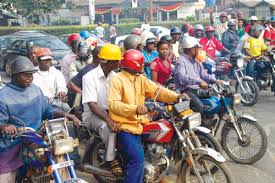

The Ondo State Government has announced a comprehensive reinforcement of the ban on commercial motorcycle operations, popularly known as “Okada,” across the state from 7 p.m. to 6 a.m. The directive, which takes immediate effect, was disclosed on Wednesday in Akure by Mr. Adetunji Adeleye, the Commander of the Ondo State Security Network Agency, also known as the Amotekun Corps. According to the state government, the measure is a strategic response to a recent uptick in kidnappings, armed robberies, and other organized criminal activities that have exploited the mobility of motorcyclists under the cover of darkness.
The announcement coincided with the parading of 70 suspects apprehended for various offenses, including 18 individuals linked to kidnapping and 11 involved in cult-related activities. Commander Adeleye emphasized that while the restriction had been introduced previously, the current security climate necessitates a total and strictly enforced prohibition. To further tighten oversight, the government has mandated a two-week window for all commercial motorcyclists to register and obtain certified eligibility documents. Following this grace period, any unregistered operator will be required to pay a ₦20,000 fee to the State Board of Internal Revenue to regularize their documentation.
In addition to the motorcycle restrictions, the state has expanded its security sweep to include several ancillary activities identified as potential covers for criminal intelligence gathering. The operation of cart-pushers in major metropolitan areas has been banned, and the government will now enforce the mandatory registration of scrap metal dealers. Furthermore, the display and sale of farm produce in unauthorized locations and makeshift markets at road junctions have been prohibited. Intelligence reports from security agencies suggest that these informal trading points have frequently been used as surveillance outposts by criminal elements to monitor movement within the state capital and other urban centers.
From an economic perspective, the restriction on night-time transportation is expected to have a tangible impact on the state’s informal economy. Commercial motorcycles serve as a primary logistical link for low-income earners, small-scale traders, and service workers who operate beyond standard daylight hours. The 7 p.m. cutoff effectively truncates the operating window for thousands of self-employed riders, potentially reducing household incomes in the short term. However, the state government maintains that the “security premium” the cost of ensuring a safe environment for business outweighs the immediate inconvenience of the curfew.
The ₦20,000 registration fee for motorcyclists who fail to meet the two-week deadline also represents a push toward formalizing the state’s transport sector. By transitioning the “Okada” industry from an unregulated fleet to a documented database, the Ondo State Board of Internal Revenue aims to enhance its Internally Generated Revenue (IGR) while providing security agencies with a verifiable audit trail of operators. This move aligns with broader efforts across Southwest Nigeria to integrate informal transit into the formal tax and security net, a trend seen in neighboring states like Lagos and Ogun.
The ban on scrap metal dealers and cart-pushers reflects growing concerns regarding the “scrap-to-crime” pipeline. Across Nigeria, the unregulated scrap metal trade has often been linked to the vandalism of public infrastructure, including power cables and manhole covers. By demanding mandatory registration and regulation, Ondo State is attempting to protect public assets and ensure that the secondary metal market does not serve as a clearinghouse for stolen goods. Similarly, the clearance of makeshift markets at junctions is intended to restore urban order and eliminate “blind spots” where criminal surveillance can occur undetected.
The social implications of these measures are significant for the residents of Akure and other major towns in Ondo. The restriction on the sale of onions, tomatoes, and other produce at junctions may lead to a temporary disruption in the food supply chain for commuters who rely on these convenient points for daily purchases. The government’s challenge will be to redirect these traders to authorized market spaces without causing a spike in food prices or permanently displacing vulnerable small-scale entrepreneurs.
As the Amotekun Corps begins the full enforcement of these directives, the security outlook for Ondo State remains a priority for the administration. The parading of 39 suspects for public order offenses and others for human trafficking and anti-grazing violations underscores the multi-dimensional nature of the state’s security challenges. The government expects that the combination of transport restrictions, mandatory documentation, and the dismantling of unauthorized trading posts will significantly degrade the operational capacity of criminal networks.
Looking ahead, the success of these interventions will depend on the consistency of enforcement and the cooperation of the organized transport unions. The state government has indicated that these measures are part of a broader “homeland security” strategy designed to make Ondo less hospitable to non-state actors. For the business community, the restoration of order is viewed as a prerequisite for long-term investment, though the immediate adjustment to a restricted nocturnal economy will require careful management by both the state and the private sector.