
The Nigerian Upstream Petroleum Regulatory Commission (NUPRC) has disclosed that 172 Host Communities Development Trusts (HCDTs) have been registered by oil and gas companies operating in Nigeria.
The NUPRC Chief Executive, Oritsemeyiwa Eyesan, revealed this during a meeting with the leadership of the Revenue Mobilisation Allocation and Fiscal Commission (RMAFC) in Abuja.
The Host Communities Development Trusts were created under the Petroleum Industry Act (PIA) to ensure that communities where oil and gas activities take place benefit directly from the industry.
Under the law, oil and gas companies, known as settlors, are required to contribute three per cent of their operating expenditure from the previous financial year into a Host Communities Trust Fund.
The money is expected to support development projects and improve the living conditions of people in oil-producing and host communities.
Eyesan explained that the NUPRC had established regulations and procedures to make the creation and management of the trusts more organised.
According to her, the Commission has not only registered the trusts but has also been monitoring contributions from oil and gas companies to ensure that the requirements of the PIA are followed.
She said several communities had already benefited from the initiative, with funds from the trusts being used for projects such as schools, healthcare facilities and other infrastructure.
Beyond physical development, Eyesan noted that the trusts had also helped improve relationships between oil companies and their host communities.
She said the improved relationship had contributed to greater peace and stability in some areas that previously experienced tensions, disruptions and conflicts linked to oil operations.
According to the NUPRC boss, a more peaceful operating environment has also supported increased oil production in some communities.
However, the implementation of the HCDTs has not been without challenges.
Eyesan disclosed that some trusts are facing legal disputes, particularly over disagreements surrounding the composition of their Boards of Trustees.
She said the NUPRC was working to resolve such issues and ensure that the trusts are able to operate effectively.
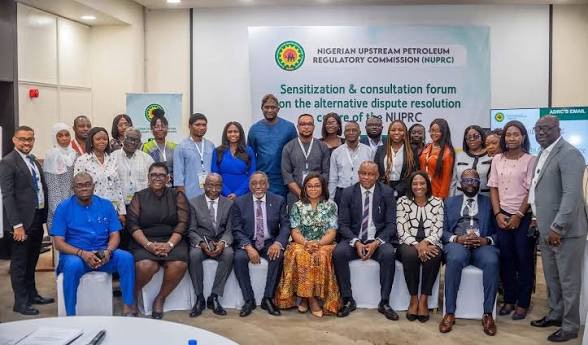
The Commission’s Alternative Dispute Resolution Centre has also been involved in settling some of the disagreements between stakeholders.
Eyesan further clarified that while the RMAFC has shown interest in the activities of host communities, the responsibility for supervising the management of funds under the HCDTs remains with the NUPRC.
She also promised that the Commission would look into the ongoing disagreement between Sterling Oil Exploration and Energy Production Company (SEEPCO) and its host community in Anambra State.
Responding, RMAFC Chairman, Dr Mohammed Bello Shehu, praised the NUPRC for its efforts to improve the oil and gas industry.
Shehu said the upstream petroleum sector remains critical to Nigeria because of its significant contribution to revenue shared through the Federation Account.
He called for closer cooperation between the NUPRC and RMAFC, saying stronger collaboration between both institutions would help promote transparency, development and growth in the sector.
The development of HCDTs is expected to remain an important part of Nigeria’s efforts to ensure that oil-producing communities receive greater benefits from petroleum activities while creating a more stable environment for investment and production.