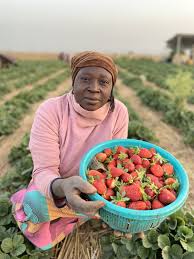

The temperate valleys of the Jos Plateau are currently witnessing a significant agricultural transformation led by a new generation of “agri-preneurs” who are successfully converting highly perishable local crops into a premium national brand. At the forefront of this movement is The Grocery Lady (TGL), an enterprise that has effectively utilized digital platforms to bridge the gap between rural farmers in Plateau State and the escalating demand for fresh, exotic produce in major urban centers like Abuja and Lagos. While strawberry cultivation was once dismissed as unfeasible in the local climate, the Jos Plateau with optimal night temperatures ranging between 7°C and 13°C has proven to be an ideal cradle for the fruit.
The Grocery Lady operates as a sophisticated agricultural aggregator, a model specifically designed to address the primary bottlenecks of logistics and market access that frequently stifle Nigerian smallholders. By adopting a digital-first approach, the brand has demystified strawberry farming through high-quality visual storytelling, building consumer trust by showcasing the “farm-to-table” journey from the volcanic soil of Jos to the final delivery. This strategy is supported by a rigorous “Order-to-Delivery” cycle that accounts for the fruit’s brief shelf life of one to four days, ensuring that berries harvested on a Sunday reach the consumer by Wednesday.
Furthermore, the business has moved toward product diversification to mitigate the systemic issue of post-harvest loss in the Nigerian agricultural sector. By expanding into value-added products such as natural strawberry jams and marmalades, the enterprise ensures that surplus or less aesthetic berries still generate significant revenue. This transition from raw commodity production to processing represents a critical step in stabilizing income for farmers and enhancing the overall value of the domestic strawberry supply chain.
The economic landscape for Nigerian strawberries remains a high-risk, high-reward sector characterized by a significant “cold chain gap”. Data from the Jos Plateau indicates that while peak harvest yields can reach 15 to 30 tons per hectare, there is a staggering 300% markup between farm gate prices and retail shelves in Lagos or Abuja. This price discrepancy is driven almost entirely by the lack of refrigerated infrastructure and reliable air cargo services, which are essential for transporting delicate produce over long distances.
Logistics remains the most pressing challenge for the industry, particularly following the suspension of major air cargo services from Jos in late 2025. Current data suggests that road transport from the north to southern markets results in a 20% to 30% loss rate due to heat and poor road conditions. Nationally, approximately 20% of all Nigerian fruits and vegetables are lost before reaching the consumer, and for delicate berries, this figure can escalate without the intervention of organized aggregators.
The success of boutique models like The Grocery Lady demonstrates a clear appetite among Nigerian consumers for quality and traceability, yet the industry’s long-term sustainability depends on systemic infrastructure investment. For strawberry farming to transition into a national economic pillar, there must be a concerted effort to secure reliable, temperature-controlled transport systems. Resolving this “Runway Problem” is essential to ensuring that the “Red Gold” of Jos contributes meaningfully to GDP, job creation, and the broader diversification of the Nigerian economy.