
Nigeria’s latest fuel relief measure expires today Saturday, October 31, as concerns grow over whether temporary government interventions are doing enough to ease the country’s rising cost of living.
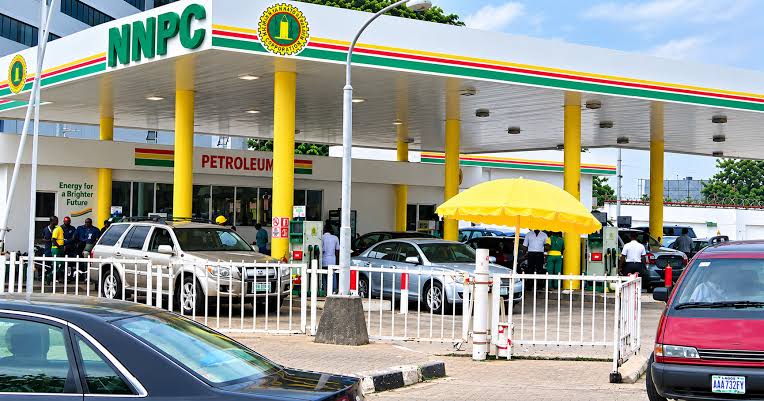
The Nigerian National Petroleum Company Limited’s (NNPCL) 30-day petrol discount, which offered motorists ₦66 off every litre purchased through its retail outlets using the NNPCL Fuel App, ends today. From Sunday, November 1, motorists will lose the discount unless the company announces an extension.
The development comes days after the Federal Government approved a ₦70,000 monthly transport allowance for public service workers for six months, beginning in November, following negotiations with the Nigeria Labour Congress (NLC).
Although the two interventions are intended to cushion the effects of rising living costs, their limited duration and eligibility conditions have raised questions about how much relief they can provide to households already struggling with expensive transportation, food and other essential services.
NNPCL introduced the discount as part of efforts to ease the impact of rising international crude oil prices on Nigerian consumers. The Federal Government announced on October 8 that the company would temporarily forgo its retail profit margin and sell petrol at cost for 30 days.
However, the discount was not automatically available to every customer at the pump.
According to a report by The PUNCH published on October 10, motorists had to download the NNPCL Fuel App and make digital payments to access the ₦66 reduction. Checks at some Abuja outlets showed that customers paying directly at the pumps were still charged the regular price.
The arrangement raised concerns about accessibility, particularly for motorists without smartphones, reliable internet connections or familiarity with digital payment platforms.
It also left questions about whether the savings would translate into lower transport fares, as there was no guarantee that commercial transport operators would pass the full reduction on to passengers.
NNPCL maintained that the initiative was a customer relief measure rather than a return to the petrol subsidy regime.
The temporary nature of the intervention is now becoming another concern as motorists prepare to lose the discount from November 1.
The Federal Government’s new transport allowance has also attracted criticism, despite offering some financial support to public servants.
Under the agreement reached with the NLC on October 27, eligible workers are to receive ₦70,000 monthly for six months, representing a total of ₦420,000 over the period.
The agreement also provides for payment of outstanding peculiar allowances dating back to May 1, 2026, in three equal monthly instalments beginning in November.
However, the Trade Union Congress (TUC) rejected the transport allowance on October 28, arguing that workers need a permanent salary increase rather than another temporary intervention.
In a statement reported by TheCable, TUC President Festus Osifo and Secretary-General Nuhu Toro said the union wanted the government to increase workers’ salaries immediately. The congress also argued that the lowest-paid federal workers should earn ₦300,000 monthly.
The disagreement highlights the continuing tension between government efforts to manage recurrent expenditure and organised labour’s demand for improved wages that reflect the rising cost of living.
The two relief measures also have different limitations. While the NNPC discount was available to customers using the company’s retail outlets and mobile application, the transport allowance is tied to public-service employment.
Consequently, informal-sector workers, traders, artisans, commercial drivers and other Nigerians outside the public service are not direct beneficiaries of the new allowance.
The debate has also extended to the broader question of what has happened to the financial resources generated by the removal of petrol subsidy in May 2023.
In its August 2026 reform briefing, the Federal Government estimated that subsidy removal mobilised ₦15.8 trillion for the federation between June 2023 and December 2025.
However, the resources were shared among the three tiers of government. The Federal Government received approximately ₦5.43 trillion, states received ₦6.52 trillion, while local governments received ₦3.88 trillion.
The figures have intensified public interest in how the additional resources are being used, particularly as households continue to contend with high transportation costs and pressure on purchasing power.
For many Nigerians, the central issue is no longer simply whether government can introduce temporary relief measures, but whether those interventions can produce lasting improvements in living conditions.
As the NNPCL discount expires, attention will turn to whether the Federal Government and other stakeholders can move beyond short-term interventions towards more sustainable solutions involving wages, transportation, public infrastructure and essential services.
The question remains whether Nigerians can expect lasting economic relief or will continue to depend on temporary measures as the cost of living remains high.