The Federal Government’s approval of a ₦70,000 monthly transport allowance for public servants will provide eligible workers with ₦420,000 over six months, but the intervention raises questions about its overall cost, coverage and ability to cushion rising living expenses.
The allowance, scheduled to begin in November 2026 and end in April 2027, was approved following a conciliation meeting between the Federal Government and the Nigeria Labour Congress (NLC) in Abuja on Tuesday, October 27.
According to the memorandum of understanding signed at the meeting, the transport intervention will be paid across all cadre levels for six months.
The agreement was signed by the Minister of Labour and Employment, Muhammad Dingyadi, Director-General of the Budget Office, Timi Yakubu, and Permanent Secretary of the Service Welfare Office, Garba Abdul, alongside NLC President Joe Ajaero and National Secretary of the Joint National Public Service Negotiating Council, Gbenga Olowoyo.
TheCable reported on October 27 that the memorandum did not specify the administrative arrangements for disbursing the allowance or provide details of the payment schedule.
At ₦70,000 monthly, each eligible worker would receive ₦420,000 throughout the six-month period. This means every 100,000 beneficiaries would cost the government ₦7 billion monthly, bringing the total to ₦42 billion.
However, the government and organised labour have not published an official beneficiary figure or the total financial commitment required to implement the intervention.
The agreement also provides for the payment of outstanding peculiar allowance arrears dating back to May 1, 2026, in three equal monthly instalments beginning in November.
In addition, the government agreed to clear 19 months of outstanding allowances owed to health workers within three months, starting in December 2026, according to Premium Times’ October 28 report.
Despite the agreement, important questions remain about the coverage of the transport intervention. Although the memorandum says payments will be made across all levels, it does not clearly identify the categories of eligible workers or explain how individual payments will be processed.
The agreement primarily concerns the Federal Government, while state and local governments were urged to adopt similar interventions within their respective jurisdictions.
The intervention also does not cover private-sector employees, traders, commercial motorcycle and tricycle operators and other informal workers automatically, even though they face the same increases in transportation and living costs.
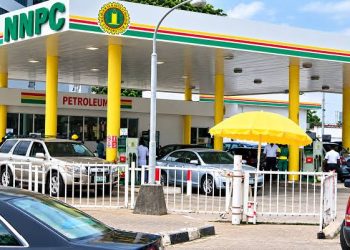
The pressure is reflected in petrol prices. NNPC Retail stations were selling petrol at ₦1,369 per litre in Lagos and ₦1,405 in Abuja as of October 28, following price adjustments, Legit.ng reported on October 28.
The allowance is equivalent to Nigeria’s current national minimum wage of ₦70,000, which was increased from ₦30,000 in 2024. However, the transport intervention is a temporary payment and does not represent an increase in the statutory minimum wage.
Indeed, the Federal Government and the NLC failed to agree on the effective date for implementing the national minimum wage, although both parties agreed to establish a Minimum Wage Negotiation Committee immediately.
The proposed tax relief for workers was also left unresolved and referred to the NLC’s National Executive Council because taxation is a statutory matter.
The intervention comes against a background of easing annual inflation but persistent pressure on household budgets. The National Bureau of Statistics reported on October 15 that headline inflation declined to 14.63% in September from 15.39% in August.
However, core inflation rose to 1.11% month-on-month in September from a contraction of 0.06% in August, indicating that underlying price pressures remained despite the moderation in headline inflation.
The six-month allowance could provide temporary financial relief to eligible workers, but its wider economic impact will depend on the number of beneficiaries, the timing of payments and whether state and local governments adopt similar measures.
The government and labour representatives are expected to reconvene after one month to review implementation, while the transport intervention is scheduled to expire in April 2027 unless extended.