Minister of Power Bayo Adelabu recently initiated a strategic dialogue on stabilizing Nigeria’s electricity sector, emphasizing the urgent need to expand transmission infrastructure and ensure commercial viability. Speaking at the first Nigerian Independent System Operator (NISO) engagement, Adelabu highlighted government priorities: creating a reliable power system that meets national demand, strengthening regulatory coordination with states, and fostering a competitive market to attract investment.
While the government commits to enhancing transmission capacity, improving supply sustainability, and boosting renewable energy integration, the daily reality for millions of Nigerians reveals a deep disconnect between official pronouncements and ground-level service delivery.
The Paradox of Capacity
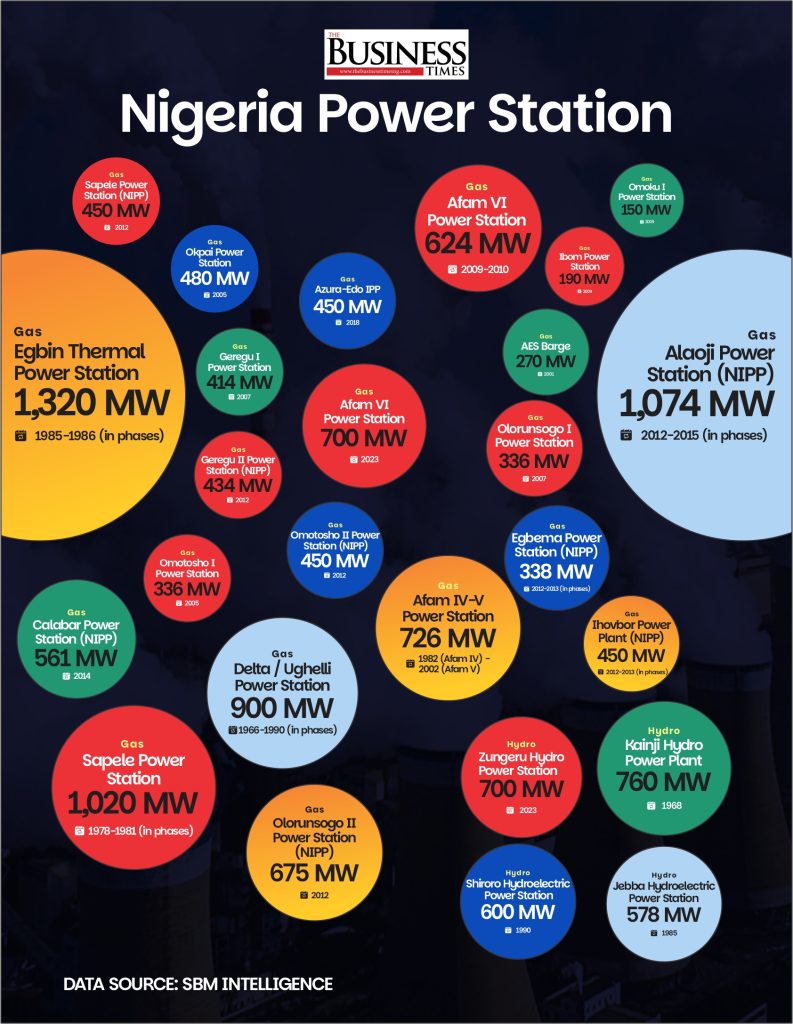
On paper, Nigeria possesses significant generating assets. Installed capacity across major gas and hydro plants exceeds 10,000 Megawatts (MW). Thermal giants like Egbin Thermal Power Station (1,320 MW) and newer National Integrated Power Projects (NIPPs) like Alaoji Power Station (1,074 MW) provide the bulk of the resource. Hydro assets, including the historical Kainji (760 MW) and the recently commissioned Zungeru Hydro Power Station (700 MW), add reliable capacity.
Yet, this potential rarely translates into stable supply. Grid operation frequently hovers between 3,500 MW and 4,500 MW, prompting stakeholders to question the system’s fundamental integrity. Industry analysts point to two critical choke points: insufficient gas supply and an aging, constrained transmission grid.
“The government can build new plants like Zungeru, but if the Transmission Company of Nigeria (TCN) grid cannot wheel the power, or if the Distribution Companies (DisCos) cannot remit the revenue to pay for gas, that capacity remains theoretical,” stated one energy sector consultant.
The Human Cost: When Power Failure Becomes a Health Crisis
The most devastating impact is seen in essential services. The persistent power shortages in the North have turned critical sectors like healthcare into daily crises.
In Kaduna, a hospital’s year-long power outage has severely compromised patient care. Medical staff at the General Hospital are forced to improvise, relying on personal lighting for delicate procedures. A doctor there reported: “I have to wear a torch on my forehead just to care for pregnant women. The lack of power has led to low patient turnout and dropped revenue, making it harder to maintain the generator we rely on.”
The human toll is immediate. Faith Isaac, a patient at the facility, recounted a distressing experience: “Nurses have to use their phone torches for night rounds. A patient next to me fainted after being injected multiple times unsuccessfully in the dark.”
Economic Adaptation and Inflationary Pressure
For the private sector, the Minister’s message of “commercialisation” is currently overshadowed by the cost of self-generation. Business chambers in the South West (Lagos), including LCCI and NACCIMA, have voiced “deep concern” over the erratic power, citing a disruption in production cycles, which severely inflates operational costs and hurts profitability.
In Jos, Auwal Bayya, a local phone charging entrepreneur, has built a business around the blackout. He charges “over a hundred phones daily” for desperate residents, providing income for his family. However, his quote encapsulates the paradox of the energy crisis: the high price of fuel needed to power his generator “cuts deeply into his profits,” showing how the cost of systemic failure is simply transferred to the consumer.
Similarly, in Ibadan, Ebunola Akinwale, who runs Nature’s Treat Cafe, stated that high fuel prices make running “polluting, noisy generators unsustainable.” Akinwale is now “actively seeking a low-cost loan to finance a switch to solar power to ensure survival.” This desperation to exit the grid entirely underscores the lack of confidence in the current centralized system.
The Way Forward
Minister Adelabu’s call for collaboration among operators, regulators, states, and consumers signals a recognition that the problems are systemic and financial, not just technical. The immediate challenge is restoring liquidity to the gas-to-power value chain and rapidly upgrading the transmission bottlenecks that prevent available power from reaching demand centers.
Until these structural and commercial failures are definitively addressed, the country’s high installed power capacity—including plants like Sapele Power Station (commissioned 1978-1981) and Afam VI (commissioned 2009)—will remain an unfulfilled promise, and the financial and human costs of relying on noisy, expensive generators will continue to rise across Nigeria.