
Nigeria’s labour market is being reshaped this year by a handful of industries absorbing the bulk of new hires, as the country’s private sector — which now accounts for 74.4% of total employment against 25.6% in the public sector, according to the National Bureau of Statistics (NBS).
Information and Communications Technology remains the single biggest driver of new jobs in Nigeria this year. According to MyJobMag’s Job Search Report, ICT/Telecommunications tops the list of hiring industries for 2026, ahead of NGOs, education, banking and healthcare. Within tech, software development alone makes up more than 35% of all job listings nationwide, with fintech firms paying mid-level developers between ₦1.2 million and ₦2.8 million monthly, while Nigerians working remotely for foreign companies earn between $2,500 and $10,000 a month.
Fintech in particular has become a jobs engine in its own right. The shift from banking halls to mobile transfers, POS terminals and digital savings apps has created sustained demand for software developers, customer support specialists and cybersecurity professionals, with entry-level cybersecurity roles now starting between ₦4 million and ₦6 million a year.
Despite the tech boom, agriculture remains the country’s biggest source of jobs in raw numbers. NBS data shows farming, forestry and fishing account for 26.1% of Nigeria’s labour force by occupation — more than any other sector — with trade and telecommunications also ranking among the largest employers of labour nationally.
Banking, NGOs, Education and Healthcare Complete the Top Five
Rounding out the top five hiring industries are NGOs, education/teaching, banking, and healthcare/medical, per MyJobMag’s data. Within these sectors, sales, finance and engineering functions carry the highest number of open vacancies. By contrast, pharmaceuticals recorded the fewest job opportunities of any tracked industry.
Healthcare’s job growth is increasingly tied to technology: Statista data cited by MyJobMag places healthcare, finance and agriculture among the industries seeing the sharpest rise in demand for AI-powered tools, as Nigeria’s AI adoption rate reaches an estimated 70%.
A Young, Self-Employed Workforce
Nigeria’s job creation story cannot be separated from the structure of its workforce. Self-employed Nigerians make up 84% of the country’s labour force, NBS figures show, and full-time roles account for 90% of all jobs tracked in MyJobMag’s 2025 Job Search Report. Remote work has also opened a new lane for job creation, with social media manager, product manager and content creator ranking as the three most in-demand remote roles last year.
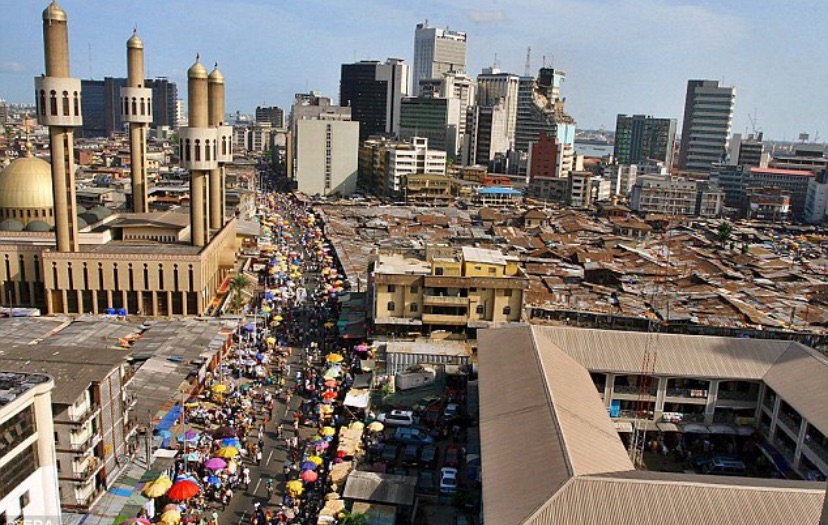
Geographically, job creation remains heavily concentrated: Lagos accounts for more job postings than any other state, followed by Abuja and Rivers, reflecting the continued pull of tech, finance and telecom hubs on the wider labour market.
Sector-level GDP data reinforces the hiring trends: Nigeria’s non-oil economy — anchored by agriculture, trade, telecoms and services — has been the primary driver of growth, expanding by 4.13% in a recent quarter even as the oil sector contracted. With employment in industry (mining, manufacturing, construction and utilities) sitting at 17.88% of total employment, according to World Bank estimates, analysts say Nigeria’s job creation in 2026 is increasingly being driven by services and digital industries rather than traditional heavy industry.
For job seekers, the message from the data is consistent: technology, finance and agriculture remain the three pillars to watch, with healthcare and education close behind as steady, resilient sources of new employment.