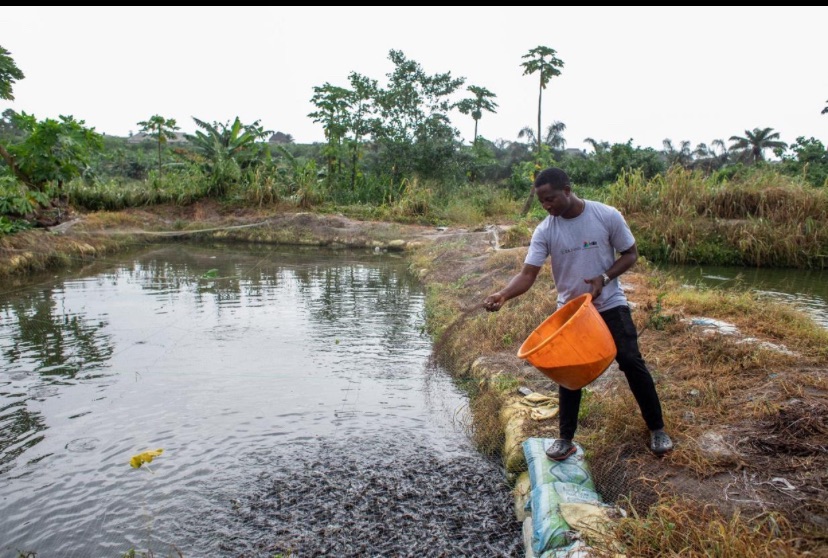

Nigeria’s fish farming industry is experiencing significant growth as rising demand for affordable protein and increasing investment in agriculture continue to attract more farmers and entrepreneurs into the sector.
Across several states including Lagos, Ogun, Rivers, Delta and Kaduna, fish farmers are expanding production to meet the country’s growing appetite for fish, especially catfish and tilapia, which remain among the most consumed seafood products in Nigeria.
Industry stakeholders say the sector has become one of the fastest-growing areas in Nigeria’s agricultural economy due to increasing awareness about food security, job creation and local production. Nigeria remains one of Africa’s largest consumers of fish, but local production still falls short of demand, forcing the country to rely heavily on imports.
Experts estimate that Nigeria consumes more than three million metric tonnes of fish annually, while local farmers produce only a fraction of that volume. This gap has created opportunities for investors, small-scale farmers and agribusiness owners looking to tap into the expanding market.
In recent years, many young Nigerians have turned to fish farming as a source of income amid rising unemployment and economic uncertainty. The business is considered attractive because it requires relatively small land space compared to other forms of farming and can generate profits within a few months if properly managed.
Fish markets across major cities such as Lagos and Abuja have also recorded increased patronage as consumers seek cheaper alternatives to beef and poultry, whose prices have surged due to inflation and rising feed costs.
Speaking on the growth of the industry, agricultural consultant Ibrahim Lawal said fish farming has evolved from a small backyard activity into a serious commercial business in Nigeria.
According to him, improved farming techniques, better access to fingerlings and growing demand from hotels, restaurants and households have helped expand the industry rapidly over the past few years.
“Fish farming is becoming more attractive because Nigerians consume fish almost daily. Farmers who manage their ponds well can make good returns within a short period,” he explained.
However, operators in the sector say several challenges continue to affect profitability. One of the biggest concerns remains the rising cost of fish feed, which accounts for a major part of production expenses. Inflation and foreign exchange instability have also pushed up the prices of equipment and imported materials used in aquaculture.
Some farmers have also raised concerns over poor access to finance, inadequate storage facilities and unstable electricity supply, which affects fish preservation and processing.
Despite these challenges, financial institutions and government agencies are increasingly showing interest in supporting aquaculture businesses through grants, training programmes and agricultural loans aimed at boosting food production.
The Federal Government has repeatedly identified fish farming as a key sector capable of improving nutrition, reducing imports and creating employment opportunities for millions of Nigerians.
Analysts believe that with improved infrastructure, affordable feed production and stronger support for farmers, Nigeria’s aquaculture industry could become a major contributor to the country’s non-oil economy in the coming years.
As demand for locally produced fish continues to rise, many investors are optimistic that fish farming will remain one of the most profitable agribusiness opportunities in Nigeria’s evolving agricultural landscape.