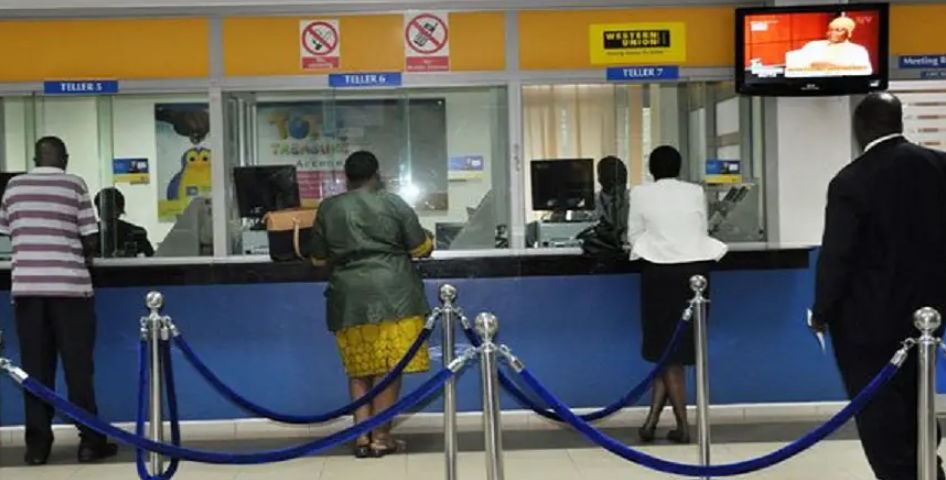

A bill seeking to prohibit casual and contract employment in Nigerian banks has sparked debate over workers’ rights versus operational flexibility. The Nigerian House of Representatives is advancing legislation that could fundamentally reshape employment practices across the country’s banking sector, where an estimated over 60% of workers are employed on casual or contract terms.
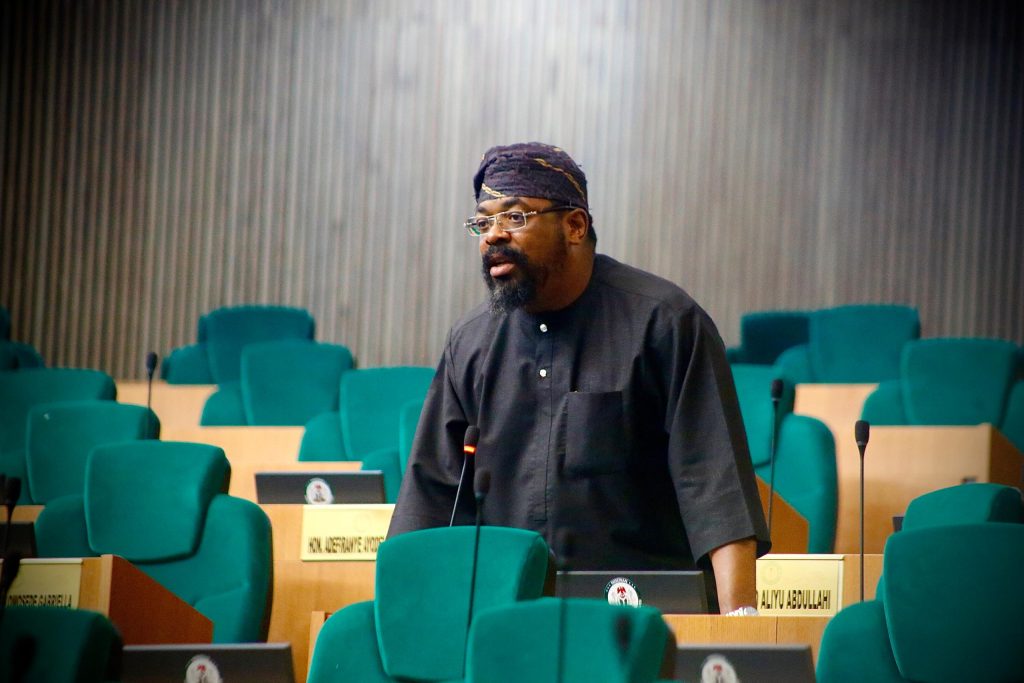
The bill, sponsored by Hon. Fuad Kayode Laguda and currently off to the public hearing stage, seeks to amend the Banks and Other Financial Institutions Act (BOFIA) 2020 to prohibit, criminalise, and penalise the employment of casual or contract staff by Nigerian banks.
In an interview with Business Times, Hon. Laguda emphasised that the bill remains subject to significant changes following stakeholder consultations. “The ultimate goal of the bill is not to eradicate the concept of casual workers, but to achieve better working conditions for them,” he explained. “They should be able to enjoy long-term service as casual staff, together with core employee benefits such as pensions.”
The lawmaker acknowledged the complexity of the issue, noting that even casual workers themselves might resist the changes. “Considering the current Nigerian economic reality and the unemployment situation, some workers would rather stick with the status quo,” he said, adding that the bill is nonetheless “highly called for” to stop exploitation.
The Framework: Penalties and Exemptions
According to details shared by Hon. Laguda, the bill’s Section 48(5) would impose a penalty of ₦50 million on banks found employing casual or contract staff to perform banking business, with additional penalties for continuous violations. Enforcement is anchored on Section 48(4), which empowers the Central Bank of Nigeria to conduct regular audits of banks to ensure compliance, in collaboration with the Ministry of Labour.
However, the legislation includes several exemptions. Section 48(3) distinguishes between exploitative casualisation and legitimate short-term arrangements by exempting bank employees not engaged in performing banking business or services, project-based employment lasting no more than six months, and interns and trainees.
Crucially, the bill directly addresses the role of outsourcing agencies. Section 48(2) stipulates that outsourcing agencies must statutorily employ workers who perform banking business or services under permanent or full-time employment contracts. Both the outsourcing agencies that recruit casual or contract employees for banking services and the banks that hire such workers from these agencies would face penalties under the proposed law.
“Section 48(2) safeguards the affected workers by ensuring they enjoy pension and other benefits provided by existing labour and banking laws or regulations,” Hon. Laguda explained, addressing concerns about whether workers would be genuinely absorbed as permanent staff or simply laid off.
On regulatory alignment, the sponsor noted that formal engagement with the CBN and other regulators “will be achieved through the public hearing on the Bill or other channels,” though the legislation already empowers the CBN to play a central enforcement role.
The Case for Reform
The legislative brief supporting the bill reveals a stark picture of working conditions in Nigeria’s banking sector. It alleges that banks use casual and contract workers to avoid legal obligations, reduce operational costs, and circumvent payments for pensions, minimum wages, health insurance, promotions, bonuses, and severance packages.
According to the bill, this practice violates Section 7(1) of the Labour Act 2004, which stipulates that employees should not work for more than three months without formal recognition of their employment. The bill also references a 2023 report by the Chartered Institute of Bankers of Nigeria (CIBN) that documented widespread use of outsourcing to reduce costs.
The sponsor cited support from Central Bank of Nigeria Governor Olayemi Cardoso, who has reportedly expressed concern about poor working conditions for casual and contract staff in Nigerian banks.
The bill further alleges that banks employ casual workers through outsourcing agencies to avoid personal income tax obligations, subjecting workers to “systemic inequalities, emotional abuses, and mental health challenges.”
Voices from the Frontlines: What Stakeholders Are Saying
As the bill moves to public hearings, clear positions have already emerged from various stakeholder groups:
Workers Speak Out on Exploitation: Contract workers have shared experiences that mirror the bill’s allegations. One banker who worked four years in a Lagos bank lamented that despite handling the same responsibilities as full-time employees, managing accounts, meeting demanding targets, and assisting customers, his monthly salary barely covers basic expenses. Another contract worker who spent six years as a bank teller at a tier two Bank remained at the same entry-level position for the entire period, earning ₦68,000 monthly without a single raise or promotion. One former contract worker recounted working for 14 years without any form of promotion before finally leaving, noting the salary remained “incommensurate with my workload.”
Many contract staff earn well below ₦100,000 monthly and are not eligible for promotions, health insurance, or other perks that core staff enjoy, even though they often work twice as much.
Labour Unions Take a Hard Stance: Comrade Sheikh Muhammed, National General Secretary of the National Union of Banks, Insurance and Financial Institution Employees (NUBIFIE), was quoted to have said that: “Generally, outsourcing, as far as labour is concerned, is an exploitative system.” The NUBIFIE’s leadership has previously warned that the government and financial institutions address the issues, threatening to declare a nationwide strike.
Olusoji Oluwole, National President Association of Senior Staff of Banks, Insurance and Financial Institutions (ASSBIFI), has been reported to state that over 75% of the operational workforce in Nigerian banks are contract staff, warning this development triggers deep concerns about job security, employee welfare, and broader economic implications including operational vulnerabilities, fraud, suppression, espionage, and loss of skills optimisation.
Industry Defends Outsourcing as Business Strategy: The Association of Outsourcing Professionals of Nigeria has defended the practice, citing outsourcing as a professional business strategy, justifying it on the premise that every company wants to reduce costs for doing business. There is also the argument from a legal perspective that there is nothing illegal about having contract staff, as it is a function of contract. From a moral perspective, it has been symbolised to be a case of “half a loaf is better than none.”
Economic Realities and Cost Concerns: A 2022 study by the Nigeria Employers’ Consultative Association revealed that banks save up to 40% on labour costs by outsourcing roles traditionally held by permanent staff. Nigerian banks have been reported to be among the lowest staff costs per revenue globally, attributed to their corporate-focused business models, which are more “staff-lite.” Another 2022 report by SBM Intelligence flagged that the average contract worker in Nigerian banks earns below the national minimum wage when considering deductions made by outsourcing firms. The question remains whether the proposed ₦50 million penalty per violation and costs of converting workers to permanent status would fundamentally alter this economic calculus or simply be absorbed as a cost of doing business.
Regulatory Gaps and Governance Concerns: The regulatory landscape surrounding contract workers in Nigerian banks has been described as insufficient, with concerns raised about oversight mechanisms. The Nigeria Deposit Insurance Corporation has identified potential risks associated with heavy reliance on casual workers, including increased exposure to fraud and security vulnerabilities within the banking industry. Industry observers note that while contract staffing exists globally as a mechanism for employing highly skilled, well-compensated workers for specific projects, the Nigerian implementation differs significantly, often lacking clear terms of engagement or adequate protections. Labour unions have campaigned against current practices for years, though their efforts have yet to yield substantial policy changes at the regulatory level.
The Central Bank of Nigeria, which would gain significant enforcement powers under the bill, has yet to formally respond to the legislation. The bill grants the CBN authority to conduct regular audits of banks and collaborate with the Ministry of Labour, responsibilities that could require new regulatory infrastructure and expertise in labour standards enforcement, which traditionally falls outside the CBN’s financial stability mandate.
A Difficult Road Ahead
Hon. Laguda acknowledges that altering the status quo will be challenging, as the practice of employing casual workers “has long been entrenched.” The Chairman of the House Committee on Banking has seconded the bill, signalling institutional support, but the lawmaker stressed that his answers “cannot be affirmative” until after public hearings incorporate stakeholder input.
The fact that formal engagement with the CBN and other regulators has yet to occur, planned instead for the public hearing stage, suggests that significant technical discussions lie ahead. The bill grants the CBN substantial enforcement powers, including regular audits of banks, which could require new regulatory infrastructure and staffing.
The bill sponsor’s acknowledgement that it carries both pros and cons reflects the delicate balance lawmakers must strike. While aiming to protect workers from exploitation, the legislation could have significant implications for businesses providing outsourcing services to banks, potentially affecting thousands of jobs in that sector.
The six-month exemption for project-based work, while intended to preserve operational flexibility, could become a loophole if not carefully monitored. Critics may argue that banks could restructure permanent roles into perpetual six-month contracts, technically complying with the letter of the law while undermining its spirit.
The public hearing stage will be critical in determining whether the bill can achieve its stated goal of better working conditions without triggering mass layoffs or operational disruptions in Nigeria’s vital banking sector. With penalties of ₦50 million per violation and additional sanctions for continued non-compliance, the financial stakes are high for banks, potentially forcing genuine structural change rather than cosmetic adjustments.
As the debate unfolds, the tension between worker protection and business flexibility will test Nigeria’s ability to modernise labour practices in one of its most important economic sectors, a challenge that resonates across many developing economies grappling with similar issues of precarious employment.