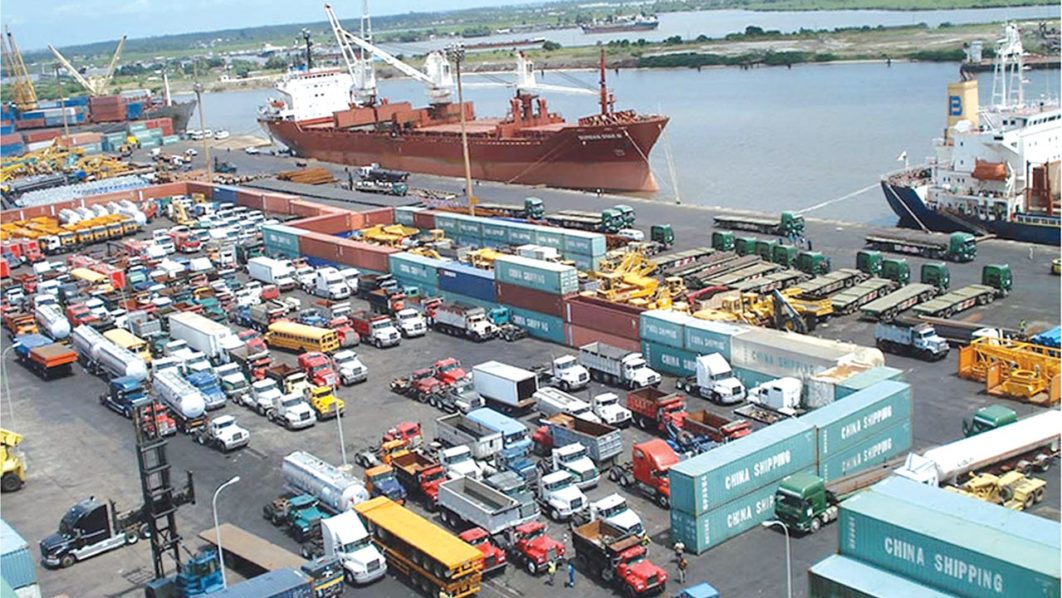

Nigeria’s seaports recorded strong growth in cargo activity in 2025, with total throughput rising by 24.8 percent to 129.3 million metric tonnes, according to the Nigerian Ports Authority (NPA).
The figures, contained in the agency’s 2025 operational performance report released on Wednesday, represent an increase from the 103.6 million metric tonnes handled in 2024. The authority described the expansion as one of the most significant annual growth rates in recent maritime history.
Imports continued to account for the larger share of cargo traffic at 59.2 percent, while exports contributed 39 percent of total throughput. Transshipment made up the remaining 1.8 percent.
Container traffic also posted robust gains. “Containerized cargo, a key indicator of export trade activity, grew significantly. Total container traffic increased by 25.7 percent, surpassing 2.1 million twenty-foot equivalent units (TEUs),” the NPA said.
“Of this, export containers grew by 3.1 percent, while import-laden containers surged by 32.8 percent.”
The report highlighted a sharp 205.8 percent rise in transshipment containers, underscoring Nigeria’s growing role in regional maritime logistics.
Lekki Deep Sea Port emerged as the top-performing port, accounting for 40.6 percent of total cargo volumes. Onne Port followed with 19.1 percent, while Apapa Port handled 16.7 percent.
“In addition to volume, Lekki Port attracted the largest vessels, with an average Gross Registered Tonnage (GRT) of 55,712, slightly higher than Onne Port at 53,022 GRT,” the report stated.
Although Tin Can Island Port recorded the highest frequency of ship calls at 22.7 percent, the NPA noted a shift toward larger vessels calling at Lekki and Onne. Overall ship calls increased by nearly 12 percent to 4,477 vessels in 2025.
By cargo type, liquid bulk, including petroleum products and chemicals, dominated with 54.7 percent of throughput, while containerised cargo accounted for 24 percent.
Managing Director of the NPA, Abubakar Dantsoho, said the performance reinforces Nigeria’s competitiveness in regional and global trade.
Looking ahead, he said growth would be supported by the federal government’s port modernisation programme and implementation of a national single window system. The initiative aims to rehabilitate ageing infrastructure, deepen berths, expand cargo-handling capacity and deploy digital solutions to reduce vessel turnaround time and improve efficiency across the port network.
The NPA added that the surge in transshipment volumes positions Nigeria as an emerging regional logistics hub, attracting more international shipping lines and strengthening revenue prospects.