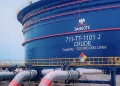

Nigeria’s Bonny Light crude settled near $67 a barrel on Monday as global oil prices rebounded sharply, driven by renewed optimism that potential trade talks between Washington and Beijing could ease tensions that had rattled markets last week.
After tumbling more than 4 per cent on Friday to their lowest levels since early May, crude prices staged a strong recovery in the week’s opening session. Brent crude climbed to $63.76 per barrel, while WTI rose 2 per cent to $59.92, buoyed by bargain hunting and expectations of a diplomatic thaw between the United States and China.
Cautious optimism returns to global energy markets
Investors took heart from comments made by U.S. President Donald Trump on Truth Social, where he insisted that America wanted to “help China, not hurt it,” adding that the Chinese economy “will be fine.” However, his remarks came just a day after he threatened to impose 100 per cent tariffs on Chinese imports, while dismissing the need for a meeting with President Xi Jinping at the upcoming summit in South Korea.
Beijing quickly responded, warning it would retaliate if Washington did not withdraw its tariff threat. The standoff has kept markets on edge, though traders appear to be betting on eventual compromise.
Last week’s steep selloff was triggered by growing geopolitical jitters and China’s decision to tighten rare earth export restrictions, widely seen as retaliation against new U.S. trade controls. Trump had announced fresh plans to extend export restrictions on “critical software” and slap sweeping tariffs on all Chinese goods by November 1.
Analysts at Goldman Sachs said both sides were likely to backtrack from their most aggressive trade positions, suggesting that upcoming negotiations could produce a temporary extension of the tariff truce first reached in May.
Nigeria launches first fully owned FSO vessel
In a significant domestic development, Nigeria has commissioned its first fully owned Floating Storage and Offloading (FSO) vessel near the Bonny export terminal. The new facility, with a storage capacity of 2.2 million barrels, is designed to boost crude production and streamline exports from Oil Mining Lease 18 and nearby assets in the Eastern Niger Delta.
Officials say the FSO will reduce dependence on pipelines, curb oil theft, and minimise disruptions caused by vandalism — persistent challenges for Africa’s largest crude producer.
Meanwhile, OPEC+ continues to maintain its cautious approach to production, gradually unwinding voluntary cuts to prevent a market glut. The group’s restraint, combined with easing fears over Middle East supply disruptions after a ceasefire in Gaza, has helped stabilise prices in recent weeks.
With markets delicately balanced between economic uncertainty and diplomatic hopes, analysts expect volatility to persist. Still, crude could find stronger support if trade negotiations progress and global demand indicators strengthen in the coming days.