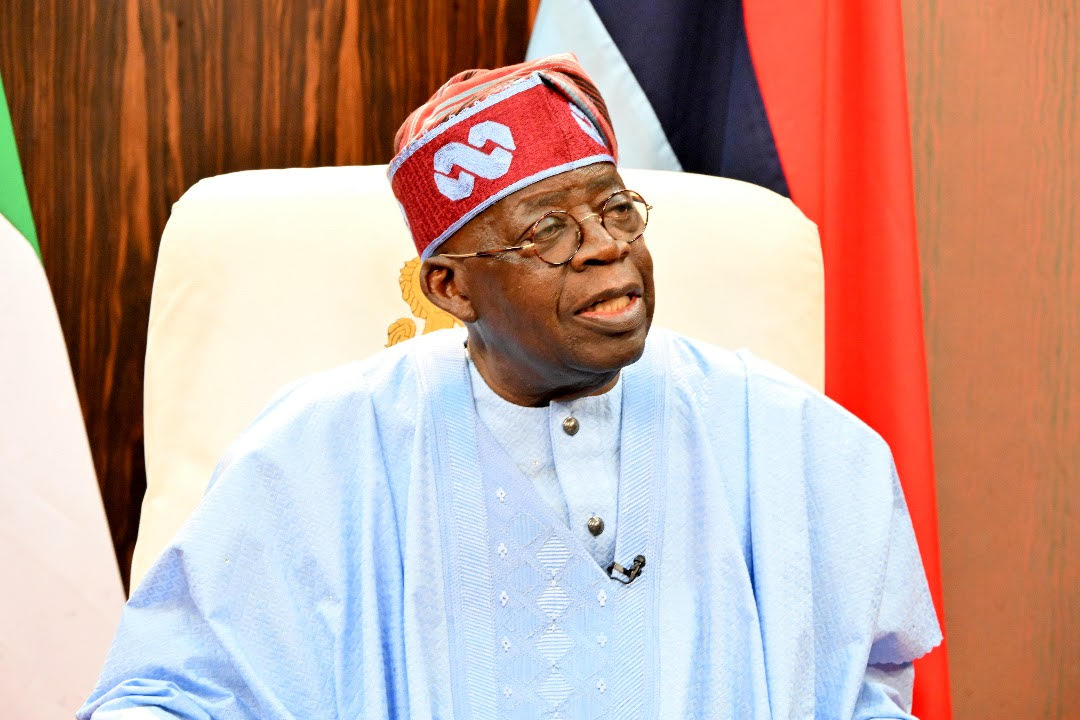

Nigeria is stepping up efforts to finance its energy transition, with President Bola Tinubu on Tuesday unveiling plans for a $2 billion climate fund, signalling a renewed push to harness private and international capital for sustainable development. Speaking at Abu Dhabi Sustainability Week, Tinubu highlighted the strong investor appetite for climate initiatives, citing oversubscribed green bonds as evidence of confidence in Nigeria’s green financing agenda.
Central to the government’s plans is the Climate Investment Platform, designed to mobilise $500 million towards climate-resilient infrastructure projects. Complementing this is the National Climate Change Fund, which targets $2 billion to support emissions-reduction initiatives and climate adaptation programmes across sectors such as renewable energy, agriculture, and urban infrastructure. Tinubu framed these initiatives as critical to Nigeria’s broader energy and economic strategy, linking climate action to industrial growth, job creation, and regional competitiveness.
The president also announced a Comprehensive Economic Partnership Agreement with the United Arab Emirates, aimed at boosting bilateral trade and investment in renewable energy, aviation, agriculture, digital commerce, and climate-smart infrastructure. Analysts say this agreement could serve as a model for leveraging international partnerships to accelerate Nigeria’s green transition, particularly by attracting technology transfer, project financing, and foreign direct investment in sectors aligned with net-zero ambitions.
Nigeria has committed to achieving net-zero greenhouse gas emissions by 2060, a target that will require sustained capital mobilisation and regulatory reform. The government estimates that $25–$30 billion annually will be needed to support renewable energy projects, climate adaptation measures, and resilient infrastructure. To bridge the financing gap, authorities are exploring blended finance structures that combine public funds, concessional loans, and private investment. Initiatives such as the Nigeria Sovereign Investment Authority’s $500 million renewable energy fund are expected to play a catalytic role, incentivising commercial banks and private investors to participate in the emerging climate economy.
The economic implications of this pivot towards green finance are significant. By channelling resources into low-carbon infrastructure and energy projects, Nigeria aims to reduce its reliance on fossil fuels while fostering industrial modernisation, creating high-skilled jobs, and enhancing energy security. Green investments also offer the potential to stabilise revenue streams in a country heavily dependent on oil exports, providing alternative sources of growth and resilience against global energy market shocks.
However, challenges remain. Effective implementation of climate finance initiatives will require robust governance, transparency, and project oversight to ensure that funds are deployed efficiently and equitably. Experts note that mobilising billions in private capital hinges on predictable policy frameworks, credible risk mitigation mechanisms, and measurable environmental and social outcomes. Without these safeguards, investor confidence could waver despite the promising appetite demonstrated by green bond issuances.
Nigeria’s focus on climate-smart finance also aligns with broader regional and global trends, as African nations increasingly turn to blended finance, sovereign-backed investment platforms, and public-private partnerships to meet ambitious climate and development goals. By combining policy reforms with strategic partnerships, such as the UAE agreement, Nigeria is positioning itself as a frontier market for sustainable investment, signalling to global investors that the country is open for climate-related capital inflows.
Nigeria’s unveiling of a $2 billion climate fund and complementary financing platforms marks a decisive step towards leveraging green finance to drive the country’s energy transition. Beyond environmental benefits, these initiatives have the potential to catalyse economic growth, strengthen investor confidence, and accelerate the development of climate-resilient infrastructure. While execution will be key, the government’s approach demonstrates a strategic alignment of climate policy with economic imperatives, signalling a new era for sustainable development in Africa’s largest economy.