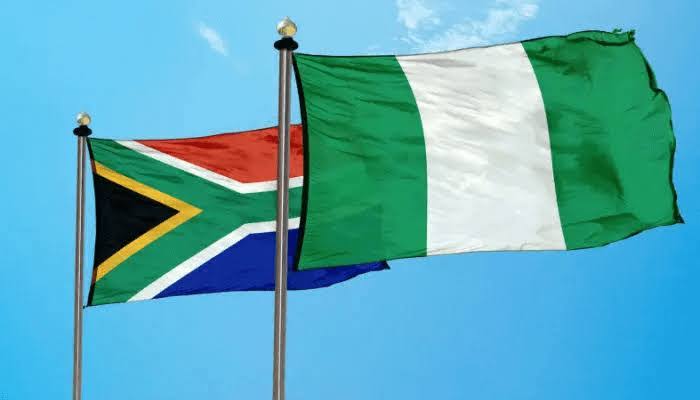

Nigeria and South Africa, two of Africa’s largest economies, are on track to exit the global financial watchdog’s so-called “gray list” later this month, in what could mark a turning point for investor confidence and capital inflows into the continent.
The Paris-based Financial Action Task Force (FATF) placed both countries under increased monitoring in February 2023, citing shortcomings in their efforts to combat money laundering, terrorist financing, and other illicit financial flows.
Since then, governments in Abuja and Pretoria have embarked on sweeping reforms to strengthen regulatory oversight, bolster compliance frameworks, and close loopholes in their financial systems.
Recent on-site inspections by FATF assessors found that Nigeria, South Africa, as well as Mozambique and Burkina Faso, had made “substantial progress” in implementing their respective action plans, according to people familiar with the matter.
The FATF is expected to vote on their removal during its October 24 plenary in Paris.
While no final decision has been taken, officials suggest consensus among the body’s members—including the United States, United Kingdom, European Commission, China, Japan, and India—leans toward delisting.
Investor Sentiment on the Line
Global investors pay close attention to FATF recommendations. A gray-listing designation often sends a damaging signal, casting doubt on a country’s financial integrity and increasing the cost of doing business. A 2021 International Monetary Fund (IMF) study concluded that countries placed on the gray list typically suffer a “large and statistically significant reduction in capital inflows.”
Lauren van Biljon, senior portfolio manager at Allspring Global Investments UK Ltd., said delisting would be “confirmation that the reforms and measures put in place in the wake of the gray listing are both significant and sticky.”
While the direct market impact might be modest, she added, the development could spark a short-term boost in asset prices.
Officials in both Nigeria and South Africa are treating the possible delisting as a milestone achievement. Temitope Ajayi, a Nigerian government spokesman, said the move would underscore “the remarkable work the government is doing in fulfilling our global obligations and making Nigeria more attractive to investors.”
South Africa’s National Treasury declined to comment ahead of the FATF decision, though in July it announced that the country had “substantially completed all 22 action items” required for removal.
Progress Across Africa
Mozambique has also advanced, with authorities confirming completion of 26 required actions to qualify for delisting. “We expect a good result, but we don’t know—we need to wait,” said Luís Abel Cezerilo, the country’s national coordinator for gray-list removal. Mozambique’s potential exit is particularly significant as energy giant TotalEnergies prepares to resume its $20 billion liquefied natural gas project in the north of the country.
Burkina Faso, too, has implemented all 37 FATF-mandated reforms, according to Madi Tapsoba of the Inter-Governmental Action Group against Money Laundering in West Africa (GIABA).
Government officials there, however, have yet to formally comment.
The FATF, chaired by Mexican official Elisa de Anda Madrazo, has recently overhauled its gray-listing criteria. The body now places greater scrutiny on its wealthiest members while easing the pressure on least-developed economies that pose a lower systemic risk. Beyond policing money laundering and terrorist financing, the FATF also sets global standards on emerging challenges—from virtual asset regulation to online extortion crimes.
If confirmed, the October delisting would mark a reputational boost for Nigeria, South Africa, Mozambique, and Burkina Faso, ending nearly two years of scrutiny that dampened investor sentiment. For Nigeria and South Africa in particular, the move could not only help repair their financial credibility but also signal to international markets that reforms are beginning to stick.