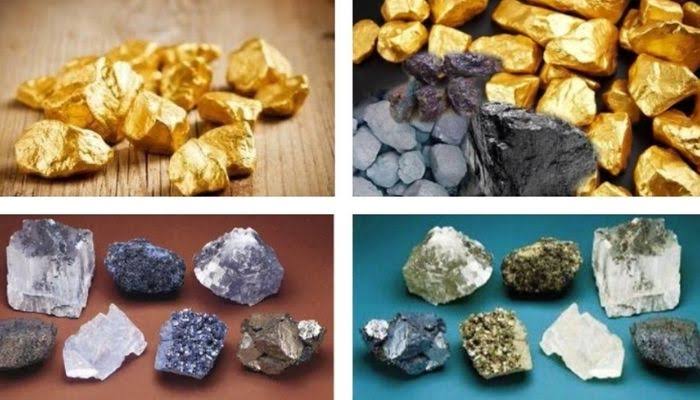

Nigeria’s solid minerals sector is showing renewed momentum as government reforms seek to reduce the country’s dependence on crude oil and unlock the potential of its vast mineral resources. According to the Ministry of Solid Minerals Development, Nigeria is endowed with more than 44 commercially viable minerals found in over 500 locations nationwide, including gold, lithium, iron ore, coal, bitumen, barite and gemstones.
Data from the National Bureau of Statistics (NBS) show that the broader mining and quarrying sector—which includes crude petroleum and natural gas—grew by 4.61% year-on-year in the second quarter of 2025, with quarrying and other minerals recording the strongest performance at 50.41%. The sector accounted for 2.98% of nominal GDP in Q2 2025, down from 3.40% a year earlier. Separately, the Minister of Solid Minerals Development, Dele Alake, has said that when isolating solid minerals exclusively (excluding hydrocarbons), the sector’s contribution to GDP has risen to about 1.8%, up from less than 0.5% before the current reform programme.
Nigeria holds significant deposits of strategic minerals needed for the global energy transition. Geological surveys have identified commercially significant lithium deposits in Kaduna, Nasarawa, Ekiti, Oyo, Kogi, Kwara, Niger, Plateau and the Federal Capital Territory. While no official valuation has been published, industry estimates place the potential value of the country’s lithium resources at more than $34 billion. Nigeria is also estimated to possess about 42.47 billion metric tonnes of bitumen, more than 3 billion tonnes of iron ore, and between 2 billion and 2.8 billion tonnes of inferred coal resources (with proven reserves estimated at 379 million tonnes).
Since 2023, the Federal Government has introduced a series of reforms aimed at formalising the sector and attracting investment. According to the Ministry, 3,794 inactive mineral titles had been revoked as of September 2025, while Mining Marshals were deployed to combat illegal mining and improve regulatory compliance.
The ministry also says the reforms have attracted about $2.6 billion in investment commitments, including a proposed $1.3 billion alumina refinery project, while government revenue from the sector increased from about ₦16 billion in 2023 to more than ₦70 billion in 2025. It added that solid minerals exports reached approximately ₦354 billion in 2025.
In June 2026, the government launched the Early-Stage Mineral Exploration and Research Grant Endowment (EMERGE), a programme designed to support geoscience research in Nigerian universities and improve geological data needed to attract long-term investment.
The government aims to increase the solid minerals sector’s contribution to GDP to 3% by 2030. Industry analysts say achieving that target will require sustained policy implementation, improved infrastructure, expanded geological exploration, stronger enforcement against illegal mining and greater private-sector investment.