
Nigeria has secured the repatriation of more than $9.5 million traced to the proceeds of corruption from the Bailiwick of Jersey, in a move authorities say underscores the growing effectiveness of international cooperation in asset recovery and anti-corruption enforcement.
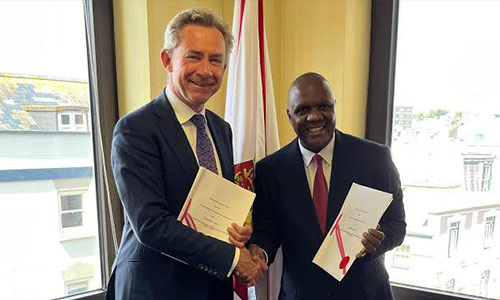
The agreement is set out in a Memorandum of Understanding (MoU) signed in December 2025 by Jersey’s Attorney General, Mark Temple KC, authorising the return of the funds to the Federal Government of Nigeria. The money will be channelled towards key infrastructure projects, continuing a pattern established under earlier asset recovery arrangements between both jurisdictions.
The funds were forfeited following civil proceedings brought by Jersey’s Attorney General before the Royal Court of Jersey in November 2023, under the Forfeiture of Assets (Civil Proceedings) (Jersey) Law 2018. In a ruling delivered on 12 January 2024, the court held that the assets were “more likely than not the proceeds of a corrupt scheme”, finding that Nigerian public funds had been diverted by contractors for the benefit of senior public officials and their associates.
The latest repatriation builds on previous Nigeria–Jersey cooperation that has resulted in the return of more than $300 million over the past decade. Those funds were deployed to major infrastructure projects, including the Lagos–Ibadan Expressway and the Second Niger Bridge, both of which have since been completed. Under the new MoU, the $9.5 million will be applied to the final stages of the 375-kilometre Abuja–Kano Road, a strategic transport corridor linking Nigeria’s federal capital to several commercial and agricultural hubs in the north.
For Nigeria, the economic implications of the recovery extend beyond the nominal value of the funds. At a time of fiscal pressure, rising debt servicing costs and constrained public revenues, asset repatriation provides an alternative source of capital for priority spending without adding to the country’s borrowing burden. Infrastructure investment, particularly in road networks, has been identified by policymakers as a key driver of economic growth, trade facilitation and job creation.
The Abuja–Kano Road, in particular, is regarded as economically critical. Once completed, it is expected to reduce travel time, lower transport costs for goods and services, and improve access to markets across northern Nigeria. Economists argue that improved connectivity could stimulate agricultural value chains, enhance regional trade and contribute to broader efforts to rebalance economic activity beyond the country’s southern corridors.
Beyond its direct fiscal impact, the repatriation also sends a strong signal to international markets and development partners. Nigeria has long struggled with perceptions of weak governance and endemic corruption, factors that have weighed on investor confidence. Demonstrable success in tracing, confiscating and transparently redeploying stolen assets may help improve the country’s credibility, particularly as it seeks to attract foreign investment and concessional financing.
Speaking on the development, Nigeria’s Attorney General of the Federation and Minister of Justice, Lateef Fagbemi SAN, described the recovery as evidence that illicitly acquired assets can no longer be safely hidden abroad. “The successful recovery and repatriation of the forfeited assets ensures that there is no safe haven for wealth or assets derived from corruption, even when moved to foreign jurisdictions,” he said.
Fagbemi also thanked the government of Jersey for its cooperation, assuring that the funds would be utilised strictly in line with the terms of the MoU. Transparency in the use of repatriated assets has been a recurring concern among civil society groups, particularly after earlier recoveries, including funds linked to former military ruler Sani Abacha. In recent years, Nigeria has sought to address these concerns by tying repatriated funds to specific, monitorable projects.
Jersey’s Attorney General, Mark Temple KC, said the case highlighted the strength of the island’s civil forfeiture framework. “This successful return demonstrates the effectiveness of our civil forfeiture legislation as a powerful tool in the fight against corruption,” he said, praising both Nigerian authorities and Jersey’s Economic Crime and Confiscation Unit for their cooperation and persistence.
The case also reflects a broader international trend towards more aggressive asset recovery efforts, particularly in financial centres that have come under pressure to strengthen anti-money laundering controls. Jurisdictions such as Jersey, Switzerland and the United Kingdom have increasingly relied on civil forfeiture and unexplained wealth mechanisms to seize assets suspected to be linked to corruption, even in the absence of criminal convictions.
For Nigeria, sustained success in this area will depend not only on foreign cooperation but also on domestic reforms, including stronger procurement oversight, improved financial intelligence capabilities and credible prosecution of corruption cases at home. Analysts note that while asset recovery is important, preventing the initial diversion of public funds remains the more economically efficient strategy.
Still, the latest repatriation represents a modest but symbolically significant gain. As Nigeria continues to grapple with economic headwinds, the return of stolen assets and their visible deployment in public infrastructure offer both tangible benefits and a reminder that international partnerships can play a meaningful role in addressing long-standing governance challenges.