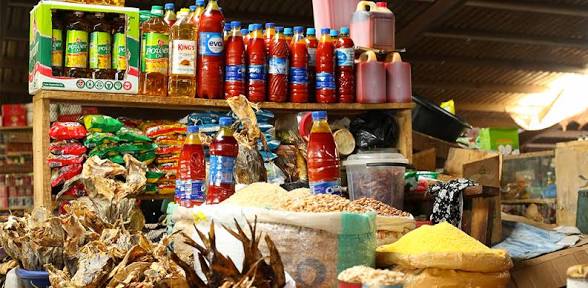

Nigeria’s retail economy is being shaped increasingly by the small shops, kiosks and neighbourhood markets that sit closest to consumers, highlighting the limits of a supermarket-led model in a price-sensitive market.
Informal retail has long dominated Nigeria. Oxford Business Group said neighbourhood markets and kiosks accounted for about 90% of retail activity, while a later OBG analysis, citing a 2022 Boston Consulting Group study, put small-scale retailers at about 600,000 and said they accounted for 97% of national retail transactions. Those figures are not 2026 measurements, but they illustrate the structural advantage traditional retailers have built over modern chains.
That advantage becomes more important when household purchasing power is under pressure. Consumers can buy smaller quantities from nearby stores, avoid the transport costs of travelling to large shopping centres and restock more frequently instead of committing scarce cash to large shopping baskets.
Nigeria’s prolonged cost-of-living pressures have reinforced demand for smaller packs and essential goods. OBG has previously identified price sensitivity and demand for smaller packaging as important opportunities within the Nigerian retail market.
The result is a retail model built around cash flow rather than bulk buying. A shopper may purchase only what is needed for the day or week, making the neighbourhood retailer particularly well suited to constrained household budgets.
The role of small retailers is also expanding beyond merchandise.
Nigeria’s point-of-sale network has become a major part of the country’s payments infrastructure. POS terminals processed ₦18.78 trillion in transactions in the first quarter of 2026, according to figures attributed to NIBSS, giving many neighbourhood businesses another reason for consumers to visit them.
A single location can therefore combine grocery sales with cash withdrawals, transfers and other basic financial services. That multifunctional role strengthens customer traffic and gives small retailers an advantage that conventional supermarkets do not always replicate.
Modern retail is not disappearing. It is being forced to compete on different terms.
Shoprite remains active in Nigeria, while Game exited the country in December 2022 after Massmart decided to close its West African operations.
For formal retailers and fast-moving consumer goods companies, the lesson is increasingly clear: scale alone does not guarantee access to Nigeria’s consumers. Distribution must reach the thousands of small outlets where everyday purchases actually occur.
Nigeria’s retail future is therefore unlikely to be a simple victory for either supermarkets or kiosks. Modern retailers can still compete through convenience, product range and organised shopping, while neighbourhood stores retain their strongest weapons: proximity, flexibility and low-cost, frequent purchasing.
For manufacturers, distributors and investors, the bigger opportunity may lie in connecting both worlds, using technology, payments and more efficient distribution to bring formal supply chains deeper into the informal economy.
The corner shop is not replacing the supermarket. It is showing the market where the Nigerian consumer already is.