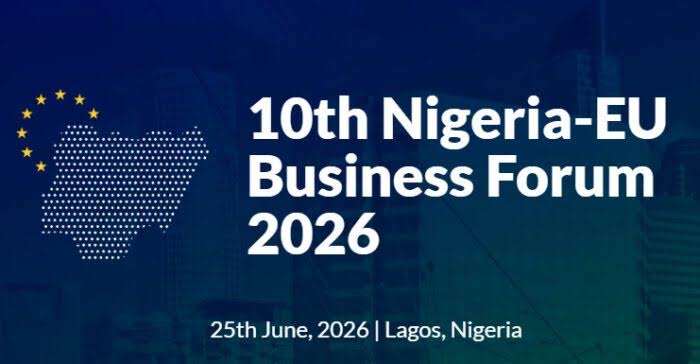

Nigeria and the European Union are intensifying efforts to strengthen trade and investment relations through the Nigeria-EU Business Forum, a structured platform for dialogue between policymakers, investors, and private-sector leaders.
The most recent edition of the forum, held in Abuja in July 2024, convened stakeholders across agriculture, manufacturing, renewable energy, digital technology, healthcare, and infrastructure. The discussions underscored both the scale of opportunity in Africa’s largest economy and the persistent challenges shaping investor sentiment.
The European Union remains one of Nigeria’s most significant economic partners, with extensive trade ties and a long-standing presence of European firms in sectors such as energy, telecommunications, financial services, logistics, and consumer goods. The relationship continues to serve as a key pillar of Nigeria’s external investment and trade engagement strategy.
Despite renewed optimism, investors continue to flag structural constraints that affect capital inflows and long-term planning. Chief among these are foreign-exchange liquidity pressures, currency volatility, regulatory uncertainty, infrastructure deficits, and security risks in parts of the country. While recent policy adjustments have been welcomed, many investors remain cautious about execution and consistency.
A Lagos-based investment analyst noted that predictability remains central to investment decisions. “Nigeria’s market fundamentals remain attractive, but investors are prioritising clarity on FX access, taxation, and regulatory stability before committing significant long-term capital,” the analyst said.
Economic reforms under the administration of President Bola Ahmed Tinubu, including fuel subsidy removal and foreign-exchange market adjustments have been presented as efforts to restore macroeconomic stability and improve investor confidence. However, their short-term impact has also contributed to higher operating costs and transitional market pressures.
On the European side, engagement with Nigeria continues under broader frameworks such as the EU’s Global Gateway strategy, which supports infrastructure, digital economy development, and climate-related investment initiatives. Officials have consistently described Nigeria as a strategic partner in Africa’s economic transformation agenda.
However, the gap between policy dialogue and investment execution remains a key concern. Businesses continue to call for clearer tax rules, stronger dispute-resolution mechanisms, improved contract enforcement, and more predictable regulatory processes.
Analysts suggest that while the Nigeria-EU Business Forum provides an important platform for engagement, its effectiveness will ultimately be judged by tangible outcomes, particularly the scale of capital inflows, project delivery, and job creation it helps unlock.
For Nigeria, sustaining investor confidence will depend on continued progress in macroeconomic stabilisation, infrastructure development, and institutional reforms. For European investors, the focus remains on translating strategic interest into bankable, secure, and scalable opportunities.
The forum therefore reflects both progress and caution: a strengthening of diplomatic and economic ties, but also a reminder that structural constraints continue to shape the pace and depth of Nigeria’s investment story.