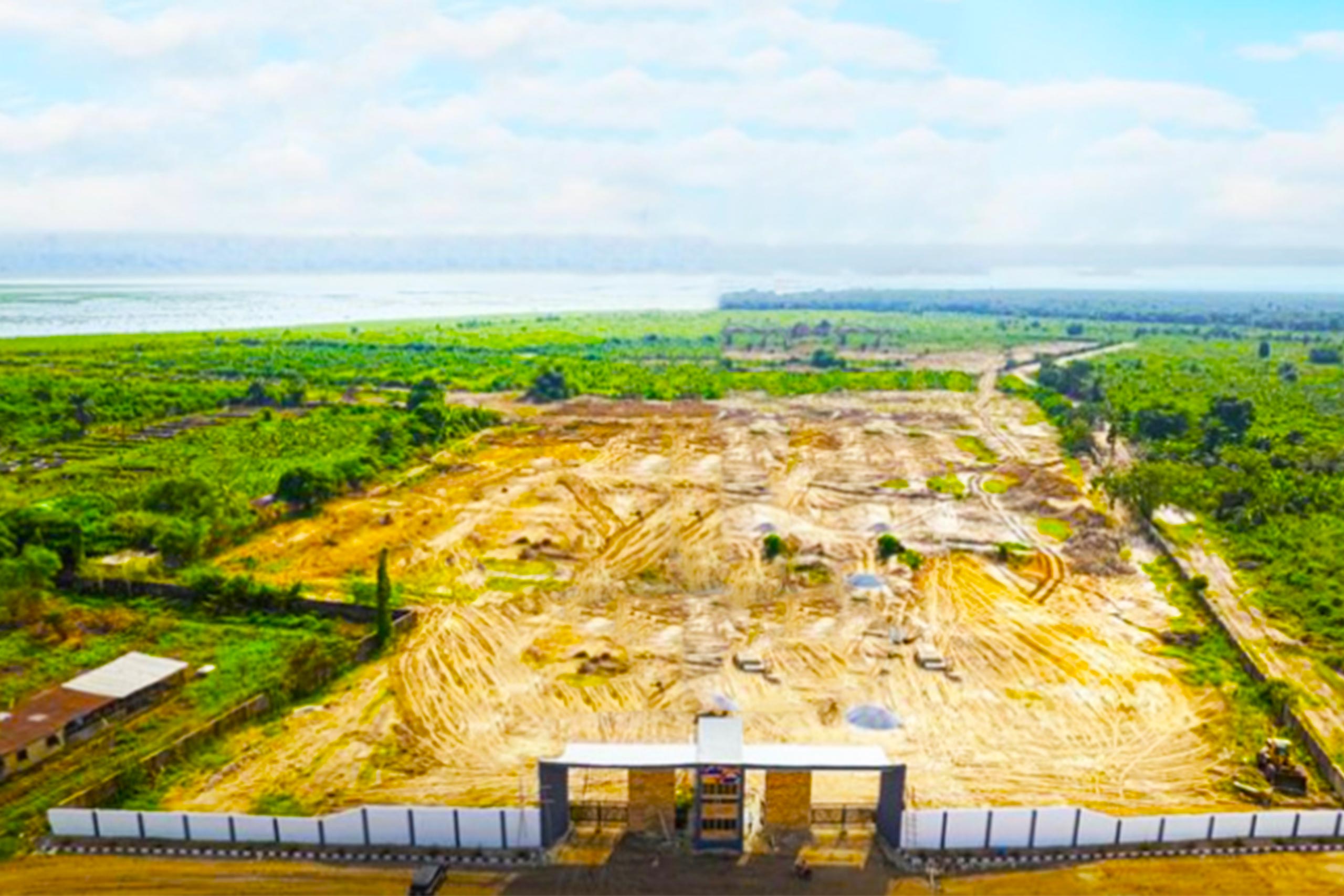

Once known primarily for fishing and farming communities, the Epe–Ibeju-Lekki corridor has become one of Nigeria’s fastest-growing real estate markets, driven by a wave of industrial and infrastructure investments reshaping Lagos’ eastern axis.
The transformation is being powered by major projects including the Dangote Petroleum Refinery, the Lekki Deep Sea Port, the 16,500-hectare Lekki Free Zone (LFZ), and ongoing road infrastructure such as the Lagos-Calabar Coastal Highway. Together with large-scale developments such as Alaro City, these investments have attracted manufacturers, logistics operators, commercial developers and institutional investors, increasing demand for residential, commercial and industrial land.
The surge in investment has translated into significant appreciation in land values. Property professionals say land in parts of Ibeju-Lekki that sold for less than ₦1 million more than a decade ago now commands several million naira, with premium locations fetching substantially higher prices. However, values vary considerably depending on location, infrastructure access, title documentation and the level of surrounding development.
While the area’s long-term growth prospects remain strong, analysts caution that investors should distinguish between genuine demand driven by industrial expansion and speculative price increases.
The rapid pace of development has also exposed regulatory and governance challenges. In 2025, the Lagos State Government published a list of 176 estates operating without the required planning approvals across Eti-Osa, Ibeju-Lekki and Epe, urging prospective buyers to verify land titles, planning permits and other statutory documents before completing transactions.
Industry stakeholders say fraudulent land sales, forged documents and multiple allocations of the same property remain among the biggest risks facing buyers, underscoring the need for thorough due diligence.
Developers are also adjusting to changes in land administration. Recent revisions to statutory charges for land transactions and title perfection have increased compliance costs, including expenses associated with Governor’s Consent and related documentation. While the state government says the reforms are aimed at improving land administration and boosting internally generated revenue, developers argue that higher costs could discourage formal registration and raise project costs.
Infrastructure remains a key challenge despite the scale of private investment. Although government continues to expand transport links and improve power infrastructure to support industrial activity within the Lekki Free Zone, many communities still face inadequate road networks, drainage, water supply and public transport.
Analysts say the corridor’s long-term investment outlook remains positive, supported by industrialisation, urban expansion and improving connectivity. However, they note that sustainable growth will depend on stronger urban planning, transparent land administration and continued public investment in supporting infrastructure.
For investors, careful verification of land ownership, planning approvals and regulatory compliance remains essential as the Epe–Ibeju-Lekki corridor continues its transition into one of Nigeria’s leading industrial, logistics and real estate hubs.