
Nigeria has the opportunity to increase its energy production while reducing greenhouse gas emissions, according to experts who spoke at the ongoing 2026 Nigeria Oil and Gas Energy Week in Abuja. Industry leaders said the country does not have to choose between economic growth and environmental protection. Instead, they believe both goals can be achieved together through careful planning, modern technology, and supportive government policies.
During a panel discussion, the General Manager of Assets Operated by Others at TotalEnergies, Ogogome Epecham, explained that Nigeria’s energy transition should focus on meeting the country’s development needs. She said every plan to reduce carbon emissions should also improve access to energy, keep electricity and fuel affordable, and support industrial growth.
According to her, reducing emissions should not slow down development. She stressed that Nigeria can build a future where economic progress and environmental sustainability go hand in hand if cleaner technologies are included from the beginning of every oil and gas project.
Epecham highlighted the Ubeta gas project as an example of this approach. The project, expected to begin supplying gas in 2027, will produce about 300 million standard cubic feet of gas daily for both local use and export. She said the project was designed with several emission-reduction measures, including eliminating routine gas flaring, using solar-powered equipment, and electrifying drilling operations to lower pollution.
She also praised the Petroleum Industry Act, saying it provides a strong policy foundation to help Nigeria achieve both its climate and energy goals.
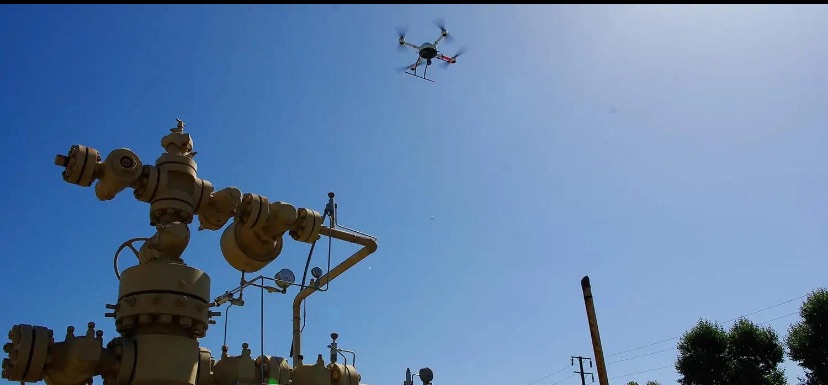
On methane emissions, Epecham said preventing gas leaks does not always require expensive solutions. She explained that proper monitoring and accurate measurement are the most important steps. TotalEnergies currently uses advanced drone technology known as AUSEA, along with permanent methane sensors, to quickly detect leaks before they become major problems. The company has also renewed its partnership with the Nigerian National Petroleum Company Limited (NNPC) to continue using this technology across Nigeria.
She added that TotalEnergies ended routine gas flaring across all its operated Nigerian assets in 2023, making it one of the first companies in the country to achieve this milestone.
Also speaking at the event, Schneider Electric’s Country Sales Director for Process Automation in Sub-Saharan Africa, Elijah Daniel, said digital technology is making it easier for companies to reduce emissions while improving efficiency. He noted that artificial intelligence, automation, infrared methane cameras, and predictive maintenance systems now help operators monitor facilities in real time, prevent equipment failures, and lower pollution.
Daniel added that cloud computing and AI have become more affordable, allowing even local oil companies to benefit from these technologies. He said indigenous firms often make decisions faster than international companies, enabling them to adopt innovations more quickly.
He encouraged Nigeria to invest in digital infrastructure such as data centres and strengthen digital skills among young professionals. He also called for stable government policies to attract more investment into the energy sector.
Another panelist, Umesh Amarnani of Pacegate Energy & Resources Limited, highlighted the importance of local manufacturing. He explained that producing oilfield chemicals within Nigeria has strengthened supply chains, reduced reliance on imports, improved energy security, and created more jobs. However, he urged stricter enforcement of Nigeria’s local content laws to ensure contracts are awarded based on quality and technical competence.
Amarnani also revealed that his company has invested in staff development, profit-sharing initiatives, and education programmes, including supporting 50 government schools to help prepare future industry professionals.
Methane Finance Advisor at the Environmental Defense Fund, Paul Boeffard, said Nigeria has become a leading example in managing gas flaring through the Nigerian Gas Flare Commercialisation Programme. He explained that the initiative allows gas that would normally be wasted through flaring to be captured and converted into useful products such as compressed natural gas (CNG), liquefied petroleum gas (LPG), and liquefied natural gas (LNG).
Although 28 licences have already been issued under the programme, Boeffard noted that many projects still face challenges in securing final investment. He said the Environmental Defense Fund is helping developers through technical support and feasibility studies.
The panelists agreed that reducing emissions should be seen as an opportunity rather than a challenge. They concluded that combining cleaner technologies with strong policies and investment can improve efficiency, attract more investors, strengthen energy security, and support Nigeria’s long-term economic growth.