
The Minister of State for Foreign Affairs, Ambassador Bianca Odumegwu-Ojukwu, has assured that Nigeria would implement the Memoranda of Understanding it signed with the Republic of Türkiye in January, emphasising that the value of the agreements lies in their execution rather than their signing. Odumegwu-Ojukwu gave the assurance in a statement issued on Friday by Dr Magnus Eze, Special Assistant on Communication and New Media, Office of the Minister of State for Foreign Affairs.
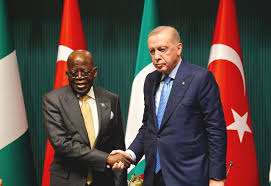
The statement said the minister made the remark during a courtesy visit by Turkish Ambassador to Nigeria, Mehmet Poroy, to her office in Abuja. She recalled that President Bola Tinubu had on January 27 visited Ankara to further strengthen bilateral ties between the two countries at the invitation of the President of Turkey, Recep Erdoğan. According to her, the MoUs signed between both countries point out that what is important is the ability of the parties to implement the letters to benefit their people.
“Bilateral relations between Nigeria and Türkiye have blossomed over the years in all ramifications; and political relations between both countries remain cordial. Nigeria and Türkiye hold identical views on strategies to address topical global issues, including the war against terrorism, climate change, and human migration, promotion of international peace and security. This also calls for reform of the global governance system and for greater inclusiveness, to accommodate all interests across the various regions of the world,” she was quoted as saying.
The MoUs cover a range of sectors reflecting the depth of the bilateral relationship. They include an agreement on cooperation in the field of education between the Nigerian Foreign Service Academy and the Diplomacy Academy of the Ministry of Foreign Affairs of Türkiye, the Joint Declaration on the Establishment of a Joint Economic and Trade Committee, and the Protocol on Military Cooperation. Others include cooperation on Halal Quality Infrastructure, Media and Communications, and an MoU on enhancing the effectiveness of social services provided to women, children, persons with disabilities, and older persons.
From an economic diplomacy perspective, the implementation of these agreements signals Nigeria’s intention to move beyond ceremonial diplomacy toward concrete outcomes that affect trade, investment, and sectoral development. The Joint Economic and Trade Committee is particularly significant, as it provides an institutional mechanism for the private sectors of both countries to resolve trade barriers and capitalise on Nigeria’s recent economic reforms, including exchange rate unification and the removal of fuel subsidies.
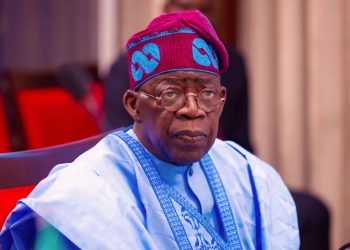
Odumegwu-Ojukwu reiterated President Tinubu’s focus on maximising the outcomes of his recent visit by directing Ministries, Departments and Agencies to submit roadmaps for the operationalisation of the MoUs signed in Ankara. This directive reflects an understanding that international agreements often fail to deliver benefits when no single agency is accountable for implementation. By requiring MDAs to develop specific roadmaps, the administration seeks to embed the agreements into the work plans of relevant government bodies.
She stated that the economic relations between Nigeria and Türkiye was progressing steadily with trade volume capped at close to 2 billion dollars, if the informal sector was captured in the official statistics. According to her, the January 2026 trade forum in Ankara serves as a practical engine for Tinubu’s “Renewed Hope Agenda,” transitioning diplomatic goals into a concrete roadmap for reaching a 5 billion dollar bilateral trade target. This target represents a significant increase from current levels and would require substantial expansion in sectors where both countries have comparative advantages.
“Central to the event was the activation of the Joint Economic and Trade Committee designed to exceed traditional diplomacy, by providing mechanism for the private sector to resolve trade barriers and capitalise on Nigeria’s recent economic reforms. The forum specifically prioritised the modernisation of Nigeria’s energy and agricultural sectors through Turkish technical expertise, particularly leveraging new Halal quality standards, to open European and Middle Eastern markets to Nigerian exports,” she said.
The focus on Halal quality infrastructure is strategically significant. The global Halal market, encompassing food, cosmetics, pharmaceuticals, and logistics, is valued at over $2 trillion annually. By developing Halal certification infrastructure in partnership with Türkiye, a country with established Halal standards and access to European and Middle Eastern markets, Nigeria could position itself as a supplier of Halal-certified products, particularly in agriculture and processed foods. This aligns with the administration’s focus on non-oil exports as a source of foreign exchange and economic diversification.
Earlier, the Turkish Ambassador described the country’s defence cooperation with Nigeria as imperative for holding counterterrorism consultation between the two countries. Poroy noted that the Joint Economic and Trade Council between both countries would bolster their economic relations, and urged them to leverage it to achieve their targeted 5 billion dollar volume of trade. The defence cooperation dimension is particularly relevant given Nigeria’s ongoing counterinsurgency operations in the North East and broader security challenges in other regions.
The implementation of the military cooperation protocol could involve technical assistance, training, equipment supply, or intelligence sharing, depending on the specific terms negotiated. For Nigeria, diversifying defence partnerships beyond traditional sources such as the United States, United Kingdom, and Russia provides strategic flexibility and potentially more favourable terms. For Türkiye, which has expanded its defence export industry significantly in recent years, Nigeria represents a large and growing market.
As the implementation process moves forward, the effectiveness of the coordination mechanism among MDAs will determine how quickly the MoUs translate into tangible outcomes. The trade target of $5 billion, while ambitious, is achievable if both countries prioritise reducing non-tariff barriers, improving logistics and transport links, and supporting private sector matchmaking. The coming months will test whether the political will expressed at the presidential level can be transmitted through the bureaucracy to deliver results for businesses and citizens of both countries.