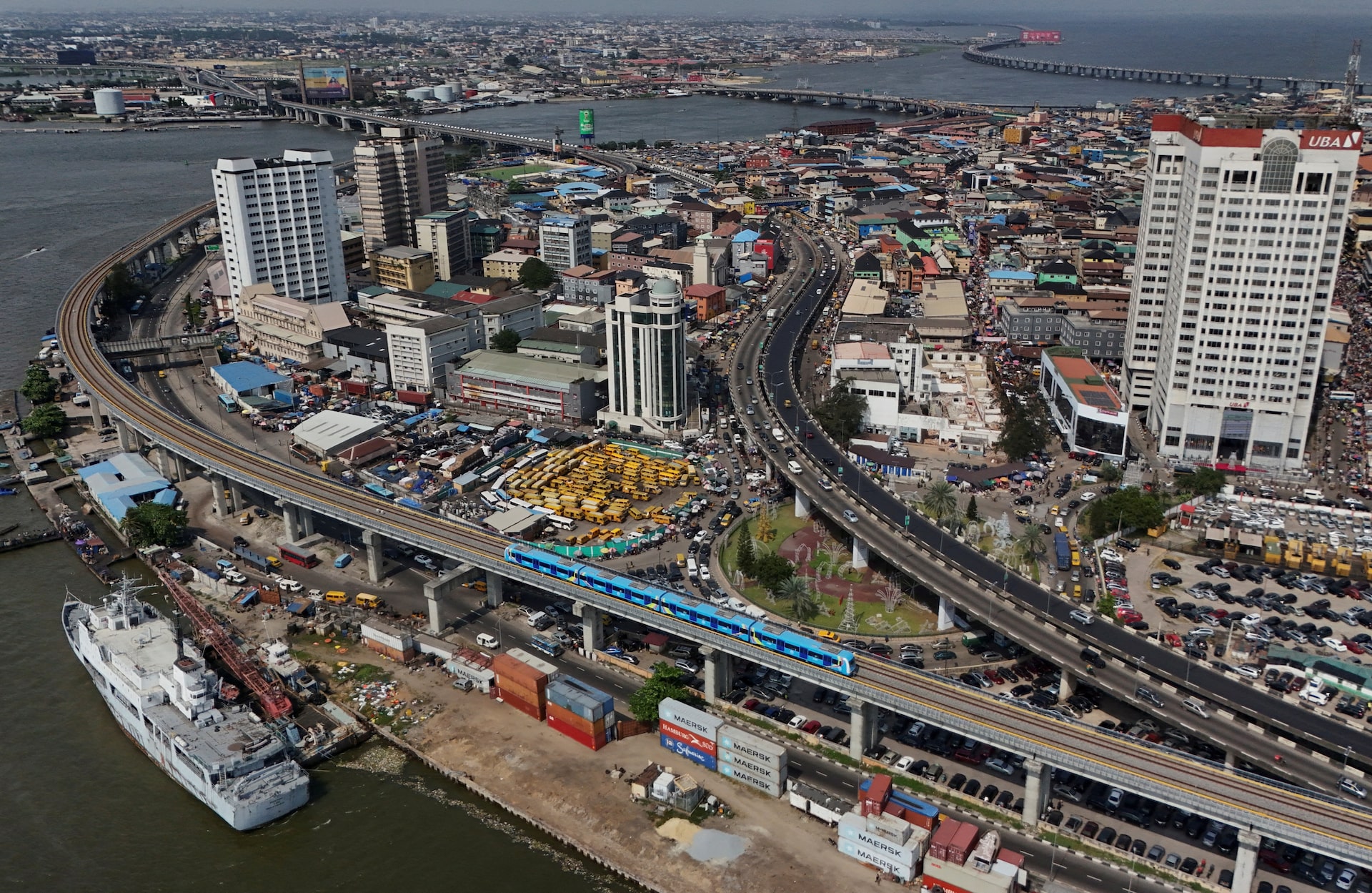

For millions of Nigerians who earn a living from market stalls, roadside shops and small businesses, the Federal Government’s ambition of building a $1 trillion economy can feel far removed from daily economic reality.
President Bola Tinubu’s administration has set a target of growing Nigeria’s economy to $1 trillion by 2030. But as the country pursues that goal, data from the informal economy shows the challenge is not only how large the economy becomes, but whether growth translates into stronger incomes and more resilient businesses.
The International Monetary Fund’s April 2026 World Economic Outlook puts Nigeria’s projected nominal GDP at about $377.4 billion in 2026, with a population of roughly 242.6 million. That means the economy would need to expand substantially in dollar terms to reach the government’s $1 trillion ambition.
The comparison with purchasing-power parity (PPP) also requires caution. PPP measures the relative purchasing power of economies using domestic prices; it is not the same as the dollar value of goods and services traded internationally. For Nigerians, however, what matters most is whether economic growth improves their ability to afford food, transport, housing and other essentials.
That question becomes more important when viewed through the informal economy, which remains a major part of Nigeria’s economic activity. The National Bureau of Statistics’ rebased GDP estimates released on 21 July 2025 put the informal sector’s contribution at 42.5% of GDP in 2019.
The sector’s financial vulnerability is highlighted by Moniepoint’s 2025 Informal Economy Report. Published in October 2025, the report found that 44% of informal businesses generated less than ₦20,000 in daily revenue, while 38% recorded daily profits below ₦10,000. It also found that 65% of businesses reported higher revenue over the previous year, but only 47% reported higher profits.
Moniepoint further reported that 42% of informal businesses did not have enough savings to survive for a month without income, highlighting how exposed many operators remain to rising costs and disruptions.
Nigeria’s latest labour data makes the issue even more significant. The National Bureau of Statistics reported that about 93% of employment was informal in June 2024, underscoring how heavily Nigerians depend on businesses and jobs outside the formal economy.
For policymakers, therefore, the $1 trillion target cannot be judged only by the size of GDP. The bigger test is whether economic expansion creates productive jobs, strengthens small businesses and raises household purchasing power.
A larger economy that leaves the market trader struggling with rising costs and shrinking profits may look impressive in official statistics, but it will feel much less impressive on the streets.
The real measure of Nigeria’s economic ambition is not simply reaching $1 trillion. It is ensuring that ordinary Nigerians can actually feel the growth.