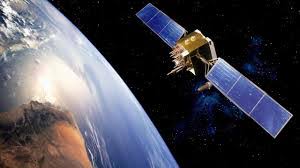

Nigerian Communications Satellite Limited, the state-owned satellite company, earned N2.2 billion ($1.6 million) in revenue in 2025, up from N650 million ($470,854) in 2024. Chief Executive Jane Egerton-Idehen described the growth as part of a deliberate trajectory rather than a one-off spike, stating that the company is targeting N8 billion ($5.8 million) in future revenue through expanded broadband capacity. Broadcasting remains the backbone of NIGCOMSAT’s earnings, accounting for more than 50 per cent of total revenue, with the company supporting over half of Nigeria’s licensed broadcasters.
The revenue growth comes amid unresolved questions over the future of Nigeria’s only working communications satellite, NigComSat-1R, which was built for a 15-year lifespan and has been extended to 2028 through technical upgrades. An ongoing financial and operational dispute with China Great Wall Industry Corporation, which manages the satellite, has raised concerns about its reliability in the interim. The government plans to replace it with a new satellite in 2028, followed by another in 2029.
Egerton-Idehen acknowledged that the company had to win customers back after some left and never returned due to past experiences related to service quality. She said the company is now fixing gaps in service quality, awareness, and technology upgrades. A crucial growth area is cellular backhaul, where satellite capacity is used to connect remote mobile base stations to core networks, particularly in rural Nigeria where laying fibre infrastructure is often uneconomical.
State governments have also emerged as a meaningful customer segment, with Adamawa, Gombe, Cross River, and Imo already using NIGCOMSAT’s services for connectivity and digital infrastructure projects. Beyond commercial services, the company plays a strategic role in Nigeria’s defence and security architecture, enabling secure communication in areas without terrestrial network coverage. Egerton-Idehen noted that satellite technology can be deployed on moving assets like armoured vehicles and naval ships, making it critical for national security.