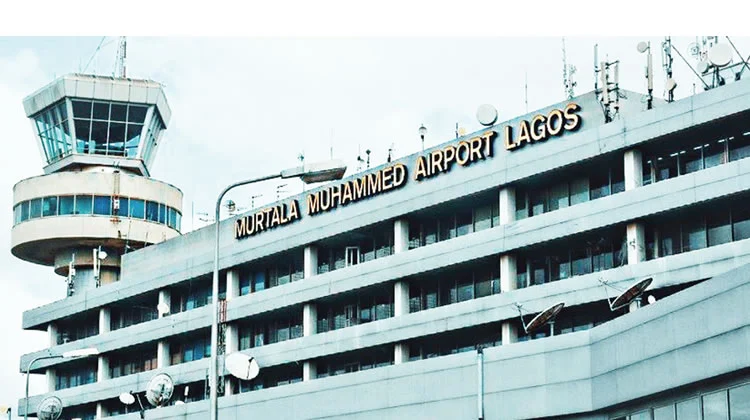

The Nigerian Airspace Management Agency has deployed a Mobile Control Tower at the Murtala Mohammed International Airport, Lagos, following the recent fire incident that affected critical air-ground communication infrastructure at the old terminal.
NAMA said the deployment was part of a swift and strategic response aimed at maintaining safe and efficient air navigation services at the country’s busiest aviation hub.
Speaking during an on-site inspection of the facility, the agency’s Director of Safety Electronics and Engineering Services, Terese Ihenacho, described the move as a major operational milestone that reflects NAMA’s resilience and commitment to service continuity.
She praised the dedication and technical expertise of NAMA personnel, whose efforts, she said, ensured the timely delivery and operational readiness of the tower.“As you can see, the Mobile Tower is fully operational and serviceable. All necessary test runs have been successfully completed, and air traffic controllers are ready to commence operations at any moment,” Ihenacho said.
She disclosed that the mobile tower had been reconfigured to meet Nigeria’s operational realities, with local innovations introduced to improve safety and efficiency.
According to her, the facility now features a smart strip system alongside the traditional manual strip, reflecting a more modern approach to air traffic management.“The way it was manufactured is not the way we are using it. We have restructured it to suit our local peculiarities.
There is now seamless connectivity to Centrex and TRACON, which did not exist before. This is part of our innovation to meet global standards,” she explained.In a further step to strengthen redundancy and operational safety, Ihenacho said NAMA had concluded arrangements to deploy a second Mobile Control Tower to service Runway 18R.
She noted, however, that the siting of the additional tower would be determined in consultation with key aviation stakeholders, including the Nigerian Civil Aviation Authority, the Federal Airports Authority of Nigeria, the Nigerian Meteorological Agency and air traffic controllers, to ensure the safest possible positioning.
Ihenacho said the deployment forms part of NAMA’s broader contingency and resilience strategy, originally designed as a backup solution to reduce disruptions that may arise from infrastructure upgrades or environmental constraints affecting the main control tower.
She added that the agency had also put in place critical support infrastructure at the temporary site, including solar-powered lighting, reinforced structural bracing, additional power systems and CCTV surveillance.
The NAMA director also said efforts were ongoing to improve the welfare and working conditions of air traffic controllers and technical staff at the temporary facility through discussions with relevant authorities on essential amenities and support services.
Describing NAMA workers as heroes, Ihenacho said they worked under difficult and risky conditions to restore operational stability, adding that the successful deployment underscores the agency’s commitment to the safety and efficiency of Nigerian airspace.