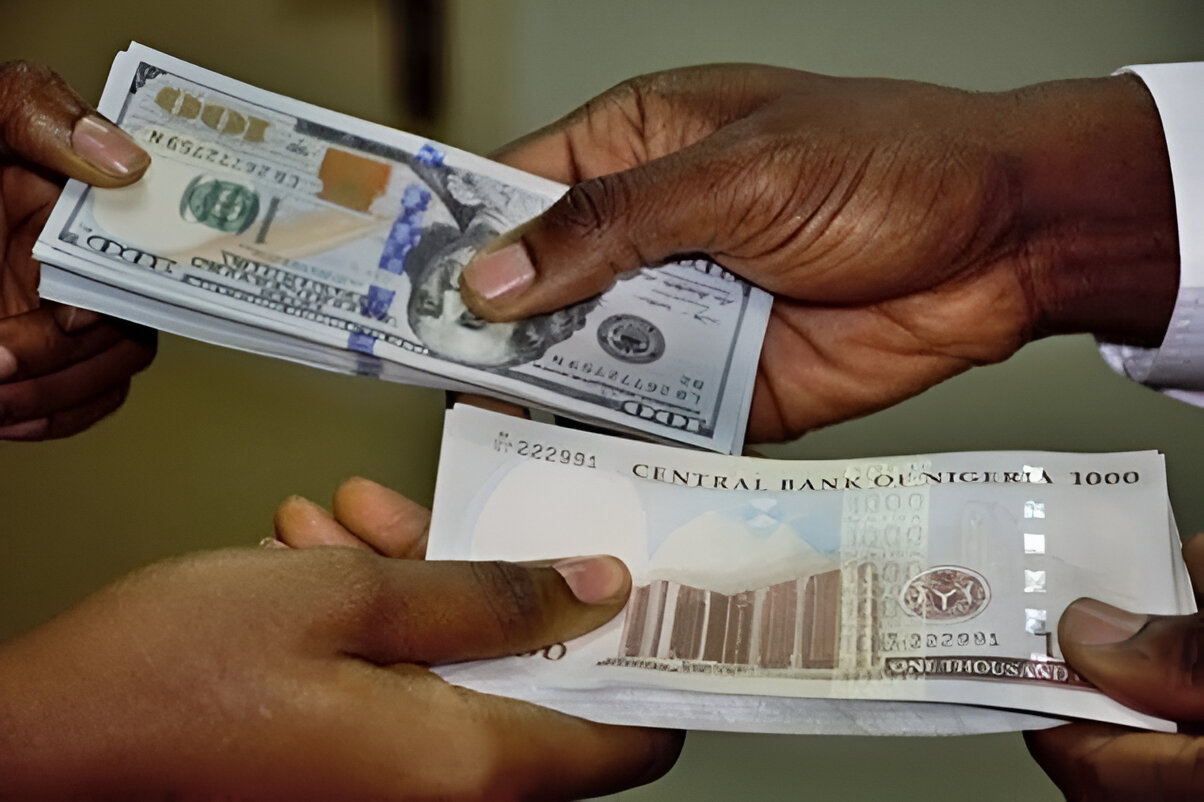

The Nigerian naira strengthened further at the official foreign exchange market on Monday, closing at N1,355 per dollar, according to data from the Central Bank of Nigeria. The latest rate marks an improvement from N1,363.5/$ recorded on Friday, extending the currency’s recent recovery trend and signalling growing stability in the market.
Monday’s close represents the naira’s strongest performance since February 23, when it traded at N1,353.5/$, highlighting a steady rebound from earlier volatility this month. Trading data showed that the currency moved within a relatively narrow band during the session, with intraday rates ranging between N1,365.35/$ and N1,354/$. This suggests calmer market conditions compared to previous weeks.
The naira has posted consistent gains over the past week. It appreciated from N1,390.5/$ on Tuesday to N1,373.5/$ on Wednesday, before closing at N1,370/$ on Thursday and N1,363.5/$ on Friday, culminating in Monday’s stronger position.
The upward movement contrasts sharply with the previous week, when the currency weakened to N1,425/$, its lowest level since mid-January. The latest rally underscores a significant turnaround in sentiment at the official market.
Analysts attribute the improved performance to relatively stable liquidity conditions and growing confidence in ongoing monetary and foreign exchange reforms.
The broader outlook for the naira is also being supported by improvements in Nigeria’s external reserves. Data from the central bank indicates that net foreign exchange reserves rose to $34.8 billion at the end of 2025, reflecting stronger external liquidity.
Gross external reserves have also increased, reaching $50.45 billion as of February 2026, driven by higher oil earnings and increased foreign inflows.
Governor of the apex bank, Olayemi Cardoso, said recent policy measures are aimed at improving market confidence and enhancing liquidity in the foreign exchange market.
According to projections in the CBN’s 2026 macroeconomic outlook, external reserves could rise further to $51.04 billion this year, largely supported by oil revenue.
Global factors, however, continue to shape currency movements. The U.S. dollar traded mixed in international markets as investors monitored geopolitical tensions involving Iran and assessed potential implications for global energy supply.
Despite these uncertainties, the naira’s sustained appreciation suggests improving short-term stability. Market watchers say the currency could strengthen further if current conditions particularly liquidity and foreign inflows remain supportive.