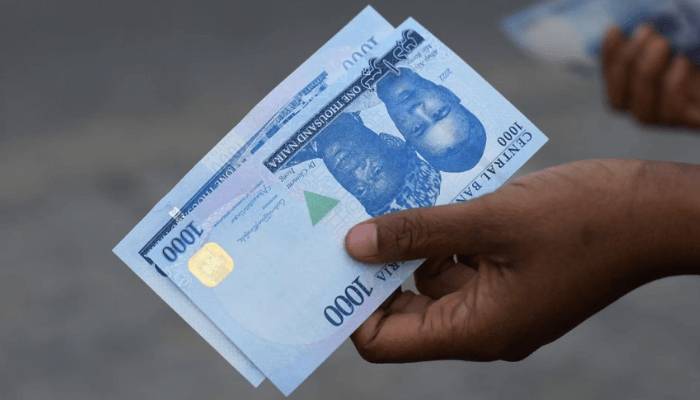

The naira weakened by ₦27.12 against the dollar in two trading sessions, closing at ₦1,361.84 on Friday, October 23, 2026, on the official market, despite an increase in Nigeria’s external reserves to $55.16 billion.
Legit.ng reported on Sunday, October 25, citing Central Bank of Nigeria (CBN) data, that the naira traded at ₦1,334.72 on Wednesday, October 21, before falling to ₦1,361.84 on Friday. The movement represented a depreciation of 2.03 per cent in two sessions.
The latest decline followed a relatively stable period, with the currency closing at ₦1,333.76 on Monday, October 19, according to an earlier Legit.ng report.
The naira also weakened on the parallel market, where currency traders quoted by Daily Post and Legit.ng said the dollar rose by ₦5 to ₦1,375. This widened the difference between the official and parallel market rates to ₦13.16 per dollar.
The depreciation coincided with heavy trading activity at the official foreign exchange window. Financial analyst Kalu Aja said in a newsletter published on Saturday, October 24, that transactions worth about $1 billion were recorded on Friday, describing the volume as a record.
The Rio Times separately reported that interbank dollar transactions reached approximately $1.01 billion on the same day, citing CBN data.
Despite the pressure on the naira, Nigeria’s gross external reserves continued to rise. CBN data showed that reserves increased to $55.16 billion as of October 22, from $55.09 billion a week earlier.
RateCaptain reported on Monday, October 26, that the reserve level was the highest since December 2008. Meanwhile, CBN Governor Olayemi Cardoso put Nigeria’s net foreign reserves at about $46 billion, according to Further Africa’s report of October 14.
Gross reserves represent the country’s overall foreign assets, while net reserves account for relevant foreign-currency liabilities. The distinction is important when assessing the funds available to support the naira and meet external obligations.
The increase in reserves has not translated into immediate currency appreciation. The exchange rate also depends on dollar demand, foreign exchange supply, investor confidence and the extent to which the CBN intervenes in the market.
Legit.ng noted that higher reserves alone do not guarantee a stronger naira. The CBN had not publicly explained the specific factors behind Friday’s depreciation at the time of the reports.
For businesses, continued weakness in the naira could increase the cost of imported raw materials, machinery and other inputs, putting pressure on operating expenses and consumer prices.
Households may also face higher costs for imported goods, overseas education, international travel and other payments denominated in dollars.
Attention is now turning to trading this week, with market participants watching whether the CBN increases dollar supply to ease pressure on the naira and whether foreign exchange turnover remains close to Friday’s elevated level.