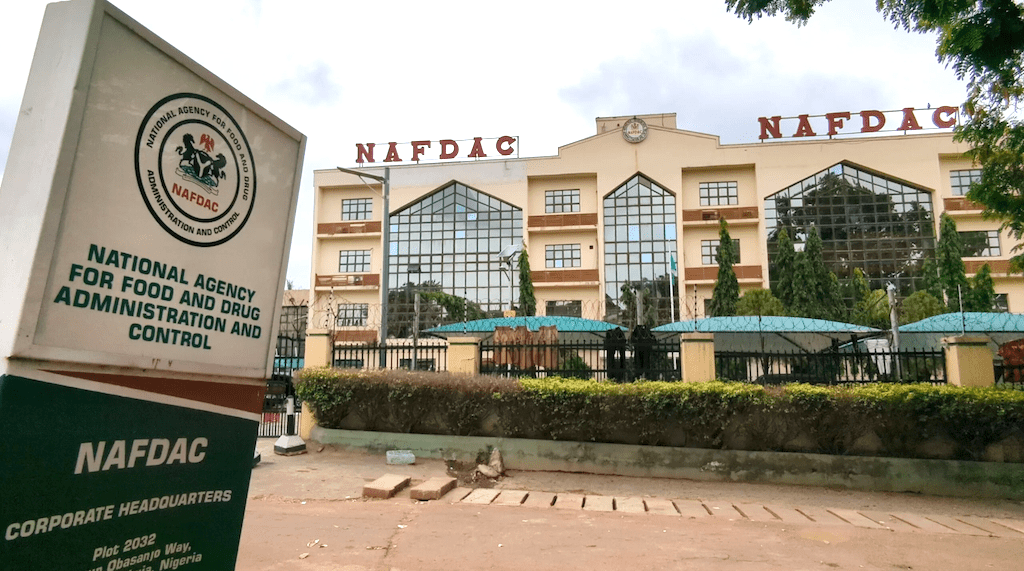

Nigeria’s food and drug watchdog, the National Agency for Food and Drug Administration and Control (NAFDAC), destroyed unsafe and unwholesome goods valued at approximately ₦22.73 billion across 22 exercises between January and August 2026, with July accounting for the largest single-month haul at ₦9.03 billion.
The figures highlight the scale of the agency’s nationwide crackdown on substandard, falsified, and non-compliant products, spanning drugs, food, cosmetics, drinks, medical devices, packaged water, and chemicals.
NAFDAC Director-General, Prof. Mojisola Adeyeye, disclosed the data during the International Pharmaceutical Regulators Programme (IPRP) Management Committee Meeting held in Prague, Czech Republic, from November 18 to 19, 2026.
According to the agency’s update, destruction activities gathered momentum in February with ₦1.29 billion worth of goods cleared, rising to ₦2.56 billion in March. Five exercises in May accounted for another ₦3.30 billion, while eight exercises in June removed products valued at ₦6.40 billion, bringing the mid-year cumulative total to ₦13.55 billion.
Activity peaked in July, when four destruction exercises wiped out ₦9.03 billion in unwholesome products and pushed the cumulative figure to ₦22.58 billion. An additional ₦157.7 million worth of goods was destroyed across two exercises in August, bringing the January–August total to approximately ₦22.73 billion. NAFDAC did not provide specific destruction values for January and April in its monthly breakdown.
Beyond product disposal, the agency logged 5,542 enforcement operations during the same window, with July again emerging as the busiest month. Activity climbed from 232 operations in January to 423 in February and 387 in March, before surging to 1,089 in July and 941 in August.
Data from the Directorate of Investigation and Enforcement showed that these operations yielded 213 raids, 821 product seizure entries, 179 sealed or closed premises, and 52 arrests. Over the same period, NAFDAC issued 221 sanctions, opened 474 cases, and concluded 295. However, the presentation did not specify what proportion of the destroyed goods came from enforcement raids versus market surveillance or voluntary handovers by manufacturers.
Adeyeye also used the Prague summit to spotlight Nigeria’s progress in pharmaceutical oversight and domestic production. She noted that the country has maintained its World Health Organisation (WHO) Maturity Level 3 status, signifying a stable, well-functioning oversight system, and is actively working toward Level 4, the highest tier of international regulatory performance.
She further highlighted gains under NAFDAC’s 5+5 Policy, which grants importers a five-year window to transition toward local manufacturing, alongside Ceiling 36, a restriction list barring the importation of 36 essential medicines that local firms have the capacity to produce. More than 70% of finished pharmaceutical products covered under both initiatives are now manufactured within Nigeria, advancing broader efforts to reduce dependence on imported medicines.
While the destruction of ₦22.73 billion in unwholesome goods demonstrates the scale of NAFDAC’s intervention, the accompanying wave of raids, seizures, and arrests underscores the persistent challenge of keeping counterfeit medicines and substandard consumer products out of the Nigerian market.