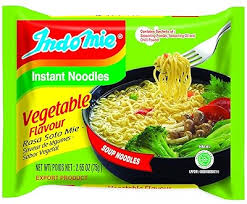

The National Agency for Food and Drug Administration and Control (NAFDAC) has reassured Nigerians that the recalled Indomie Vegetable Flavour noodles are neither registered nor sold in Nigeria. The agency’s statement comes amid concerns raised by a safety alert linked to the product in other countries.
In a press release issued on Sunday, NAFDAC explained that the recall notice originated from French authorities and does not involve any Indomie products manufactured, imported or distributed within Nigeria. The agency said the alert was issued as a precaution to protect public health.
NAFDAC said the specific product referred to is “Indomie Noodles Vegetable Flavour.” It clarified that this variant is not registered with the agency for sale in Nigeria. Because it has no registration status, the noodles are not legally permitted to be sold in the country.
According to the agency, noodles are included on Nigeria’s Federal Government Import Prohibition List, which bans their importation. This means that even if the recalled product exists abroad, it should not be available on the Nigerian market under normal circumstances.
The recall was initially issued by the French food safety authority, Rappel Conso, after tests revealed the presence of undeclared allergens, specifically milk and eggs, in the product. These ingredients were not listed on the packaging, which could pose serious health risks to people with allergies or intolerances.
NAFDAC acknowledged that while the risk of the recalled Indomie vegetable flavour noodles entering Nigeria is low, there remains a possibility that individuals might bring the product into the country through online purchases or international travel. To address this, the agency said it is taking proactive steps to prevent any illegal entry or circulation of the implicated product.
As part of its precautionary measures, NAFDAC has directed its zonal directors and state coordinators to intensify surveillance activities nationwide. Officials have been instructed to monitor markets and distribution networks for the presence of the recalled product and to seize it if found.
The agency also said it has placed its Ports Inspection Directorate on high alert to guard against potential attempts to import the recalled noodles into Nigeria. Border control and port inspection teams have been reminded to be particularly vigilant for any signs of smuggling or unauthorised entry.
Consumers and retailers have been urged to exercise caution and vigilance. NAFDAC advised that anyone who encounters the recalled product should not consume it and should instead discard it immediately. Members of the public were encouraged to report sightings or suspected sales of the product to the nearest NAFDAC office or through the agency’s official hotline.
In addition, the agency said that any adverse reactions linked to consumption of the recalled noodles should be reported to NAFDAC through its e-reporting platform or in person at local offices. This information will help the agency monitor potential health effects and respond appropriately.
Indomie Nigeria, the Nigerian franchise of the popular instant noodles brand, has also issued a clarification. The company stated that it does not produce, market or sell any vegetable-flavour variant in Nigeria. It described the social media reports connecting the French recall to Nigerian products as misleading.
Indomie Nigeria emphasised that all noodle products available in the Nigerian market are produced locally by Dufil Prima Foods under strict quality control and in compliance with NAFDAC regulations. The firm reiterated that its products do not include a vegetable flavour variant and bear packaging consistent with approved branding.
Both NAFDAC and Indomie Nigeria have urged the public to remain calm and to rely on official information from reputable sources. They stressed that the safety of local products is not in question and that the alert relates only to an unrelated variant outside Nigeria.
The situation highlights the importance of food safety monitoring and the need for regulatory authorities to act swiftly to inform and protect consumers when alerts arise abroad, even when the products in question are not present in the domestic market.