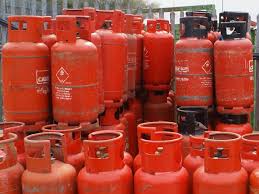

The retail price of Liquefied Petroleum Gas (LPG), commonly known as cooking gas, has surged across Nigeria as depot owners adjust to the escalating geopolitical conflict in the Middle East. Following coordinated US-Israel airstrikes on Iran, which have severely disrupted energy flows through the Persian Gulf, major Nigerian distributors have raised prices by an average of ₦100 per kilogram. Currently, Nipco Plc has set its price at ₦950 per kg, while Navgas Limited and Techno Oil Limited are dispensing at ₦900 and ₦885 respectively.
The structural and economic consequence of this price hike is a direct reflection of Nigeria’s “global parity” pricing model. Despite being a major gas producer, Nigeria still relies heavily on imports to meet domestic demand, meaning local prices are inextricably linked to international benchmarks. This vulnerability was laid bare as global oil prices reacted violently to the conflict; Brent crude jumped to $79.08 from $72.87, and Nigeria’s own Bonny Light surged to $80 per barrel, its highest level since July 2025.
Analytically, the rapid pass-through from global crude rallies to domestic kitchen budgets highlights the thin cushion available to Nigerian consumers. Market data indicates that West Texas Intermediate (WTI) and Murban crude also saw sharp single-session rallies, increasing by nearly 10-15%. Because LPG is a byproduct of petroleum refining and natural gas processing, its cost at the depot level moves in lockstep with the volatile energy markets of the Persian Gulf, leaving local retailers with no choice but to pass the burden onto households.
The impact on “Household Food Security and Energy Access” represents a vital dimension of this crisis. In urban centers like Lagos, retailers report that the cost of replenishment has forced immediate adjustments at the pump. The sudden shift from a market average of ₦800 per kg to nearly ₦1,000 in some areas threatens to reverse recent gains in the adoption of clean cooking energy, potentially driving lower-income families back toward traditional, less sustainable fuel sources like charcoal or firewood.
Furthermore, the timing of this energy shock complicates the government’s efforts to stabilize inflation. With crude prices remaining elevated due to the threat of prolonged military action in the Middle East, the pressure on the Naira and the landing cost of refined products is expected to persist. Industry experts suggest that until domestic refining capacity, such as the Dangote Refinery and the rehabilitated state-owned plants, can fully bridge the LPG supply gap, the Nigerian kitchen will remain an unintended casualty of foreign conflicts.
The long-term outlook for LPG prices in Nigeria remains contingent on the de-escalation of tensions in the Middle East and the stability of the Strait of Hormuz. For now, depot owners are maintaining a cautious stance, with many bracing for further volatility if Iran retaliates by targeting regional energy infrastructure. For the average Nigerian, the 2026 energy landscape is proving to be a stark reminder that in a globalized economy, a drone strike in the Gulf is felt as surely as a price hike at the local gas station.