
Artificial intelligence is quickly changing the way people work, learn and build businesses, and Nigerian young people are now being given another opportunity to take part in that transformation.
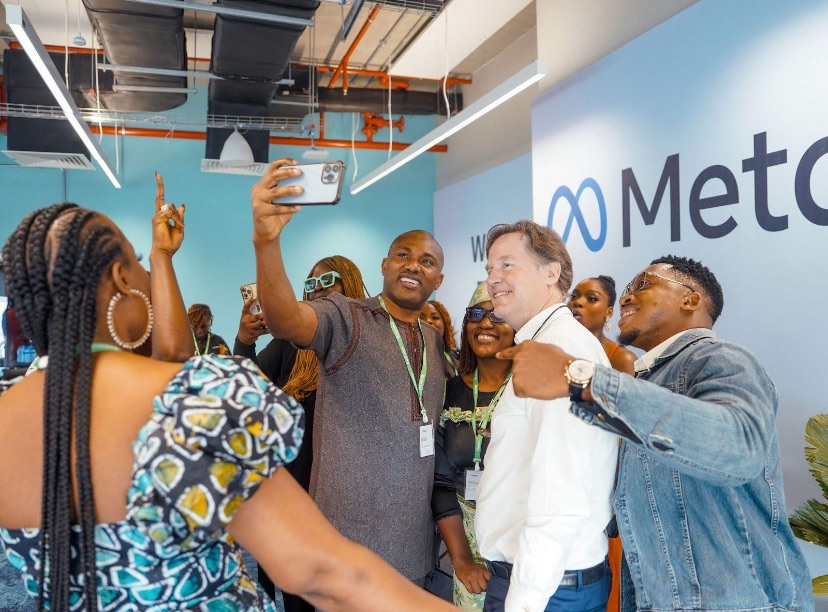
Meta has partnered with Nigeria’s Federal Ministry of Communications, Innovation and Digital Economy, the 3 Million Technical Talent (3MTT) programme, the National Centre for Artificial Intelligence and Robotics (NCAIR), and Robotics and Artificial Intelligence Nigeria (RAIN) to launch AI Academy Nigeria.
The initiative is designed to move participants beyond simply understanding artificial intelligence to actually using the technology to create products, solve problems and build businesses.
For Nigerian youths, this could be particularly important as employers increasingly look for digital skills and businesses explore AI-powered solutions.
AI Academy Nigeria will operate through three major areas: AI skills development, a startup pitchathon and a six-week developer bootcamp. The programme is expected to provide practical training for developers, students, entrepreneurs and young professionals.
The startup pitchathon is also creating a direct opportunity for young Nigerian entrepreneurs. Early-stage startups using Meta’s AI technologies can present their ideas and compete for funding and exposure.
Two winning startups are expected to receive $5,000 each in cash funding, alongside $2,000 in Meta advertising credits. Winners will also have an opportunity to represent Nigeria at Meta’s AI Summit in Istanbul later in the year.
Beyond the money, the bigger opportunity may be the access to knowledge, mentorship and international exposure.
For a young Nigerian who has an idea but lacks the technical skills to develop it, programmes like this can provide a bridge between an idea and a working product. A student could learn how to use AI tools, while a small business owner could discover ways to automate customer service, marketing or data analysis.
The initiative also comes at a time when Nigeria is trying to build a stronger digital economy and prepare its workforce for changes brought by automation and artificial intelligence.
However, access to training alone will not solve every challenge. Nigerian youths will still need reliable internet, affordable devices, electricity, funding and opportunities to apply the skills they acquire.
The real measure of AI Academy Nigeria will therefore be what happens after the training — whether participants secure jobs, launch businesses, develop useful products or compete successfully in international markets.
For Nigeria’s young population, the message is becoming clearer: AI is no longer simply a technology of the future. It is becoming a skill that can influence who gets hired, who builds the next startup and who participates in the digital economy.
Meta’s new academy could give more young Nigerians a chance to be creators of that future rather than simply consumers of it.