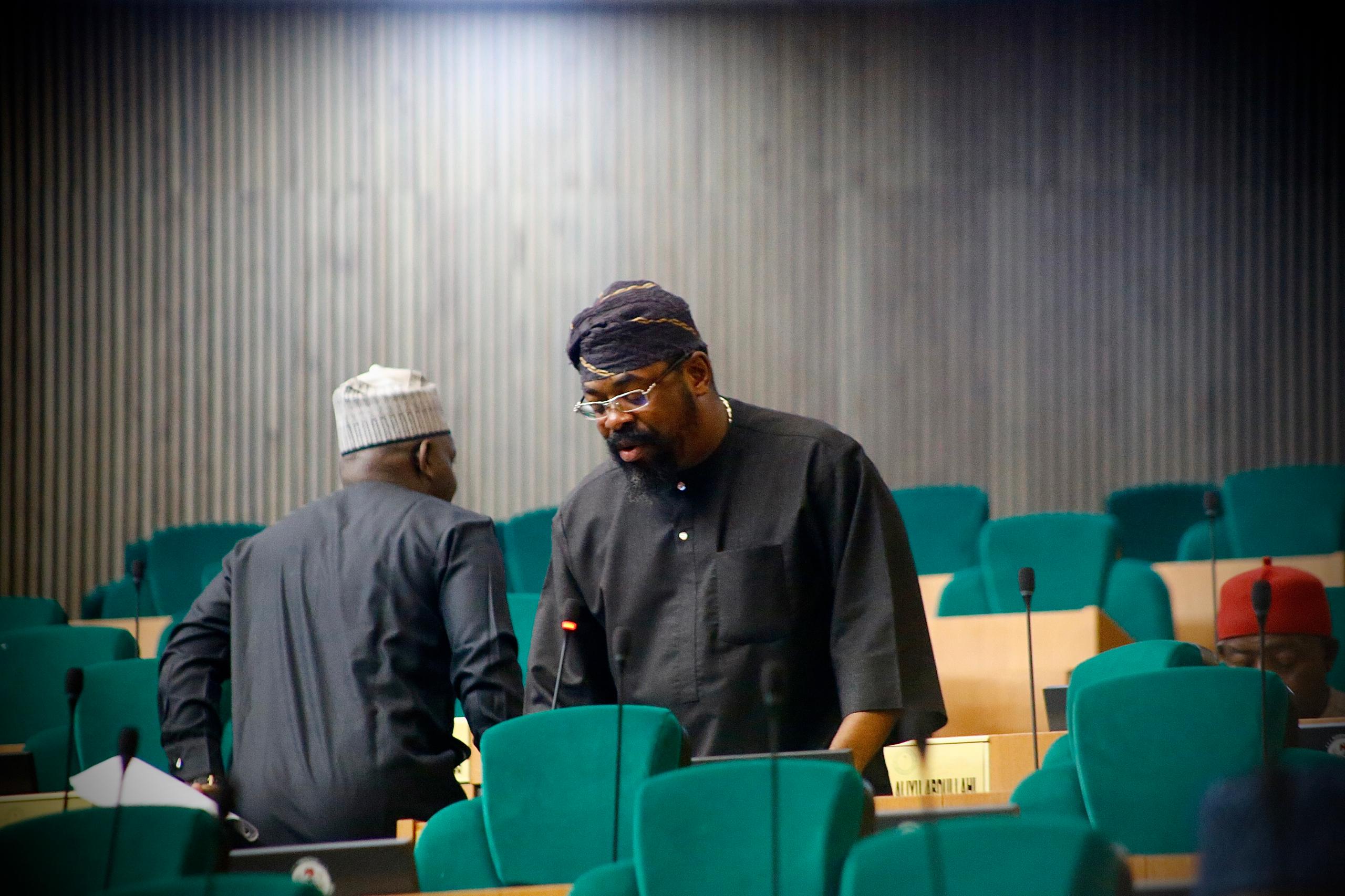

In a bold legislative move aimed at overhauling labour practices within Nigeria’s financial industry, Honourable Fuad Kayode Laguda (FCTI) has presented a bill before the House of Representatives seeking to outlaw the employment of casual and contract staff by commercial banks.
The proposed legislation, titled “A Bill for an Act to Amend the Banks and Other Financial Institutions Act (BOFIA No. 183) 2020,” seeks to prohibit, criminalise, and penalise the use of non-permanent staff for core banking operations. Leading the debate on the bill’s general principles, Hon. Laguda argued that the prevalent practice is a systemic breach of existing labour laws and constitutes the exploitation of millions of Nigerians.
Central to the lawmaker’s argument is the assertion that casual and contract workers, who he stated constitute about 65% of the banking workforce as of the third quarter of 2024, are deliberately used by financial institutions to sidestep statutory obligations. These obligations include the payment of pensions, adherence to minimum wage standards, provision of health insurance, bonuses, study grants, and severance packages.
“The primary objective of this Bill is to totally mitigate the employment of casual or contract staff by Nigerian Banks because it is a breach of laws regulating employment in Nigeria,” Laguda stated, addressing the Speaker and his colleagues. He specifically referenced the Labour Act Cap L1 LFN 2004 and the Employees’ Compensation Act (ECA) of 2010, noting that these laws lack sufficient provisions for the welfare of temporary staff.
The sponsor further contended that the practice violates Section 7(1) of the Labour Act 2004, which stipulates that an employee should not be engaged for more than three months without formal recognition of such employment. By employing staff on prolonged casual or contract terms, banks are effectively flouting this provision, he argued.
Aligning his proposal with national policy, Laguda connected the bill’s aims to President Bola Ahmed Tinubu’s “Renewed Hope Agenda,” emphasising the need for equitable treatment for all Nigerian workers. He also cited a 2023 report from the Chartered Institute of Bankers of Nigeria (CIBN) that corroborates the use of outsourcing to slash operational costs.
The lawmaker painted a grim picture of the working conditions faced by temporary bank staff, describing them as being subjected to “low wages, job insecurity, unfair treatments, systemic inequalities, emotional abuses, and mental health challenges.” He noted that his bill corresponds with concerns previously raised by the Governor of the Central Bank of Nigeria (CBN), Mr. Olayemi Cardoso, regarding the poor working conditions of non-permanent staff in the sector.
A significant allegation in the motion points to potential fiscal evasion. Laguda accused banks of using casual employment strategies, often facilitated through Outsourcing Agencies or Third-party Employers, as a mechanism to avoid responsibilities related to Personal Income Tax (PIT) remittance for these workers.
“In Conclusion, this proposed Bill should be supported… to prohibit, criminalise, and penalise the employment of causal and contract staff by Nigerian Banks to ensure all Nigerians have access to equitable, conducive, and prosperous working ecosystem,” Laguda appealed before concluding his debate.
The bill, if passed into law, would represent one of the most significant interventions in Nigeria’s labour market in recent years, directly challenging the operational models of the country’s banking giants. It is expected to spark intense debate among legislators, with arguments likely to centre on its potential impact on banking sector liquidity, operational flexibility, and employment levels, weighed against the urgent need for worker protection and formalisation.
The motion has now been presented for further deliberation and committee scrutiny, where stakeholders from the banking sector, labour unions, and civil society are expected to contribute to the discourse.