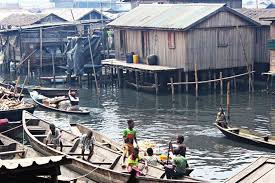

The Lagos State Government has once again affirmed its pledge to transform Makoko, one of the city’s most iconic waterfront communities, into a safer and more habitable environment for residents. At a press briefing in Alausa, Ikeja, the state’s Commissioner for Information and Strategy, Gbenga Omotoso, stressed that while recent demolition activity has drawn widespread attention, the administration of Governor Babajide Sanwo-Olu remains committed to safeguarding lives and improving living conditions for the people of Makoko.
Makoko’s densely built wooden houses, many perched precariously over water and directly under high-tension power lines, have long been a focus of safety concerns. Officials argue that the settlement’s informal layout and proximity to critical infrastructure put residents at risk, prompting the state to clear portions of the community that fall within these danger zones. According to Omotoso, these actions were taken out of necessity and in the broader interest of public safety, not as punitive measures against the inhabitants.
To address the long-term challenges facing Makoko, the Lagos State Government has earmarked $2 million toward a redevelopment strategy framed around the “Water Cities” concept. This initiative, officials say, aims to sustainably regenerate the community in ways that respect both environmental considerations and residents’ livelihoods. The state is seeking additional support, including an expected $8 million in counterpart funding from United Nations agencies, to expand the project and implement comprehensive improvements.
Dr. Babatunde Olajide, Special Adviser to the Governor on E-GIS and Urban Renewal, underscored that the engagement with the people of Makoko has been deliberate and continuous. According to him, the current configuration of the settlement often described by some government officials as an “eyesore” reflects years of haphazard growth, limited infrastructure, and a near-total absence of basic social amenities. He lamented the poor sanitation that sees waste regularly dumped into waterways and stressed that meaningful re-planning is essential to enhance public health and dignity.
One of the government’s central commitments, Olajide said, is to ensure that renewal efforts are inclusive and do not push out low-income residents in favor of wealthier newcomers. “This government is not interested in removing poor people from an area and replacing them with rich people,” he said, emphasizing that the plan is to create a better environment where current residents can continue to live and work safely.
Officials have also pledged compensation for those whose homes were demolished because they encroached on hazardous zones, particularly around high-tension cables. Olajide noted that similar urban renewal exercises elsewhere in the state including in markets and other informal settlements have included compensation and relocation measures for affected occupants. He maintained that the government never intended to displace people indiscriminately, but rather to remove only structures that posed demonstrable safety risks.
Despite these assurances, the demolitions have sparked significant controversy and protests from community members and rights groups who argue that many residents have been displaced without adequate notice or resettlement plans. Human rights organisations and activists have also pointed to wider concerns about large-scale evictions in Makoko in recent weeks, urging the government to observe legal protections for housing and dignity.
As the state moves forward with its urban renewal agenda, it faces the complex task of balancing public safety, environmental sustainability, and the human rights of one of Lagos’ oldest and most culturally significant communities. For many Makoko residents, the promise of safer living conditions hangs in the balance alongside deep anxieties about displacement, livelihood disruption, and the future of their homes. The government says its approach will unfold through sustained dialogue, funding partnerships, and careful planning designed to protect both people and place.