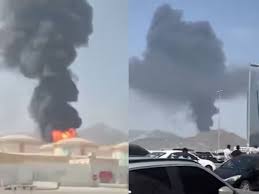

Iran’s recent drone strike on the UAE’s Fujairah port oil terminal has triggered a massive fire and disrupted global oil supplies, sending shockwaves through the energy market.
The Port of Fujairah, located outside the Strait of Hormuz, is a critical energy hub, handling millions of barrels of oil daily. The attack has raised concerns about the safety of global oil supplies, with prices surging past $100 per barrel.
The drone strike, reportedly carried out by Iran, has led to a suspension of some oil loading operations at the port, with shipping concerns growing across the Gulf region.
Energy analysts predict that the situation could lead to a broader disruption in global oil supplies, pushing prices even higher.
The Port of Fujairah is the world’s second-largest bunkering hub, making it a vital outlet for Gulf oil, allowing shipments to bypass potential bottlenecks in the Strait of Hormuz.
The attack comes amid heightened tensions between Iran and the US, with Iran warning that oil prices could nearly double to $200 a barrel as retaliation escalates.
The US has struck military targets on Kharg Island, Iran’s main oil export terminal, and warned that oil infrastructure on the island could be next if Iran disrupts shipping in the region.
The global oil market is already feeling the pinch, with supplies plunging by 8 million barrels a day to 98.8 million barrels a day.
The International Energy Agency (IEA) has warned that the war in the Middle East is creating the largest supply disruption in the history of the global oil market.
Impact on Nigeria’s Oil Market
Nigeria, an oil-dependent economy, is likely to feel the impact of the global oil price surge. With the country’s fuel prices already high, the situation may worsen, affecting the economy and consumers.
Energy experts warn that Nigeria’s fuel prices could rise if global crude oil prices exceed $90 per barrel.