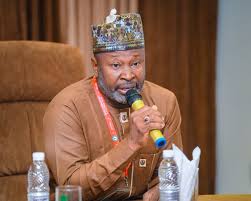

The Inter-Party Advisory Council (IPAC) has issued a high-stakes ultimatum to the National Assembly, threatening a total boycott of the 2027 general elections unless critical “anomalies” in the newly minted Electoral Act 2026 are addressed. This position was formalized in a communiqué released on Thursday, March 5, 2026, following a General Assembly meeting in Abuja led by National Chairman Yusuf Dantalle and National Secretary Maxwell Mgbudem.
The structural and legislative consequence of the 2026 amendment, according to IPAC, has been the introduction of “fresh concerns” that stifle multi-party democracy rather than fixing the gaps of the 2022 Act. The council argues that certain provisions directly infringe upon the constitutional rights of political parties to manage their internal affairs and select candidates. If these issues remain unresolved, IPAC warns it will not only boycott the polls but will also move to have the 2027 election results declared illegitimate by the international community, including the United Nations and ECOWAS.
Analytically, IPAC has identified several “red-line” provisions that it demands be expunged or restored. The council criticized Section 84(2) for excluding indirect primaries, arguing that forcing a specific mode of candidate selection violates party autonomy. It is also demanding the removal of the mandate for party members to upload National Identification Numbers (NIN) during registration, citing the potential disenfranchisement of millions of Nigerians who lack the ID. Furthermore, a major demand is the restoration of mandatory electronic transmission of results directly from polling units to resolve transparency issues.
The impact on “Political Inclusion and Freedom of Association” represents a vital dimension of this standoff. IPAC specifically highlighted Sections 77(4) through (7) as unconstitutional infringements on the right to associate freely. By mounting this challenge now, nearly two years ahead of the general elections, the council aims to force a legislative retreat before the Independent National Electoral Commission (INEC) begins the heavy lifting of the 2027 electoral cycle.
Furthermore, the council indicated its readiness to take the battle to the judiciary, reserving the right to challenge these contentious provisions in court. Chairman Dantalle emphasized that IPAC “cannot fold its arms” while the legal framework for the next election is being constructed in a way that undermines the fundamental objectives of political parties. This proactive stance marks a shift in strategy for the advisory council, moving from mere consultation to active resistance against perceived legislative overreach.
The long-term outlook for the 2027 elections now hinges on the National Assembly’s willingness to re-open the Electoral Act for further amendments. A boycott by the umbrella body of all registered political parties would present a significant legitimacy crisis for the Nigerian government. As the debate intensifies, the focus will remain on whether lawmakers will prioritize the NIN and primary restrictions or yield to IPAC’s demands for electronic transparency and party autonomy.