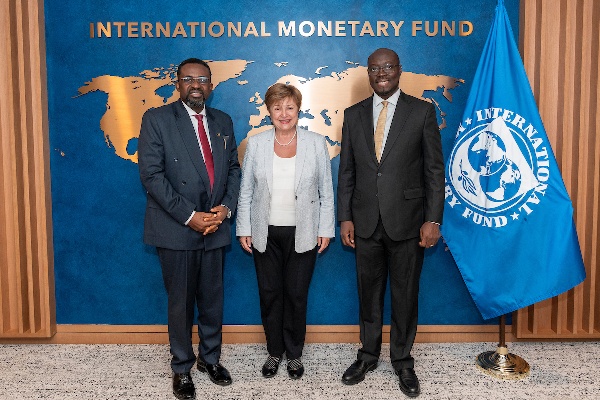

The International Monetary Fund (IMF) has confirmed that the extension of Ghana’s Extended Credit Facility (ECF) programme to August 2026 is a technical adjustment rather than a reflection of missed targets or policy failures. Dr Adrian Alter, the IMF’s Resident Representative in Ghana, emphasised that the three-month extension was agreed with the government to provide sufficient time to complete the final programme review, including a detailed assessment of data for the end of 2025 and the first quarter of 2026.
Addressing concerns that the extension implied shortcomings in Ghana’s fiscal or monetary policies, Dr Alter noted that programme implementation has been broadly satisfactory. “All performance criteria and indicative targets for end-June 2025 were successfully met,” he said, underscoring the government’s adherence to the agreed macroeconomic framework. The IMF’s Executive Board approved the extension as part of the fifth review of the programme.
The Fund indicated that the programme would undergo limited modifications to accommodate evolving macroeconomic conditions. These adjustments include revisions to fiscal indicative targets and inflation consultation bands, reflecting recent developments in global commodity markets and domestic economic trends. While progress under the ECF has been strong, the IMF cautioned that downside risks remain, particularly from volatile commodity prices and potential delays in Ghana’s ongoing debt restructuring initiatives.
Economists note that Ghana’s adherence to the ECF framework is critical for maintaining investor confidence and macroeconomic stability. By meeting performance criteria on time, the country continues to signal fiscal discipline, monetary prudence, and a commitment to structural reforms. This is particularly important as Ghana seeks to stabilise public finances, attract foreign investment, and rebuild foreign exchange reserves amid global economic uncertainty.
The three-month technical extension also carries practical economic implications. It allows the IMF and Ghanaian authorities to fully assess the impact of recent fiscal and monetary measures, including revenue mobilisation efforts and expenditure controls, before finalising the programme’s next phase. Analysts argue that this approach minimises the risk of premature adjustments that could destabilise growth or exacerbate inflationary pressures.
Commodity price volatility remains a key concern for Ghana. As a net importer of fuel and key raw materials, the country is vulnerable to fluctuations in global energy markets. Unexpected spikes could strain public finances and limit the government’s ability to fund social programmes, while sustained low prices for export commodities, such as gold and cocoa, could reduce foreign exchange earnings. The IMF’s guidance aims to provide a buffer against these external shocks, allowing Ghana to adjust policy gradually and maintain macroeconomic resilience.
Debt restructuring is another focal point. Ghana’s ongoing negotiations with bilateral and commercial creditors are critical for reducing debt service pressures and creating fiscal space for development spending. The IMF highlighted that any delays in these processes could affect the sustainability of the country’s debt trajectory and, by extension, its economic growth prospects. By aligning the programme review with the completion of key assessments, the Fund ensures that policy recommendations are grounded in the latest fiscal and macroeconomic data.
Overall, the technical extension of the ECF programme reflects Ghana’s relatively strong economic management amid a challenging global environment. It provides additional time for careful analysis, supports continuity in policy implementation, and reassures markets that the government remains committed to stabilising the economy. While risks remain, including external shocks and debt-related uncertainties, the IMF’s stance suggests confidence in Ghana’s capacity to navigate these challenges without jeopardising the programme’s objectives.