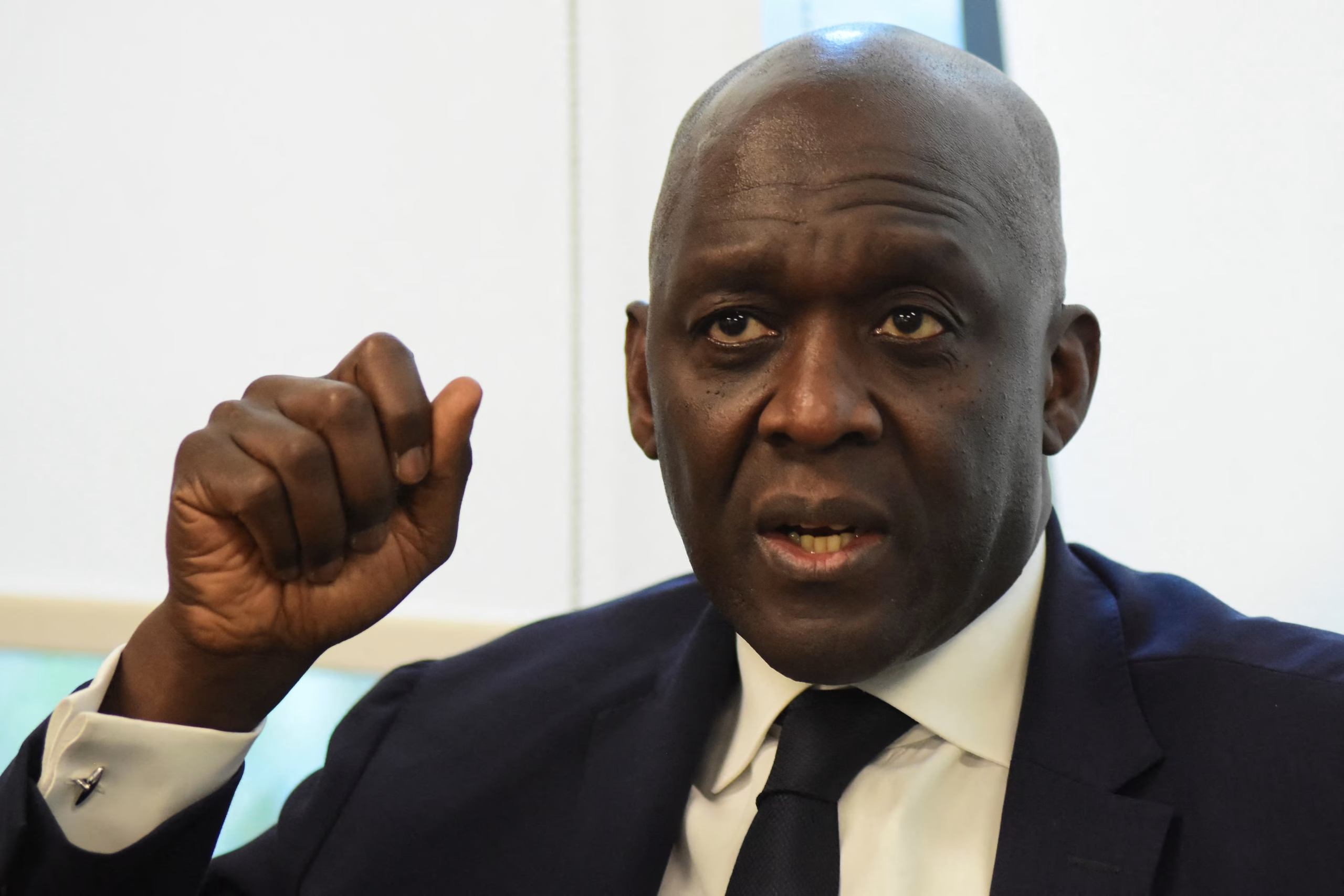

The International Finance Corporation (IFC), the private investment arm of the World Bank Group, is expanding its local-currency lending and direct investments across Africa in an effort to help projects reach the scale needed to attract major global investors. Speaking at the Africa Financial Summit in Casablanca, IFC Managing Director Makhtar Diop emphasised that the continent’s fragmented markets must integrate further if they are to draw long-term capital from institutional investors such as BlackRock and other global asset managers.
“Large investors typically look for billion-dollar-sized assets before committing significant resources,” Diop said. “Africa must build larger, more interconnected markets that can absorb that level of investment. Our role is to help make those projects viable in local currency, so that exchange rate volatility does not undermine their returns.”
The renewed push by the IFC comes amid a tightening global financing environment, with concessional finance and traditional donor aid declining as advanced economies grapple with inflation, higher interest rates, and geopolitical tensions. For many African nations, these global shifts have made private capital a critical source of funding for infrastructure, energy, and industrial development.
In the last financial year, Africa accounted for over $15 billion of the IFC’s total commitments, primarily in debt and trade finance. Around 30 per cent of its African portfolio is now denominated in local currencies, a share that is set to rise as the institution seeks to cushion borrowers from exchange rate risks that have plagued many economies on the continent. Several African currencies, including those of Ghana, Nigeria, and Kenya, have faced steep depreciation in recent years, eroding the profitability of projects financed in dollars.
The IFC’s strategy involves not just direct lending, but also partnerships with commercial banks and local financial institutions to expand credit availability in local currency. Diop revealed that the organisation is scaling up its currency-swap programmes, allowing banks to exchange dollar resources for local-currency funds that can be channelled into sectors such as housing, renewable energy, and small and medium-sized enterprises (SMEs).
“The aim is to deepen liquidity in domestic financial markets while reducing dependence on foreign-denominated borrowing,” Diop noted. “This will make African economies more resilient and better able to mobilise domestic savings for long-term investment.”
The move aligns with broader efforts across the continent to promote regional financial integration. Institutions such as the African Continental Free Trade Area (AfCFTA) Secretariat and the African Export-Import Bank (Afreximbank) have been working to harmonise financial regulations, establish payment systems that facilitate cross-border trade, and create regional investment platforms that pool risk and attract capital.
Economically, the IFC’s increased focus on local-currency financing could have several benefits. By mitigating exchange rate risk, projects become more bankable and predictable, improving creditworthiness and lowering the cost of capital. This, in turn, can unlock new investments in long-term infrastructure—particularly in power, transport, and manufacturing—where returns are typically realised over many years.
Moreover, strengthening local capital markets contributes to macroeconomic stability. A robust domestic debt market allows governments and private companies to fund operations internally, reducing reliance on volatile foreign inflows. It also provides institutional investors, such as pension funds and insurance companies, with safer, longer-term investment options.
However, challenges remain. Many African countries still have shallow financial markets, limited investor confidence, and underdeveloped regulatory frameworks. Currency volatility, high inflation, and fiscal deficits continue to constrain monetary flexibility. The IFC’s approach, therefore, hinges on collaboration with local regulators to build transparent, rules-based financial systems capable of attracting sustained private investment.
Analysts note that the IFC’s growing involvement reflects a strategic pivot from short-term relief to long-term market development. Rather than simply financing individual projects, the institution is now positioning itself as a catalyst for systemic change—encouraging regional integration, strengthening domestic financial ecosystems, and promoting sustainable investment flows.
With concessional lending shrinking globally, Africa’s ability to attract private investment will increasingly depend on its capacity to generate viable, scalable projects and manage risk locally. As Diop put it, “Africa does not lack opportunities. What it needs are mechanisms that allow local and global investors to work together efficiently.”
The IFC’s expanded local-currency initiative, if effectively implemented, could be a significant step in that direction—helping African markets move from dependence on external aid towards a more self-sustaining model of growth driven by private capital and deeper financial integration.