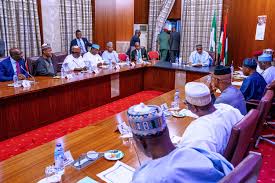

The elected governors from Nigeria’s thirty-six states recently convened in Abuja, where they pledged their unequivocal support for the ongoing, tough economic measures being implemented by the Federal Government and the Central Bank of Nigeria (CBN). Meeting under the umbrella of the Nigeria Governors’ Forum (NGF), their collective position affirmed backing for the central bank’s concerted drive to restore price stabilisation and bolster confidence in the nation’s fragile economy.
The governors received a comprehensive briefing from the CBN’s Deputy Governor for Economic Policy, Dr Muhammad Sani Abdullahi, who detailed the central bank’s strategy. This multi-pronged approach is focused on three main pillars: aggressive monetary policy tightening, the unification of the country’s various exchange rate windows, and a mandatory recapitalisation exercise for commercial banks. The primary aim of these measures is to curb soaring inflation, improve liquidity management across the financial system, and ultimately consolidate macroeconomic stability.
The unification of the exchange rate system, in particular, was one of the most drastic reforms. The policy was designed to foster greater transparency, facilitate efficient price discovery, and ultimately attract much-needed foreign capital and investor confidence. However, the short-term economic reality has been brutal for the average Nigerian citizen. The move triggered a sharp depreciation of the Naira, pushing the currency’s value down significantly in a short period. This rapid devaluation has, in turn, fed directly into hyperinflation, causing a severe spike in the general price level of essential goods and services, notably food and energy. Consequently, the temporary effect has been a rise in the cost of living and increased economic hardship for households, even as the authorities insist the long-term benefits of a market-reflective exchange rate will outweigh the transitional pain.
Furthermore, the continuous tightening of monetary policy, which involves significant hikes to the benchmark interest rate, is a classic, albeit painful, strategy to rein in the money supply and dampen inflationary pressures. While the CBN’s hard-line stance is deemed necessary to put inflation on a firm downward trajectory, the resulting high interest rates create their own economic challenges. They invariably increase the cost of borrowing for businesses, potentially depressing investment, slowing down economic activity, and attracting ‘hot money’ or short-term, reversible capital inflows. The governors stressed the importance of sustained co-ordination between the CBN (monetary authorities) and the finance ministry (fiscal authorities) to ensure policy effectiveness and safeguard both economic growth and the financial sustainability of the individual states.
The bank recapitalisation directive is another key reform aimed at fortifying the financial system. The exercise, which mandates commercial banks to significantly raise their capital base, is vital for strengthening these institutions against both domestic and global financial shocks. Years of currency depreciation have eroded the dollar-equivalent capital base of Nigerian banks, threatening their ability to compete regionally and internationally. The recapitalisation seeks to create larger, more resilient banks capable of underwriting bigger loans, a crucial requirement if the government is to achieve its ambitious goal of a $1 trillion economy. Stronger banks, with enhanced capital buffers, are also expected to unlock foreign exchange liquidity and improve the efficiency of cross-border trade settlements in the medium term.
Beyond economics, the governors also addressed crucial security matters. The forum received an intelligence briefing from the Director-General of the Department of State Services (DSS) on emerging security threats. The discussion linked ongoing security risks such as countering violent extremism and managing inter-communal tensions directly to the underlying issues of economic hardship and political transition. The state governors acknowledged the DSS’s proactive efforts and reiterated their commitment to deepening intelligence sharing and collaboration with all federal security agencies to enhance peace and stability nationwide.
Finally, the NGF turned its attention to legislative affairs, urging support for a specific constitutional amendment bill set for a vote in the coming weeks. The proposed legislation seeks to create reserved seats exclusively contested by women in both the National and State Assemblies. The governors were encouraged to lobby their respective senators, representatives, and state assembly members to support the bill’s passage, affirming the country’s commitment to gender equity and inclusive governance.