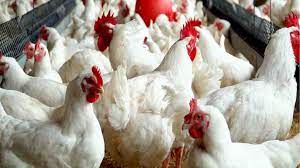

The Federal Government has unveiled a new agricultural intervention aimed at strengthening food supply and improving nutrition outcomes. The initiative combines the release of a newly developed chicken breed with the approval of 57 crop varieties, signalling a broadened approach to agricultural productivity.
The policy is positioned as a response to persistent food security pressures, with authorities seeking to increase both protein availability and crop yield across the country. Officials said the intervention is designed to address supply gaps, stabilise food systems, and improve the nutritional profile of households.
According to the report, “FG introduces new chicken breed, 57 crop varieties to boost food security.” The scale of the rollout reflects a shift from incremental reforms to a more expansive agricultural upgrade strategy.
The newly introduced chicken breed is expected to support poultry farmers through improved productivity. With poultry remaining a key source of animal protein, the development is targeted at increasing meat supply while lowering production constraints. Analysts note that improving livestock genetics often leads to better growth rates, higher resistance to disease, and stronger output efficiency.
In parallel, the approval of 57 crop varieties marks a significant expansion in crop innovation. These varieties span key staples and are expected to deliver higher yields and better adaptation to local conditions. The government’s approach indicates a dual focus on both resilience and volume, particularly in the face of climate variability and rising food demand.
Available details show that the intervention is also tied to research-backed processes. The varieties and livestock breeds were subjected to evaluation and approval mechanisms involving agricultural experts, scientists, and regulatory bodies. This reflects an effort to align policy execution with scientific validation rather than administrative rollout alone.
The underlying objective is clear. Authorities are attempting to reduce dependence on food imports while strengthening domestic production capacity. By improving seed quality and livestock performance, the government aims to raise output without proportionately increasing input costs.
Food security remains a central economic concern. Rising prices and supply disruptions have placed pressure on households, making agricultural productivity a critical policy lever. The introduction of improved varieties is therefore expected to influence both availability and affordability over time.
Data from similar past interventions suggest that improved crop varieties can significantly raise farm output when adopted at scale. Likewise, enhanced poultry breeds tend to reduce mortality rates and improve feed conversion efficiency, both of which directly affect profitability for farmers.
The success of the initiative, however, will depend on implementation. Distribution systems, farmer awareness, and access to inputs will determine whether the new varieties translate into measurable gains. Without effective rollout mechanisms, the policy risks remaining at the level of announcement rather than impact.
Nonetheless, the breadth of the intervention signals intent. By combining livestock and crop improvements in a single policy move, the government is attempting to tackle food insecurity through multiple production channels simultaneously.
As stated, “FG introduces new chicken breed, 57 crop varieties to boost food security,” the initiative underscores a strategy built on scaling productivity, improving resilience, and reinforcing the agricultural base of the economy.