
Ghana’s Minister for Lands and Natural Resources, Emmanuel Armah-Kofi Buah, has revoked 278 small-scale mining licences across the country over regulatory breaches and expired operating permits. The move, which was announced on Thursday, 23 October, marks one of the most sweeping enforcement actions taken by the Ministry in recent years to bring order to the small-scale mining sector.
The announcement was made by Paa Kwesi Schandorf, Spokesperson and Media Relations Officer at the Ministry of Lands and Natural Resources, in a Facebook post. According to him, the revocation forms part of a broader effort by the government to sanitise the small-scale mining industry, a sector that plays a vital role in Ghana’s economy but has long been associated with illegal operations, environmental destruction, and weak regulatory oversight.
The affected licences reportedly include operators who either continued mining activities after their permits had expired or failed to meet mandatory environmental, safety, and operational standards. In many cases, small-scale miners have been found to operate outside their allocated concessions, encroaching on protected areas such as forest reserves and riverbanks, leading to severe ecological damage.
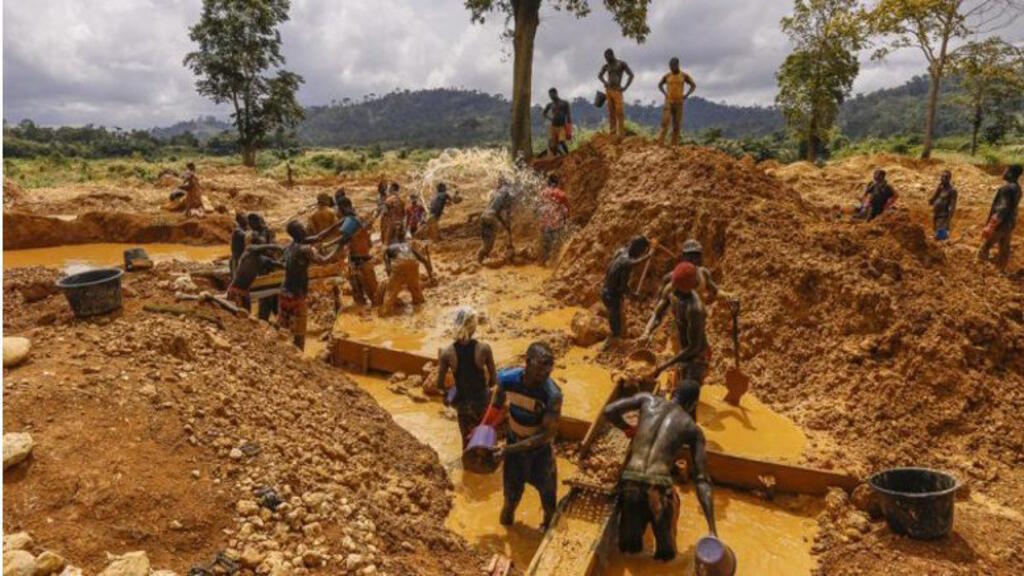
Ghana, the leading gold producer in Africa and among the top ten globally, has struggled for years to balance the economic benefits of small-scale mining with its environmental and social costs. While the sector provides livelihoods for hundreds of thousands of Ghanaians and contributes significantly to rural development, it has also become synonymous with “galamsey,” the local term for illegal mining, which has left vast tracts of land degraded and rivers polluted with mercury and other toxic chemicals.
Minister Armah-Kofi Buah’s decision is therefore seen as part of a renewed drive to restore discipline and transparency within the sector. Since assuming office earlier this year, the Minister has repeatedly signalled his intention to uphold the law and strengthen institutional accountability in Ghana’s mining governance. His latest action builds on the Ministry’s ongoing efforts to align small-scale mining operations with the Minerals and Mining Act, as well as to enforce compliance with environmental protection laws administered by the Environmental Protection Agency (EPA) and the Minerals Commission.
Analysts say the revocation of 278 licences sends a strong message to operators who continue to flout regulations. It also reflects growing public pressure on the government to act decisively against illegal mining, which has become one of the country’s most pressing environmental challenges. In recent months, several civil society organisations and environmental advocacy groups have called for stricter monitoring of mining concessions and a clampdown on the issuance of fraudulent permits.
However, the move is likely to have mixed reactions among stakeholders. While environmental groups and policy advocates are expected to welcome the crackdown, some small-scale miners may view it as heavy-handed, particularly in communities where mining is a major source of income. There have been past concerns about transparency in the licence allocation process and allegations that political interference sometimes affects who is targeted for enforcement.
The Ministry has assured that the exercise is not aimed at crippling the legitimate small-scale mining industry but rather at creating a more sustainable and well-regulated sector. According to Schandorf, further details on the affected concessions will be made public in due course, along with plans to support operators who comply with the country’s mining regulations. This support may include training programmes, access to legal concession areas, and improved monitoring systems to ensure compliance.
The government’s broader strategy also includes digital tracking of mining operations through initiatives such as the Community Mining Scheme, which seeks to formalise small-scale mining by providing designated areas where activities can be monitored and regulated. In addition, the Lands Ministry has been working closely with the security agencies and local authorities to identify and shut down illegal mining sites.
Observers note that the success of these measures will depend on sustained political will, adequate resourcing of regulatory institutions, and community engagement. The recurring problem of illegal mining in Ghana has often been attributed not only to poor enforcement but also to the lack of viable economic alternatives for rural populations who depend on mining for survival.
As the Ministry prepares to release the full list of affected operators, attention will turn to how effectively it can balance enforcement with support for legitimate miners. The revocation of the 278 licences, while a significant step, will only yield lasting results if it is accompanied by consistent monitoring, transparent licensing procedures, and genuine community participation in mining governance.
For now, the decision by Minister Armah-Kofi Buah signals a firm stance on accountability within Ghana’s small-scale mining sector — a move that could mark a turning point in the government’s long-running battle to clean up an industry vital to its economy yet fraught with persistent environmental and governance challenges.