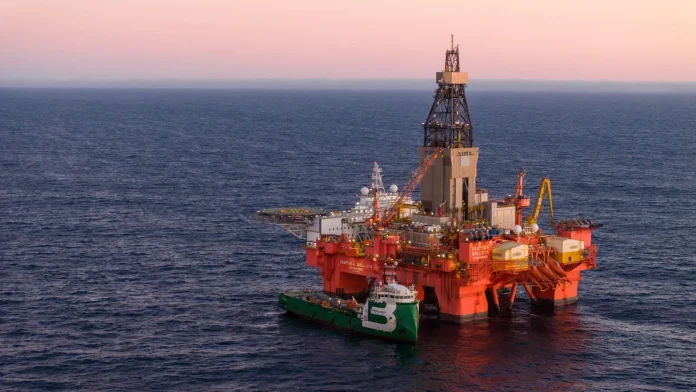

The Government of Ghana, through the Ghana National Petroleum Corporation (GNPC), is reportedly engaged in constructive discussions to acquire Springfield Exploration and Production Limited’s (SEP) interest in the West Cape Three Points Block 2 (WCTP2), one of the country’s largest undeveloped deepwater oil and gas assets. The potential acquisition is aimed at accelerating development of the block amid declining domestic crude production and broader uncertainties in global energy investment.
WCTP2, located offshore Ghana, is estimated to contain approximately 1.5 billion barrels of oil and 1.2 trillion cubic feet of gas, with a potential valuation exceeding $3 billion. These reserves are largely based on SEP’s 2019 Afina discovery, which marked a significant milestone for the company and the nation. SEP, founded by Ghanaian entrepreneur Kevin Okyere, holds the distinction of being the first entirely Ghanaian firm to drill in deepwater, highlighting the strategic importance of domestic participation in the oil sector.
According to industry sources, the discussions focus on enabling a more rapid mobilisation of the asset, with the state potentially partnering with international operators to bring the block into production efficiently. Kevin Okyere has confirmed ongoing engagement with the government, emphasising a commitment to a “decisive and constructive outcome” that aligns with national interests.
Analysts note that the proposed acquisition reflects a broader strategy by the Ghanaian government to safeguard its energy security and counter declining crude output. Ghana’s oil production has faced challenges in recent years, with some fields experiencing natural declines and investment in new exploration being constrained by global energy market volatility and high development costs. By acquiring a stake in WCTP2, the state would gain direct control over a strategic deepwater asset, enabling it to influence production timelines, investment decisions, and partnerships with international oil companies.
Economically, bringing WCTP2 into accelerated production could have far-reaching implications. Increased crude and gas output would bolster government revenue through royalties and taxes, enhance foreign exchange earnings, and potentially reduce energy import dependence. It could also stimulate local content opportunities, generating employment across engineering, logistics, and service sectors. Moreover, securing a high-value asset in a complex global energy environment could strengthen investor confidence, signalling Ghana’s capacity to manage strategic resources proactively.
However, the acquisition also carries financial and operational considerations. Deepwater developments are capital-intensive, with long lead times and elevated technical risks. While state involvement may facilitate quicker mobilisation and risk-sharing, the government will need to ensure sufficient funding, maintain robust project governance, and attract capable technical partners to mitigate operational uncertainties. International partners may be sought not only for capital injection but also to provide advanced technological expertise required for deepwater production.
From a policy perspective, the transaction underscores the government’s active role in managing natural resources to support national development. Ghana has historically relied on a mix of international oil companies and local firms to develop its offshore blocks. The potential state-led acquisition reflects a pragmatic approach to leveraging domestic capabilities while retaining flexibility to collaborate with global operators, thereby balancing national control with technical efficiency.
Observers have highlighted that SEP’s trailblazing efforts as the first fully Ghanaian deepwater operator provide a symbolic as well as strategic dimension to the talks. A successful transfer of interests would not only preserve the value of the Afina discovery but could also serve as a blueprint for future public-private partnerships in the energy sector.
As discussions continue, the government and GNPC are expected to focus on structuring an arrangement that accelerates production timelines, protects public investment, and maximises the economic benefits of one of Ghana’s most promising offshore assets. The outcome could mark a significant milestone in the country’s efforts to maintain energy self-sufficiency, attract investment, and harness local expertise in a sector critical to national growth.