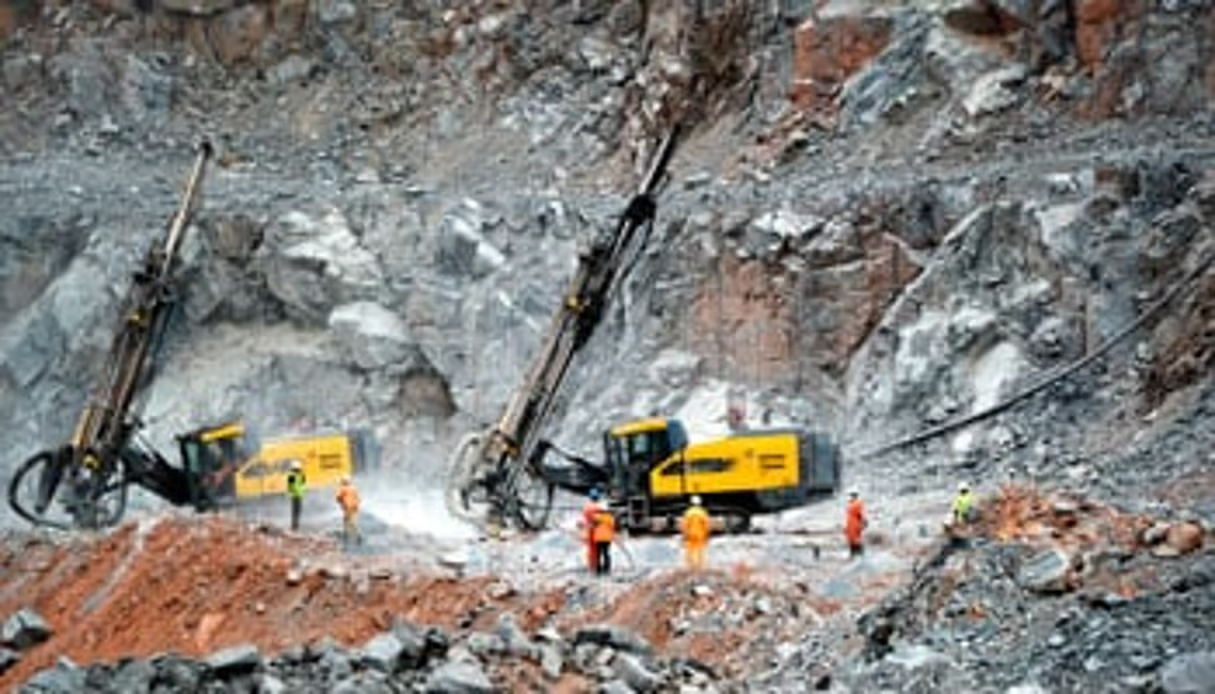

Ghana has fallen seven places in the latest Global Mining Investment Attractiveness Index, ranking 53rd out of 68 jurisdictions in 2025, down from 46th out of 82 in 2024, according to the Fraser Institute’s annual survey released on 26 February 2026. Although its overall score dipped only marginally from 56.98 percent to 55.21 percent, faster improvements elsewhere pushed Ghana lower in the rankings, reflecting intensifying competition for global exploration capital.
The survey, based on responses from over 2,300 mining professionals whose companies spent $4.2 billion on exploration in 2025, assesses how mineral potential and government policies, including taxation and regulation, affect mining investment. Ghana’s policy perception score of 53.65 placed it 50th on that metric, with executives citing uncertainty over protected areas, infrastructure gaps, and the administration of existing regulations as persistent deterrents.
On the African continent, Ghana ranked eighth out of 16 countries assessed, finishing just two positions ahead of South Africa. Within West Africa specifically, Ghana ranked second after Côte d’Ivoire, which reclaimed its position as the sub-region’s most attractive mining jurisdiction with a score of 60.92, up from 55.70 in its last year at the top. Guinea ranked third in West Africa at 52.16, followed by Mali at 46.58 and Burkina Faso at 35.29.
Botswana and Morocco lead Africa overall in 2025, followed by Zambia and Tanzania. Botswana also re-entered the global top 10, ranking seventh after dropping out in 2024. Nevada ranked as the most attractive mining jurisdiction in the world.
The ranking comes at a sensitive moment for Ghana’s mining sector. The country has held the title of Africa’s leading gold producer in recent years, overtaking South Africa, but the sector faces rising scrutiny over the impact of illegal small-scale mining on land and water resources, alongside broader investor concerns about regulatory predictability under successive governments. Mining firms in Ghana have expressed concerns about planned tax and policy reforms, while the government insists changes are needed to secure greater national benefits from mineral resources.
The Fraser Institute noted that Africa’s performance in the survey remains uneven overall, with four jurisdictions appearing among the bottom 10 worldwide. The concentration of low-ranked African nations reflects continent-wide challenges around political stability, legal framework quality, and infrastructure development rather than Ghana-specific failures alone.
For policymakers in Accra, the report carries weight as a signal of how the global exploration community views Ghana’s regulatory environment. Closing the gap with top African performers will require visible progress on the policy factors that executives consistently flag: regulatory consistency, infrastructure investment, and the quality and accessibility of the country’s geological database.