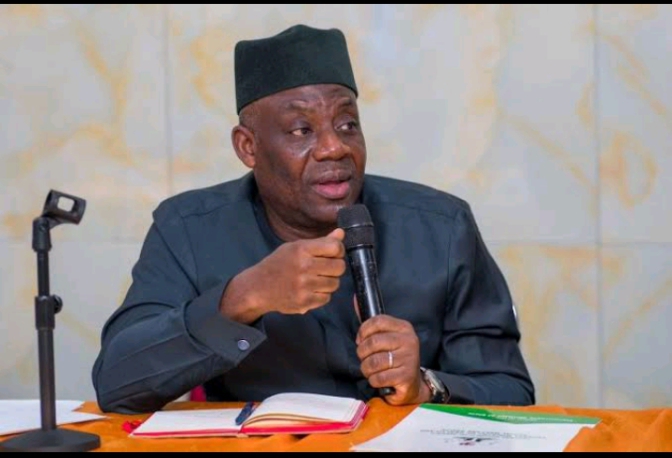

The Federal Government has launched a sweeping reform of Nigeria’s agricultural education system, with the aim of strengthening “food security” and expanding job opportunities across the nation. The initiative was jointly announced by the Ministries of Education and Agriculture and Food Security during an event in Abuja.
The details were shared in a statement by Mrs. Folasade Boriowo, Director of Press and Public Relations at the Federal Ministry of Education.
Dr. Tunji Alausa, the Minister of Education, called the reforms a key move to reposition agriculture as a foundational sector in Nigeria’s development. He said the new curriculum will reflect modern agricultural practices and technologies, aligning with President Bola Tinubu’s vision for a tech‑driven agricultural sector capable of addressing the country’s food challenges.
According to Dr. Alausa, enrollment in agricultural courses at tertiary institutions has been declining despite government investments. He said that “Statistics from the 2024 Unified Tertiary Matriculation Examination (UTME) revealed that 47.92 per cent of admission slots allocated to agricultural courses remain unfilled.” He added: “Agriculture is a major national priority, but enrollment in agricultural courses in higher institutions is dropping.”
He warned that this decline is “a serious gap, especially in an area that should ensure food security for Nigeria and make the country an export hub for agricultural products.”
While university enrollment in agricultural programs is falling, Dr. Alausa noted a growing interest in technical and vocational agricultural training. He revealed that over 900,000 applications were recently submitted to Technical and Vocational Education and Training (TVET) institutions, with more than 210,000 of those for livestock farming alone. In total, agriculture ranked close to garment making, which attracted more than 260,000 applicants.
“This shows that young Nigerians are eager to gain practical agricultural skills, but the outdated tertiary curriculum has not kept pace with modern realities,” he added.
The government pledges to overhaul the education curriculum by integrating practical training, innovation, and value‑chain development. Dr. Alausa cited the Republic of Benin’s success with cotton processing—moving from exporting raw cotton to producing processed goods that employ over 25,000 people as a model Nigeria could replicate.
Senator Aliyu Abdullahi, Minister of State for Agriculture and Food Security, underscored the need to synchronize education and training objectives with national priorities. He said the curriculum must emphasize hands‑on skills and innovation, rather than purely theoretical knowledge, to fuel agricultural transformation, drive food sovereignty, and support broader economic diversification.