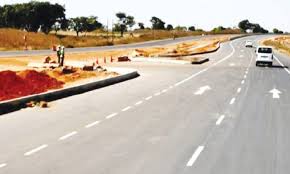

The Federal Government has announced that the reconstruction of the Enugu–Onitsha federal highway will cost N350 billion, marking a significant increase from the original contract value as the administration adopts reinforced concrete pavement technology for enhanced durability. Senator David Umahi, the Minister of Works, made the disclosure while inaugurating completed portions of the road, describing President Bola Tinubu’s commitment to the project as unrivaled.
Umahi explained that the federal government reviewed the original N202 billion contract for the road and retained part of it. The government further carved a 72 kilometre stretch for reconstruction using reinforced concrete pavement, with this section costing approximately N150 billion. “This section is being executed to higher durability standards similar to those used on the Lagos–Calabar coastal highway,” the minister said.
From an infrastructure economics perspective, the shift from asphalt to reinforced concrete represents a significant change in Nigeria’s road construction methodology. While asphalt roads typically require substantial maintenance within five to ten years and major resurfacing within fifteen to twenty years, concrete roads can last between fifty and one hundred years with minimal maintenance. The higher upfront cost is offset by lower lifecycle expenditure and reduced disruption from frequent repairs. For a country that has struggled with road maintenance budgets, the concrete approach could yield long term fiscal savings despite higher initial capital outlay.
The minister provided a detailed breakdown of progress on the various sections. The first 15 kilometres of the reinforced concrete section is approximately 97 percent completed and is presently being opened to traffic to ease movement during the Easter celebration. Another 18 kilometre stretch is under construction toward Anambra, while a separate 39 kilometre segment extending from the River Niger Bridge axis is also ongoing. Contractors handling asphalt portions of the road have been directed to adopt the same concrete standard for the remaining 23 kilometres, the minister said.
Umahi emphasised the durability advantages of concrete technology, stating that “asphalt fails over time but concrete can last between 50 and 100 years with little or no maintenance.” He added that 50 percent of the entire highway would be constructed on reinforced concrete, significantly improving durability and reducing long term costs. This approach aligns with the administration’s broader infrastructure strategy, which has prioritised concrete pavement on major highway projects including the Lagos–Calabar coastal highway.
The Enugu–Onitsha highway is a critical artery in Nigeria’s southeastern transport network. It connects Enugu, a major commercial and administrative centre, to Onitsha, one of the country’s largest markets and a key hub for trade with the South East and South South regions. The road carries substantial freight traffic, including goods moving to and from the Onitsha River Port, as well as passenger vehicles serving the dense population centres along the corridor. Poor road conditions on this route have historically increased travel times, raised vehicle operating costs, and contributed to accidents.
From a regional economic development perspective, the reconstruction carries implications for trade and commerce across the South East. Businesses that rely on just in time deliveries, including manufacturers, distributors, and retailers, benefit from predictable travel times and reduced vehicle maintenance costs. Farmers moving produce to markets also gain from improved road conditions, which reduce spoilage and expand market reach. The multiplier effects of infrastructure investment extend beyond direct employment in construction to include enhanced productivity across multiple sectors.
Umahi commended President Tinubu for his resolve to change the infrastructural narrative of the South East, enumerating other roads being reconstructed or constructed across the zone. The statement reflects an awareness of the political economy of infrastructure distribution, with the administration seeking to demonstrate balanced development across Nigeria’s geopolitical zones. For residents and businesses in the South East, the visible progress on the Enugu–Onitsha highway provides a tangible indicator of federal commitment to the region.
The News Agency of Nigeria reports that supervisors of various sections of the road commended the federal government for its support and pledged completion of the project in 2026. The timeline, if achieved, would deliver a modern, durable highway that could serve the region for decades with minimal maintenance. However, the construction industry in Nigeria has a mixed record on project delivery timelines, and achieving the 2026 target will depend on consistent funding, effective contractor management, and resolution of any right of way or utility relocation challenges.
For road users, the partial opening of completed sections ahead of Easter provides immediate relief during a peak travel period. The gradual commissioning of finished portions allows the public to experience the benefits of the investment before full project completion, building goodwill and demonstrating progress. As the reconstruction continues, the focus will shift to maintaining quality standards on the remaining sections and ensuring that the concrete pavement delivers the durability advantages that justify its higher upfront cost.