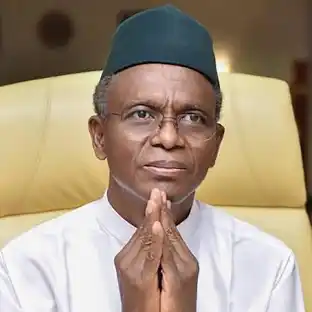

Justice Darius Khobo of the Kaduna State High Court has adjourned the bail hearing of former Kaduna State governor, Nasir El-Rufai, to the first week of June 2026, meaning the embattled politician will remain in the custody of the Independent Corrupt Practices and Other Related Offences Commission until at least that date. El-Rufai was arraigned last week on an amended nine-count charge bordering on alleged fraud and abuse of office, filed by the ICPC, marking a significant escalation in the anti-corruption agency’s pursuit of the former governor.
The presiding judge, Darius Khobo, adjourned ruling on the application to April 21, 2026, before subsequently setting the new date in June. The former governor was last week granted bail by a Federal High Court in Kaduna in another corruption case instituted against him by the ICPC. Justice Rilwanu Aikawa admitted El-Rufai to bail in the sum of N200 million, ordering that he remain in ICPC custody pending the fulfilment of the bail conditions. As part of the conditions, the defendant was barred from making public comments on the case and must attend all court sittings.
Speaking after the court session, counsel to the former governor, Ukpon Akpan, kicked against the lingering adjournment, describing it as politically motivated. The adjournment extends the period of El-Rufai’s detention while his legal team awaits a ruling on his bail application, raising questions about the pace of judicial proceedings in high-profile corruption cases.
From an institutional integrity perspective, the case represents a test of Nigeria’s anti-corruption framework. El-Rufai, a prominent political figure who served as governor of Kaduna State from 2015 to 2023, has maintained his innocence. The ICPC’s decision to pursue multiple charges across different courts suggests a coordinated effort to hold the former governor accountable, while his legal team’s claims of political motivation highlight the inherent tensions in prosecuting senior political figures. The adjournment to June prolongs the legal uncertainty and keeps El-Rufai in custody, with significant implications for his political future and public perception of the anti-graft war.