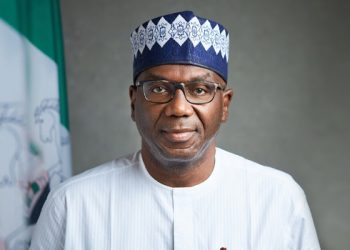

The Central Bank of the Democratic Republic of Congo has launched a formal gold purchase programme designed to integrate the nation’s abundant artisanal production into its official reserves, marking a strategic pivot in reserve management and monetary sovereignty. Under the initiative, the BCC will partner with DRC Gold Trading SA, the state-owned entity established in 2022 following the government’s full acquisition of the former joint venture with Emirati firm Primera Gold. Governor André Wameso framed the move as correcting “a major historical anomaly”: the complete absence of physical gold in the vaults of one of the world’s foremost producers despite the country’s subterranean wealth.
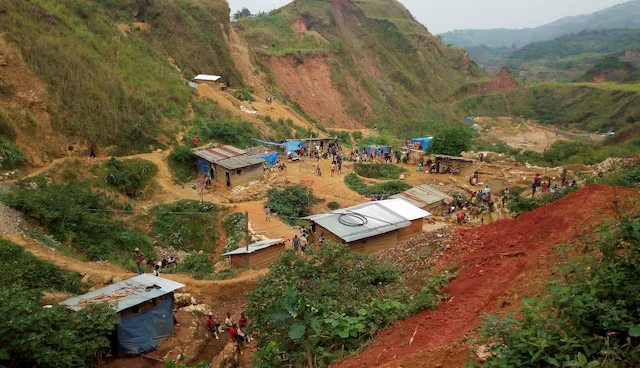
The programme’s architecture reflects a deliberate departure from conventional reserve management. Transactions are expected to be settled in Congolese Francs, a mechanism designed to reduce structural dependence on foreign currencies while simultaneously converting domestically produced gold into sovereign assets. This dual objective addresses both monetary policy goals and the perennial challenge of formalising artisanal mining, which has historically operated outside official circuits with significant value leakage through smuggling and illicit trade. By positioning the central bank as the principal off-taker, the state aims to capture a portion of the estimated 15 tonnes DRC Gold Trading targets annually for integration into national reserves.
The scale of ambition is substantial. Achieving the 15-tonne annual target would require a fivefold increase in formally declared artisanal gold volumes relative to the 2.5 tonnes officially recorded in 2025. At prevailing market rates—gold averaged $5,050 per ounce in early 2026—mobilising this volume would necessitate an injection of approximately $2.4 billion into the domestic economy, equivalent to roughly one-third of the 2026 national budget. The monetary implications of such liquidity injection would require rigorous oversight to manage inflationary dynamics, but successful execution could fundamentally transform the BCC’s balance sheet.
The programme carries significant governance implications beyond reserve accumulation. Artisanal gold mining in eastern DRC has long been associated with conflict financing, with opaque supply chains intersecting with non-state armed groups and illicit cross-border flows. The Primera Gold joint venture, despite exporting over five tonnes worth $300 million in 2023, faced serious concerns about supply chain integrity, including sourcing from areas with documented armed group presence and environmental damage. The transition to full state ownership through DRC Gold Trading, with shareholding distributed among the state (55 percent), Gécamines (15 percent), and the Mining Fund for Future Generations (30 percent), aims to address these transparency deficits.
Governor Wameso has articulated a vision linking monetary policy with broader stability objectives. “The constitution of reserves in monetary gold is now among the major axes of the Central Bank of Congo’s strategy,” he stated in January 2026. “This approach aims to reduce dependence on foreign currencies while strengthening the country’s financial resilience to external shocks”. By integrating artisanal gold into official reserves, authorities believe they can improve traceability, reduce illicit flows, and limit informal mining activities that contribute to insecurity in the eastern provinces.
The initiative draws on African precedents while adapting them to the DRC’s unique context. Tanzania has mandated a 20 percent central bank buyback of national gold production since 2023, deploying local purchasing centres to formalise supply chains. Ethiopia demonstrated the effectiveness of price incentives, collecting 26 tonnes in 2025 by offering premiums above global market rates to channel production into official reserves. Ghana illustrates a more advanced stage of reserve management, with its central bank actively administering a 38-tonne gold stock to optimise sovereign liquidity. Cameroon’s experience with CAPAM, however, offers a cautionary precedent, where uncompetitive pricing and governance deficiencies captured only a marginal share of artisanal production.
DRC Gold Trading has already begun expanding its operational footprint, opening branches in Lubumbashi for Haut-Katanga province and in Durba for Haut-Uele. The Lubumbashi branch’s first official shipment exceeded 20 kilograms, worth over $2 million, demonstrating early traction in formalising artisanal flows from provinces historically associated with copper and cobalt rather than gold. The company aims to operate ten offices nationwide, with additional branches planned for Kinshasa and Mbuji-Mayi in 2026.
The timing aligns with favourable market dynamics. Rising gold prices provide additional momentum, with the average annual price rising 44 percent to $110,280 per kilogram in 2025, supported by safe-haven demand amid geopolitical uncertainty. January 2026 saw prices surpass $160,000 per kilogram, with major financial institutions projecting potential further increases. This price environment enhances the programme’s financial viability and the strategic value of gold accumulation.
For the Congolese economy, successful implementation could yield multiple dividends: strengthened external reserves reducing vulnerability to currency volatility, improved governance in the artisanal mining sector, increased state revenues from formalised production, and enhanced monetary credibility with international investors. Governor Wameso has expressed cautious optimism, noting that areas affected by conflict represent approximately 6 percent of national GDP and that recovering this economic potential could deliver an even stronger performance in 2026.
The ultimate success of this ambitious programme will depend on the BCC’s ability to offer prompt, competitive, and transparent payments in local currency, underpinned by digital traceability mechanisms aligned with international due diligence standards. If executed effectively, the initiative could position Kinshasa to convert its considerable subterranean wealth into a durable strategic asset for macroeconomic and financial stability, transforming a resource historically associated with conflict into a foundation for sovereign resilience.