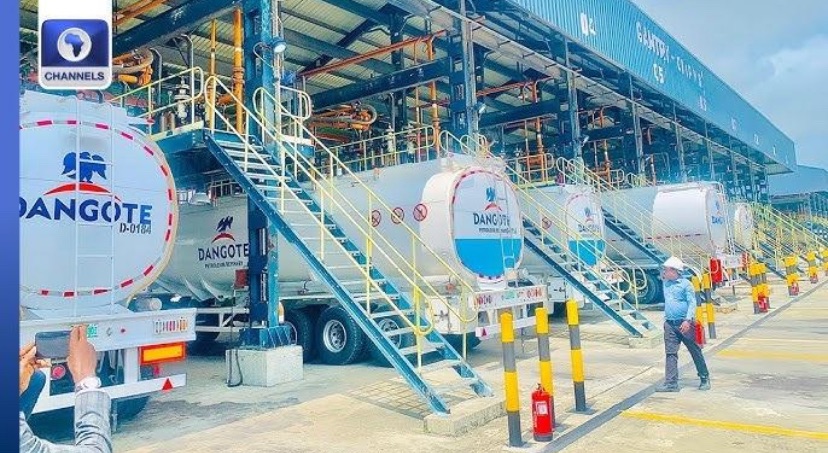

The Dangote Petroleum Refinery has resumed selling Premium Motor Spirit (PMS), popularly known as petrol, in naira, ending its short-lived decision to price the product in US dollars. However, the company has also increased its ex-depot price by N140 per litre, pushing the new price to N1,215 per litre.
The change comes just one week after the 650,000-barrels-per-day refinery suspended petrol loading for trucks and introduced dollar-based pricing. That move created uncertainty in Nigeria’s downstream oil sector, reduced fuel supply, and caused depot prices to rise sharply across the country.
In a notice sent to marketers by the refinery’s commercial department, the company confirmed that all local petrol purchases would once again be made in naira. The updated pricing took effect immediately.
Under the revised price structure, the gantry price increased from N1,075 per litre to N1,215 per litre, representing a 13 percent increase. The coastal loading price also rose from N1.44 million per metric tonne to about N1.60 million per metric tonne.
The refinery informed customers that any petrol volumes that had not yet been loaded would be charged at the new price. It also encouraged marketers to begin placing fresh orders under the revised pricing arrangement.
Industry information platform Petroleumprice.ng confirmed that the refinery had officially returned to naira transactions. The platform’s Chief Executive Officer, Jeremiah Olatide, said marketers had already been notified that naira payments had resumed.
The refinery had stopped both gantry and coastal loading on July 15 when it switched to dollar pricing for refined petroleum products. During that period, many independent marketers struggled to buy fuel because they could not easily access the foreign exchange needed to complete transactions.
As a result, many marketers turned to private fuel depots, where prices quickly increased due to limited supply. The average ex-depot price reportedly climbed from around N1,075 per litre to approximately N1,275 per litre within days.
Industry experts warned that continuing with dollar sales would place additional pressure on Nigeria’s foreign exchange market. Based on the country’s estimated daily petrol consumption of about 50 million litres, marketers would have needed roughly 40 million US dollars every day, or more than 14 billion dollars annually, to keep buying petrol from the refinery.
Dangote Refinery had earlier explained that it temporarily adopted dollar pricing because it was no longer receiving enough crude oil under the Federal Government’s naira-for-crude arrangement. According to the company, it had to source additional crude from the international market using dollars, increasing its operating costs.
Following concerns raised by petroleum marketers and industry stakeholders, the Federal Government stepped in and began discussions with the Dangote Group over the future of the naira-for-crude initiative.
Although petrol is now being sold in naira again, the higher ex-depot price means filling stations may still adjust pump prices upward in the coming days. Petrol was already selling for around N1,300 per litre in Lagos and several other cities on Wednesday as global oil prices remained close to 94 dollars per barrel, driven by renewed tensions in the Middle East.
Market analysts believe the return to naira payments should improve fuel distribution and reduce supply challenges. However, they also warn that unless international crude oil prices fall or competition increases, motorists could continue to face higher fuel prices in the weeks ahead.